Boulevard · Architecture · History
Unter den Linden
Berlin's grand boulevard between the Brandenburg Gate and Museum Island, lined with the opera, the university, the Zeughaus and linden trees.
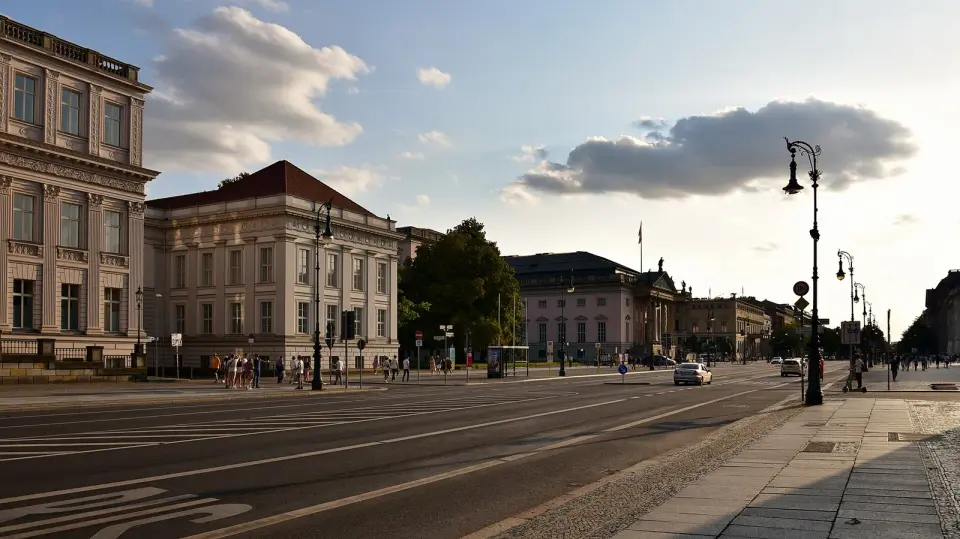
Unter den Linden is the best-known street in the historic center, running for about one and a half kilometers (just under a mile) from Pariser Platz at the Brandenburg Gate to the Schlossbrücke bridge at Museum Island. It began in the 17th century as a bridle path that Elector Friedrich Wilhelm had laid out from the City Palace toward the Tiergarten and planted with linden and walnut trees. Under Frederick the Great the path became a showcase axis along which Prussia lined up its most important buildings.
The ensemble is densest in the eastern section, the so-called Forum Fridericianum around Bebelplatz. Here stand the State Opera, the Old Library, St. Hedwig's Cathedral and, across the street, Humboldt University. Next come Karl Friedrich Schinkel's Neue Wache and the baroque Zeughaus (arsenal), which now houses the German Historical Museum. On the median in front of the university, Frederick II rides high on a tall pedestal as a bronze figure by Christian Daniel Rauch.
The western part feels more sober. Embassies, office buildings and hotels set the tone, among them the massive Russian embassy from the early 1950s. The linden trees on the wide median, by the way, are not the originals. They have been cut down and replaced several times over the years, including in the 1930s during construction of the S-Bahn tunnel and again after World War II.
The boulevard is best experienced on foot. Start at the Brandenburg Gate and head east, and you will end up facing the dome of the Berlin Cathedral and the Humboldt Forum. Since 2020 the U5 has run beneath the street, with stations at Brandenburger Tor, Unter den Linden and Museumsinsel, so you can start or cut short the walk at any point.
One street, many eras
Unter den Linden was never just a shopping street. It was always a stage as well. Troops marched in here after victorious campaigns, and emperors and state guests rode from the palace to the Brandenburg Gate. Around 1900 hotels, cafés and shops stood side by side, and Café Kranzler on the corner of Friedrichstraße was a well-known meeting place for high society. On May 10, 1933, students and SA men burned thousands of books by authors persecuted by the Nazis on what is now Bebelplatz.
Most of the buildings were damaged or destroyed in the war. The GDR largely rebuilt the historic buildings in the eastern section, including the State Opera, the Zeughaus (Arsenal) and the university, and added new ones such as the Grand Hotel on Friedrichstraße. Until 1989 the boulevard effectively ended at the Brandenburg Gate, with the Wall running just beyond it. Only after reunification was Pariser Platz built up again, with the Hotel Adlon, the Akademie der Künste (Academy of Arts) and several embassies.
What you see along the way
As you walk east from the Brandenburg Gate, the character of the street changes every few hundred yards.
- Pariser Platz to Friedrichstraße: Embassies, hotels, office buildings. The intersection with Friedrichstraße is the best spot to turn north or south into the shopping street.
- Bebelplatz: A glass panel is set into the ground in the middle of the square. Beneath it lies Micha Ullman’s memorial “Library,” an underground room with empty white shelves that would have space for about 20,000 books. It commemorates the book burning of 1933. In the evening the room is lit and easier to see.
- St. Hedwig’s Cathedral: The domed building behind Bebelplatz is Berlin’s Catholic cathedral. Its interior has been thoroughly redesigned in recent years.
- Kronprinzenpalais and Prinzessinnenpalais: The two palaces opposite the State Opera were reconstructed after the war. The Unification Treaty was signed in the Kronprinzenpalais (Crown Prince’s Palace) in 1990.
- Schlossbrücke: The boulevard ends at this bridge with its eight marble groups based on designs by Schinkel. Beyond it lie the Lustgarten, the cathedral and the Humboldt Forum.
Planning your visit
The walk itself takes half an hour. Add detours into churches, courtyards and museums and it quickly becomes half a day. The U5 has three stations along the boulevard, and at Unter den Linden station it crosses the U6. The S-Bahn stops at Brandenburger Tor (S1, S2, S25, S26) and at Friedrichstraße. Bus lines 100 and 300 run the whole length, so you can rest tired legs at any point.
Tips
- Walk from west to east. That way the cathedral and the Humboldt Forum are in front of you as your goal, and the more interesting buildings come in the second half.
- In the morning between eight and ten, the central promenade is almost empty, ideal for photos of the linden-lined avenue without crowds.
- The courtyards of Humboldt University and the State Library are often open during the day and make quiet places for a break.
- The central promenade is a footpath. Cyclists should use the marked bike lanes along the edge of the roadway.
Nearby
At the western end are the Brandenburg Gate, the Reichstag and the Holocaust Memorial. South of Friedrichstraße you reach Gendarmenmarkt in a few minutes. In the eastern section, Humboldt University, the Neue Wache, the German Historical Museum and the State Opera are worth a stop. Beyond the Schlossbrücke, Museum Island and the Humboldt Forum begin.
Frequently asked
What to know about Unter den Linden
How long is Unter den Linden?
The boulevard measures about one and a half kilometers (just under a mile) from Pariser Platz to the Schlossbrücke. Walking it without stops takes about 20 minutes, much longer with sightseeing.
Which sights are on Unter den Linden?
Among others, the Brandenburg Gate at the western end, Humboldt University, the State Opera, the Neue Wache, the Zeughaus with the German Historical Museum, Bebelplatz and the equestrian statue of Frederick the Great.
Which U-Bahn runs under Unter den Linden?
The U5. It stops at Brandenburger Tor, Unter den Linden (transfer to the U6) and Museumsinsel, so you can reach every section of the boulevard directly.
Nearby & related
Pairs well with this
More attractions that combine nicely with a visit to Unter den Linden.
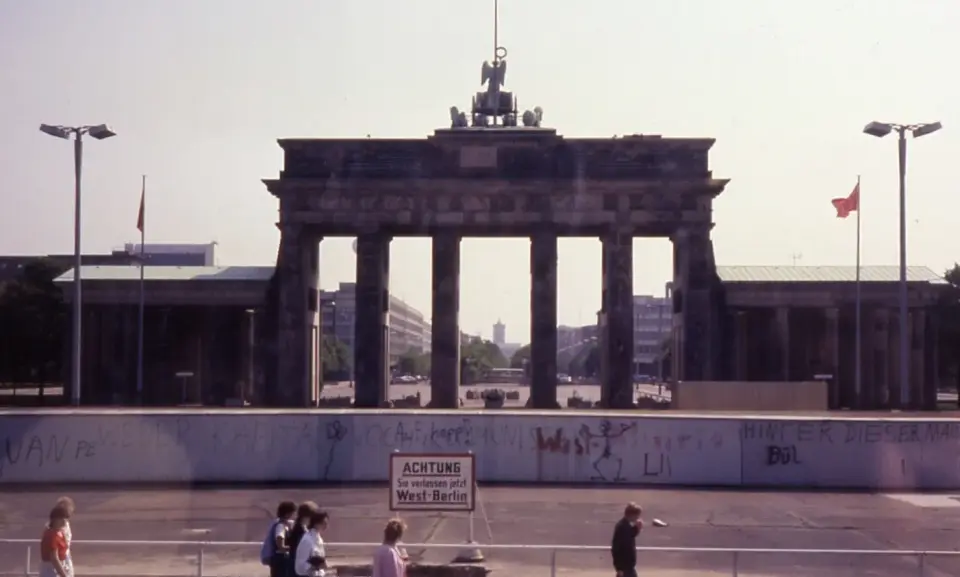
Brandenburg Gate
Berlin's most famous landmark on Pariser Platz, transformed from a symbol of division into a symbol of unity.
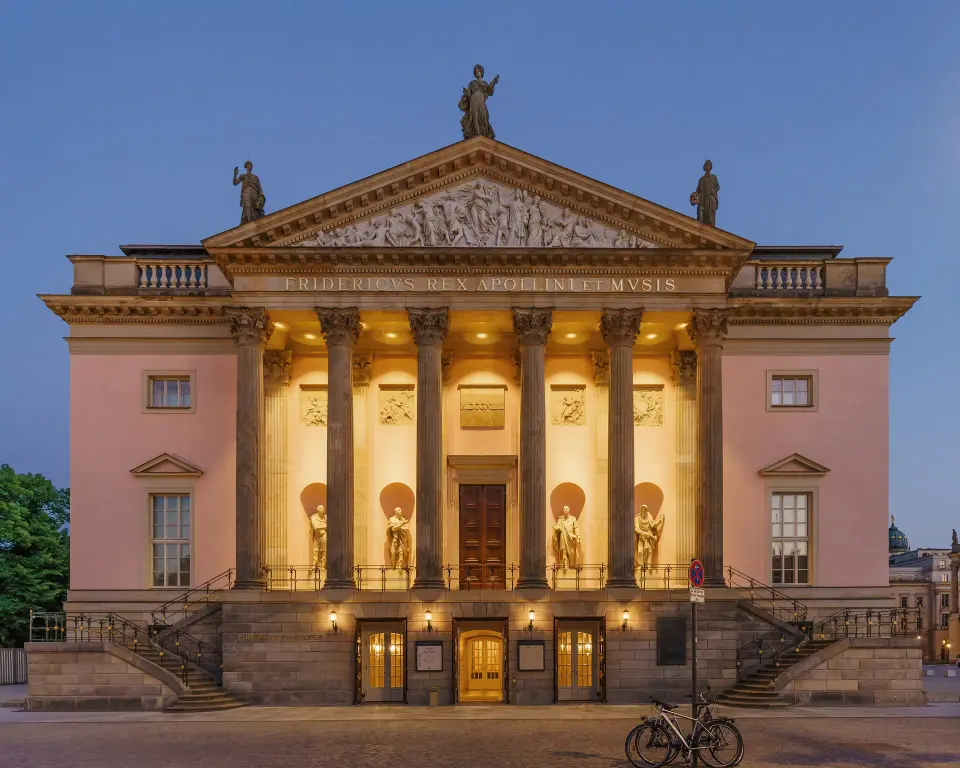
Berlin State Opera
Frederick's magnificent opera house of 1743 on the grand avenue Unter den Linden, still one of Europe's most important opera stages.
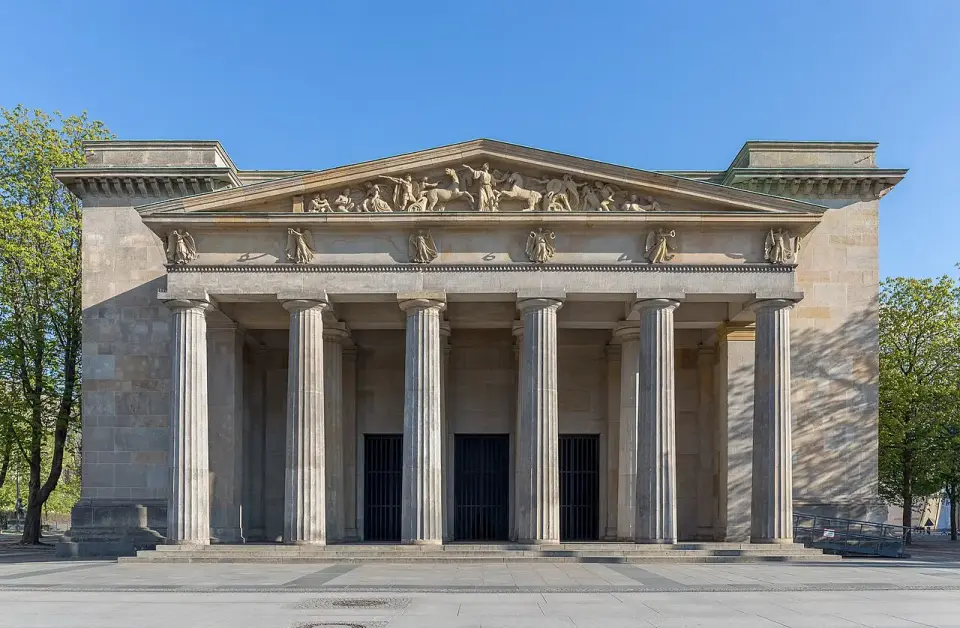
Neue Wache
Schinkel's neoclassical guardhouse on Unter den Linden is today Germany's central memorial to the victims of war and tyranny.
More in Mitte
More attractions in Mitte
Other highlights in the same district that pair well with a visit to Unter den Linden.
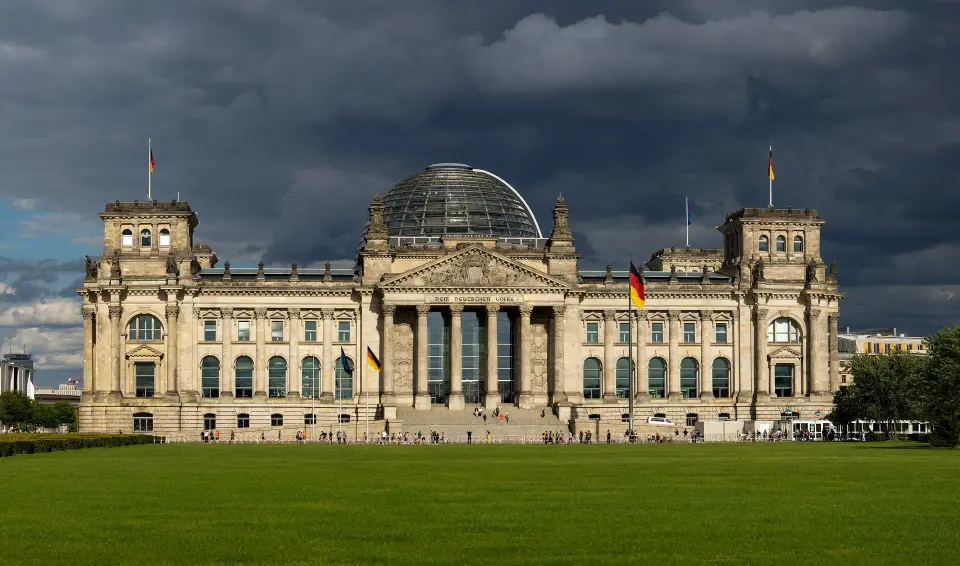
Reichstag Building
Seat of the German Bundestag, with a walk-up glass dome by Norman Foster and views over the government quarter.
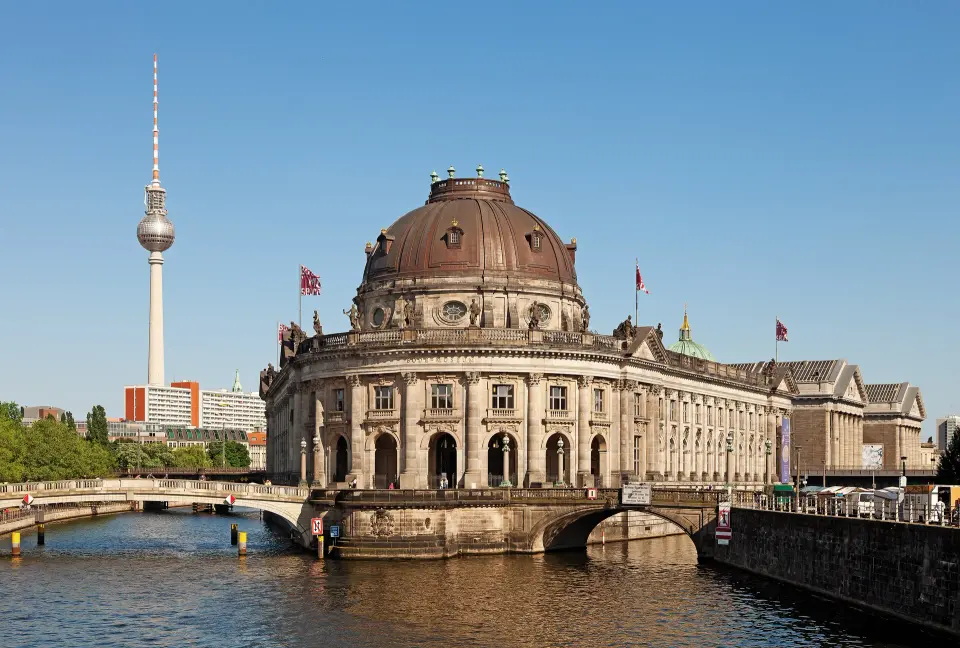
Museum Island
Five world-famous museums on an island in the Spree, a UNESCO World Heritage Site since 1999.
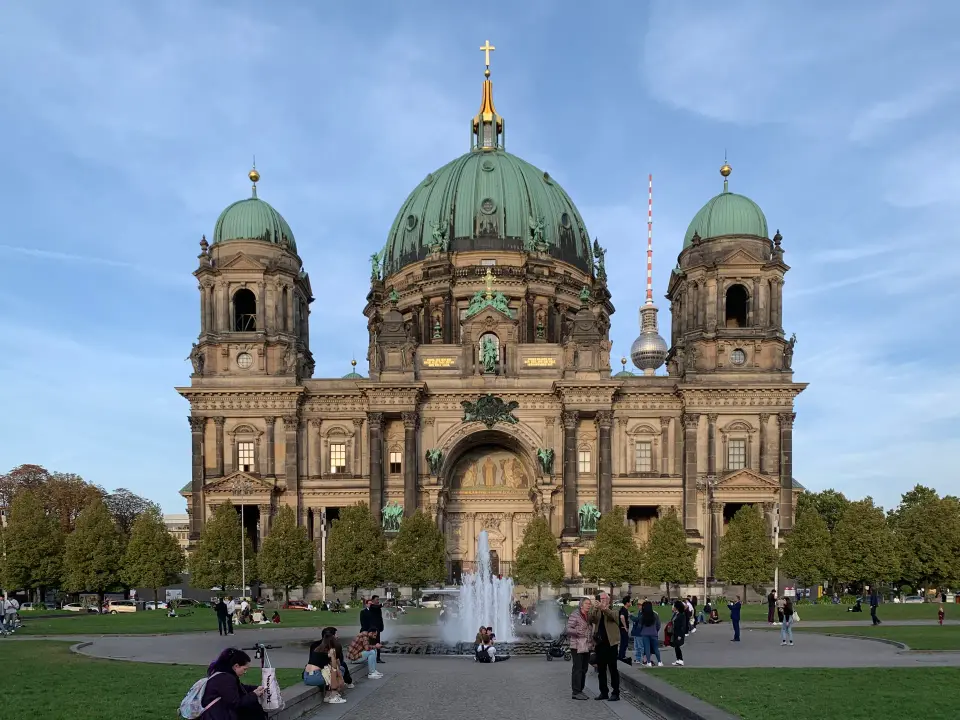
Berlin Cathedral
A monumental Protestant church on the Lustgarten with a walk-up dome and views over Museum Island.
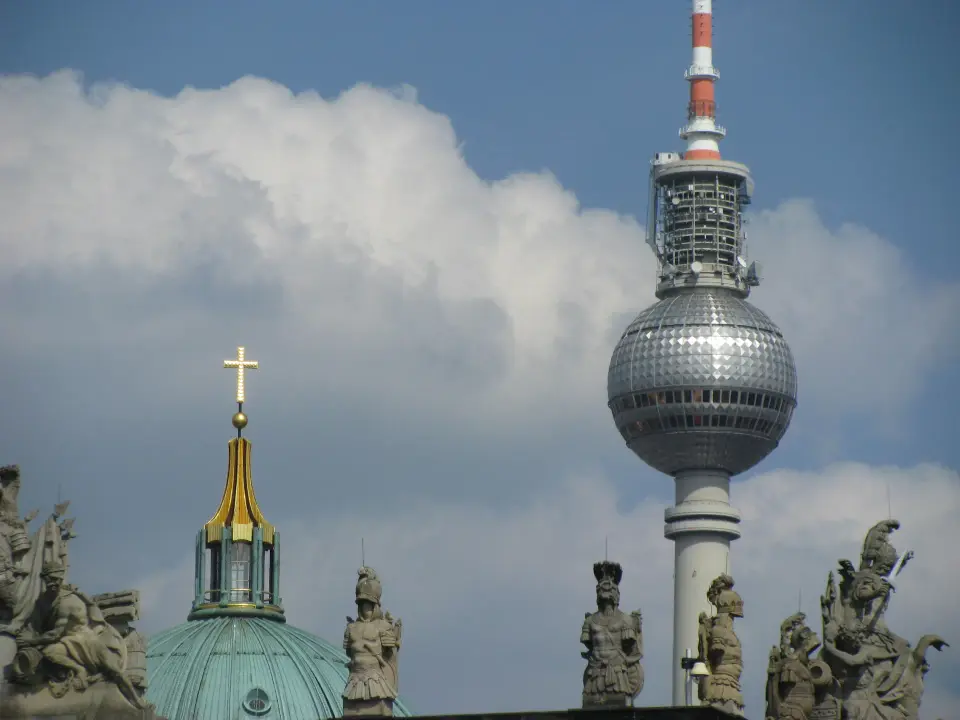
Berlin TV Tower
At 368 meters the tallest structure in Germany, with an observation deck and a revolving restaurant.
Stay in the neighborhood
Find hotels in Mitte
Planning a visit to Unter den Linden? Here you'll find places to stay in the Mitte district.