Raw · Creative
Kreuzberg
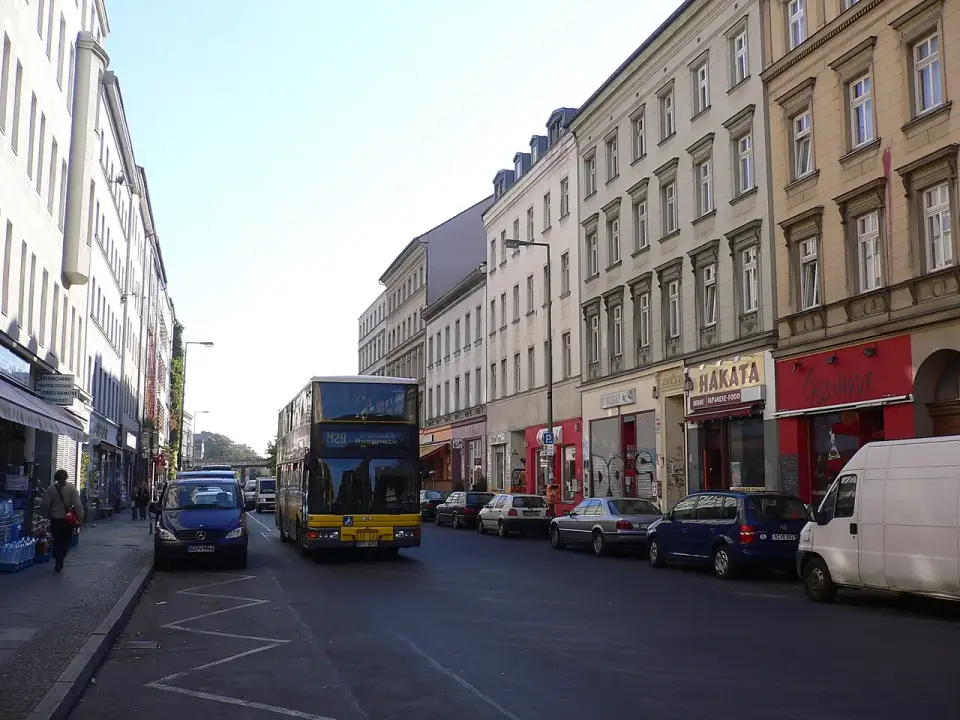
No other district stands for the rough, creative Berlin quite like Kreuzberg. Around Kottbusser Tor, Oranienstraße and the Landwehrkanal, corner shops, record stores, bars and snack stands line up one after another, with murals covering entire building walls in between. With the Topography of Terror, one of the most important sites of remembrance for Nazi history lies right here, next to the former Wall strip.
Eating in Kreuzberg is varied and often inexpensive: from Turkish snack bars and vegan spots to the legendary street food at Maybachufer, where the Turkish Market takes place twice a week. In the evening, life shifts to the clubs and pubs around Wrangelstraße and Schlesisches Tor. The Wrangelkiez is one of Berlin's liveliest neighborhoods, packed with bars, cafés and corner shops. Stay here and you get the unfiltered Berlin, some noise included, but you are right in the thick of it.
A hill, a wall and two postcodes
Kreuzberg takes its name from a 66-meter hill in what is now Viktoriapark. On the summit, Schinkel’s cast-iron National Monument to the Wars of Liberation has stood since 1821, crowned by an Iron Cross. The district itself was only created in 1920 and was first called Hallesches Tor, then Kreuzberg from 1921. Since 2001 it has formed a single borough together with Friedrichshain, even though the two neighborhoods lay on opposite sides of the former border.
During the division, Kreuzberg sat on the edge of West Berlin, surrounded by the Wall on three sides. Rents were low and many old buildings fell into disrepair. From the 1960s onward, many labor migrants from Turkey found homes here, later joined by students, artists and the squatter scene of the 1980s. Berliners still like to tell apart “SO 36” in the east, around Oranienstraße and the Wrangelkiez, from the more middle-class “61” in the west, around Bergmannstraße and Chamissoplatz. The names come from old postal districts and describe two quite different temperaments.
The streets and squares that define the neighborhood
In the western part, Bergmannstraße is the best-known address, with the Marheineke Markthalle on Marheinekeplatz. A few steps further on is Chamissoplatz, one of the best-preserved late-19th-century squares in the city, with gas lamps and an old public toilet kiosk known as the “Café Achteck”. Mehringdamm connects this part with Hallesches Tor.
In the east, Kottbusser Tor, Oranienstraße and Adalbertstraße set the tone, along with Paul-Lincke-Ufer on the Landwehrkanal and the Graefekiez between the canal and the Hasenheide. In the evening, crowds gather on the Admiralbrücke over the canal. Creative businesses have settled around Moritzplatz and Prinzenstraße, and from the Spree bank near Schlesisches Tor you look across to Friedrichshain.
What to see and do in Kreuzberg
For history, the northern edge is the key area: the Topography of Terror sits on the site of the former Gestapo headquarters, the Martin-Gropius-Bau is right next door, and a few minutes away is Checkpoint Charlie on the border with Mitte. On Lindenstraße stands the Jewish Museum with Daniel Libeskind’s zigzag building, and on Alte Jakobstraße the Berlinische Galerie, devoted to art from Berlin. You can spot the German Museum of Technology at Gleisdreieck from the elevated train by the airplane on its roof.
Outdoors, the Park am Gleisdreieck on former railway land and Viktoriapark, where an artificial waterfall runs down the slope in summer, are both worth your time. From the top you can see across the rooftops all the way to Mitte. Heading east, the Oberbaum Bridge takes you to the East Side Gallery.
Food, markets and nightlife
Kreuzberg is above all a district of snack stands, markets and market halls. Every Thursday evening, Markthalle Neun on Eisenbahnstraße hosts Street Food Thursday. On Mehringdamm, Curry 36 has been one of the city’s best-known addresses for decades, and the queue outside is part of the streetscape. The Turkish Market on Maybachufer is technically on the Neukölln side of the canal, but it is only a bridge away from Kreuzberg and runs on Tuesdays and Fridays (as of October 2026). For more on the markets, see street food markets, and for the snack classics, best döner and currywurst spots. For the evening, the corner pubs in SO 36 are a good place to start; see pub culture.
Green spaces and water
The Landwehrkanal is the neighborhood’s real main street. You can walk along its banks almost the whole way, from Urbanhafen past Paul-Lincke-Ufer to Görlitzer Ufer. To the south lie the Hasenheide and Tempelhofer Feld, both easy to reach on foot.
Getting there and around
The U1 and U3 run as an elevated railway on viaducts straight through the district, from Möckernbrücke via Hallesches Tor and Kottbusser Tor to Schlesisches Tor. That ride alone is a small sightseeing tour. The U6 stops at Hallesches Tor, Mehringdamm and Platz der Luftbrücke, the U7 at Mehringdamm, Gneisenaustraße and Südstern, and the U8 at Moritzplatz, Kottbusser Tor and Schönleinstraße. S-Bahn lines S1, S2, S25 and S26 stop at Anhalter Bahnhof and Yorckstraße. Bus M29 runs along Oranienstraße. Depending on where you start, the Hauptbahnhof is 15 to 25 minutes away.
Who Kreuzberg suits
Anyone who likes eating outdoors, browsing markets and spending evenings in pubs or by the canal. Museum-goers get their money’s worth too, because the Jewish Museum, the Museum of Technology and the Topography of Terror are close together. If you need quiet at night, look for a place in the western part around Bergmannstraße or Chamissoplatz rather than around Kottbusser Tor.
Half a day on foot
Start at Platz der Luftbrücke U-Bahn station and climb up through Viktoriapark to the monument. From there, head via Großbeerenstraße and Chamissoplatz to Bergmannstraße and into the Marheineke Markthalle. Continue past Südstern into the Graefekiez and down to the Landwehrkanal. Following the bank, you reach the Admiralbrücke and Paul-Lincke-Ufer. To finish, Reichenberger Straße leads to Kottbusser Tor and into Oranienstraße. It’s about five kilometers, a good afternoon with breaks. On a Tuesday or Friday, a short detour to the market on Maybachufer is worth it.
Highlights on the ground
Attractions in Kreuzberg
The key landmarks and spots you shouldn't miss in Kreuzberg.
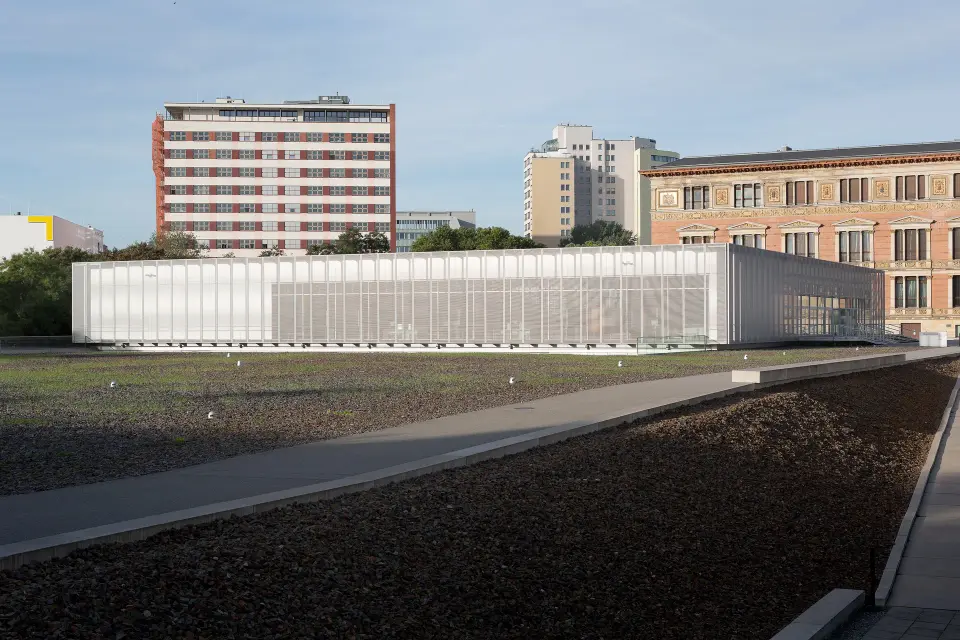
Topography of Terror
A documentation center on the former Gestapo grounds tracing the history of Nazi terror.
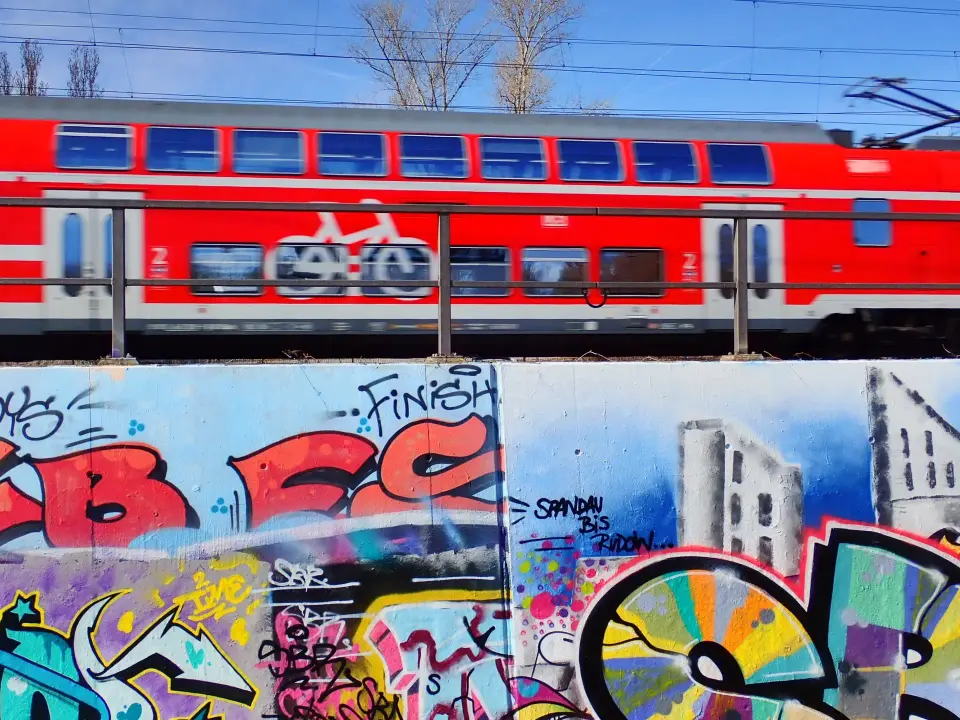
Park am Gleisdreieck
An expansive city park on former railway land between Kreuzberg and Schöneberg, blending an industrial past with modern leisure use.
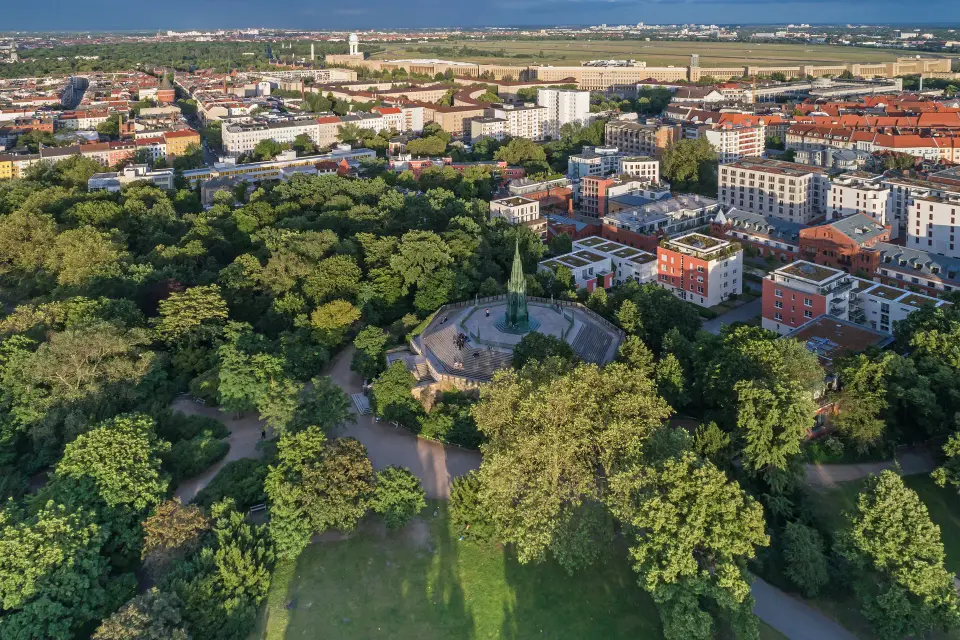
Viktoriapark
A green hilltop park on the 66-meter Kreuzberg, with Schinkel's national monument, an artificial waterfall and wide views over the city.
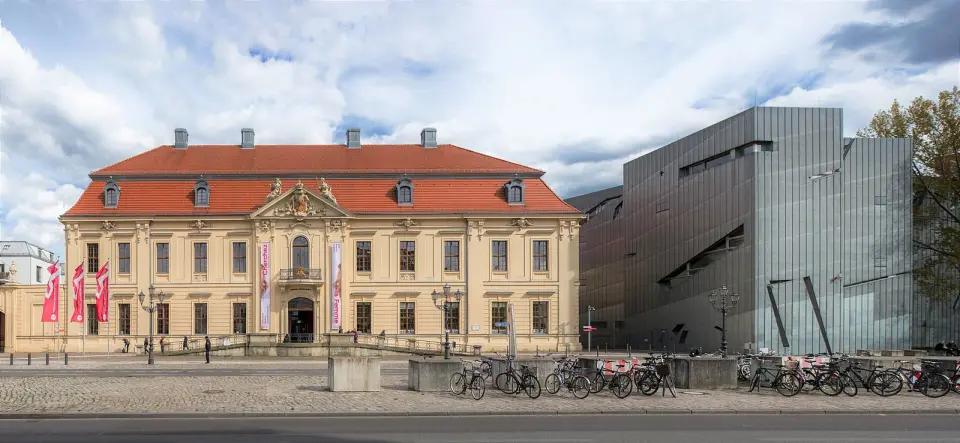
Jewish Museum Berlin
A museum of Jewish history and culture in Germany, housed in Daniel Libeskind's zigzag building in Kreuzberg.
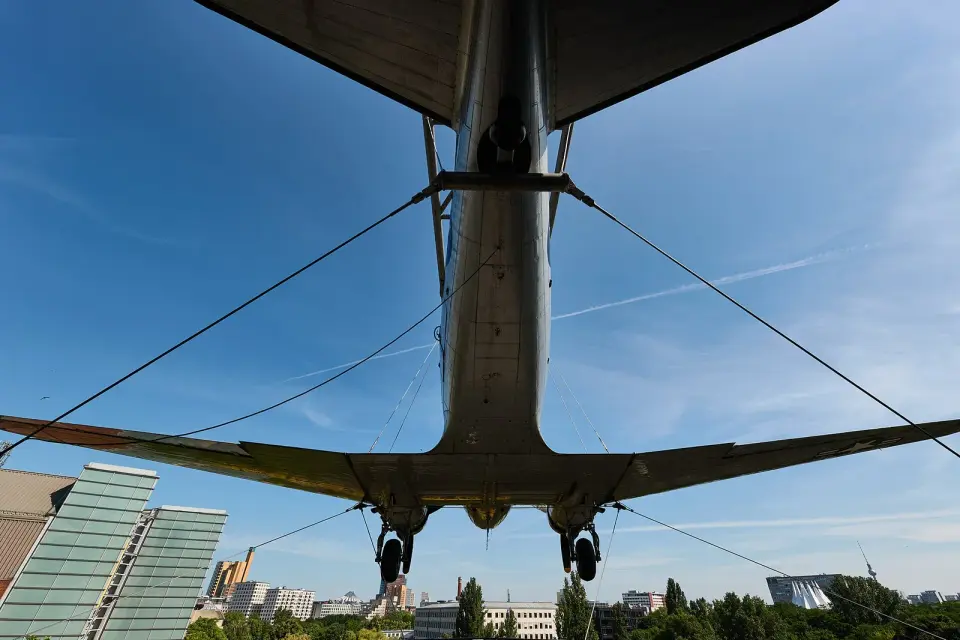
German Museum of Technology
A huge museum of technology on the old Anhalter freight yard, with locomotive sheds, an aircraft hall and the "Raisin Bomber" on the roof.
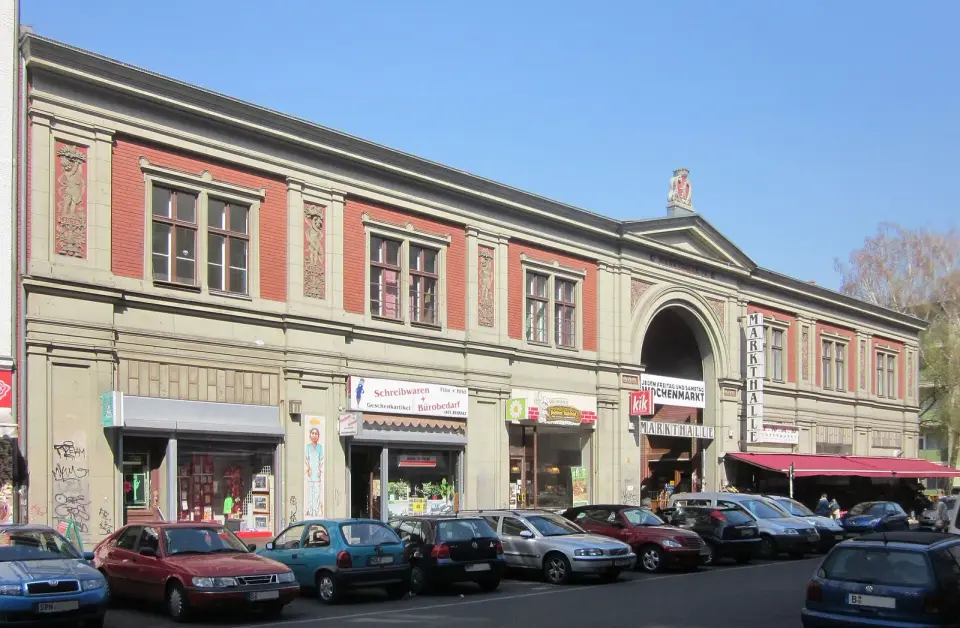
Markthalle Neun
A historic market hall from 1891 in Kreuzberg, now known for regional food, a weekly market and Street Food Thursday.
Hungry & thirsty
Food & drink in Kreuzberg
Where to eat, drink and take a break in the neighborhood.
Stay in the neighborhood
Where to sleep in Kreuzberg?
A fit for travelers looking for subculture, street food and nightlife who don't mind a bit of big-city noise.
Tours & tickets in Kreuzberg
Guided tours, tickets and experiences to match Kreuzberg. Bookable directly via GetYourGuide.
* Tours & tickets from GetYourGuide. If you book through the markers we earn a small commission at no extra cost to you.
Keep exploring
All Berlin neighborhoods at a glance, or jump straight to the attractions and food & drink.