Square · History · Landmark
Alexanderplatz
East Berlin's great square for traffic and gatherings, with the World Clock, GDR modernism and one of the city's most important transit hubs.
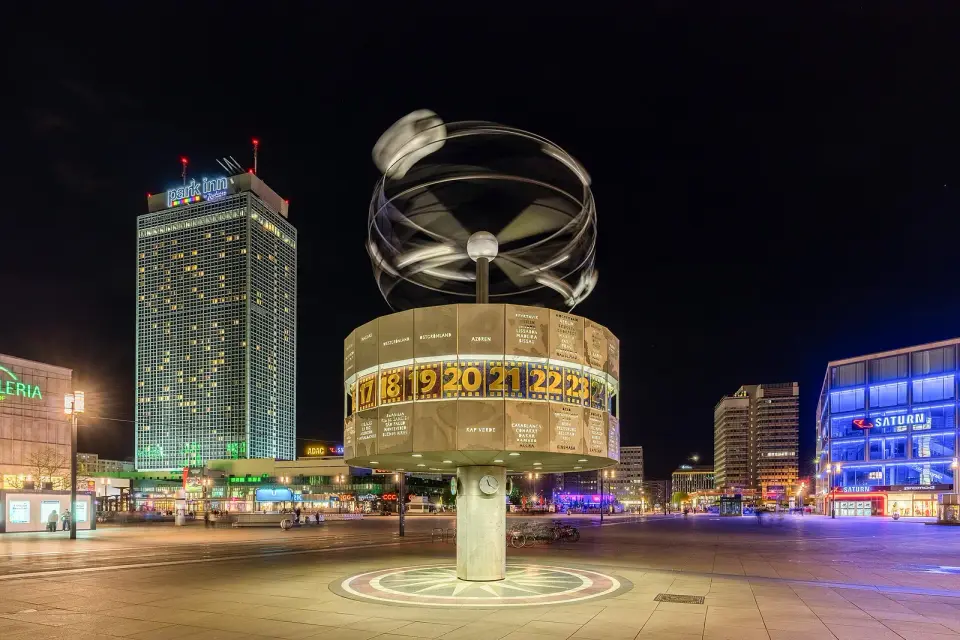
Alexanderplatz, which Berliners mostly just call "Alex," has carried its name since 1805. That year the Russian tsar Alexander I visited the city, and the former Ochsenmarkt (ox market) outside the Königstor gate was renamed in his honor. Around 1900, with its city rail station, department stores and police headquarters, the square grew into one of the loudest places in the metropolis. In 1929 Alfred Döblin gave it a literary monument with his novel "Berlin Alexanderplatz."
What mainly survives from the prewar square are two office buildings by Peter Behrens, the Alexanderhaus and the Berolinahaus from the early 1930s. Almost everything else reflects GDR planning of the 1960s. The square was greatly enlarged and turned into a pedestrian zone, and around it rose the Haus des Lehrers (House of the Teacher) with its wraparound mosaic frieze, the Haus des Reisens (House of Travel) and the hotel tower that now operates as the Park Inn. The Urania World Clock followed in 1969 and the Fountain of International Friendship in 1970. Both are still popular meeting points.
November 4, 1989 carries real historical weight. On that day hundreds of thousands of people gathered here for the largest demonstration in GDR history that was not organized by the state, five days before the Wall fell. Today Alex is above all a transit hub. The S-Bahn, three U-Bahn lines, several tram lines and buses all meet here, so it is busy at every hour of the day.
The square is not pretty in the classic sense, but it tells you a lot about the city. Walk across the wide open space with your eyes open and you will see Weimar-era modernism, socialist urban planning and post-reunification department store architecture side by side. The TV Tower, St. Mary's Church, the Neptune Fountain and the Red City Hall are only a few minutes away, which makes Alex a good starting point for a walk through the historic center.
From cattle market to transit hub
Before the square was named after a tsar, it lay outside the medieval city wall in front of the Georgentor, a gate later called the Königstor (King’s Gate). Oxen and wool were traded here, and soldiers drilled on the open ground. When the Stadtbahn, the elevated east-west railway, was built, the Alex got its own station on brick viaducts in 1882, and from then on it changed quickly. Large department stores such as the one run by Hermann Tietz drew shoppers from all over the city, and on the southeastern edge stood the massive police headquarters, known to Berliners as “die Rote Burg” (the Red Castle).
In the late 1920s the city held a competition to redesign the square. Only the two office buildings by Peter Behrens were ever built; the rest stayed on paper. World War II destroyed much of the surrounding area. Afterward, the GDR replanned the square as the center of the socialist capital and made it many times larger. The streetcar disappeared for a while, and car traffic was moved into tunnels and onto wide ring roads.
After 1990 the architect Hans Kollhoff drew up a master plan with a ring of high-rises. For decades it was barely put into practice, and only recently have new towers started going up around the square. So the Alex is still a construction site in the literal sense, and if you come back in a few years, some of it will look unfamiliar.
What to look out for
- Haus des Lehrers (House of the Teacher): Walter Womacka’s mosaic band wraps around the entire building at the level of the second and third floors. It shows scenes of work, family and science in the style of GDR modernism. The best view is from Alexanderstraße or from the start of Karl-Marx-Allee.
- Haus des Reisens (House of Travel): Above the entrance hangs a large copper relief titled “Man Conquers Time and Space.”
- Berolinahaus and Alexanderhaus: The two Behrens buildings by the station show how the square might have looked under the plans of the Weimar era.
- Alexanderplatz station: The hall above the S-Bahn tracks is a good place to spend a few minutes watching people come and go.
Planning your visit
Most visitors arrive at the Alex or change trains here anyway. By S-Bahn you reach the square from Hauptbahnhof in about ten minutes and from Ostkreuz in about eight. The U5 links it directly with Museumsinsel, Unter den Linden and Brandenburger Tor, while the U8 runs north toward Wedding and south through Kreuzberg to Neukölln. Several streetcar lines start or stop on the north side of the square.
In the morning the Alex is mostly a place people pass through. It fills up toward evening and on weekends. During Advent a large Christmas market sets up here, and in the fall there is often a funfair. On those days much of the open space is taken up.
Tips
- For the classic shot of the World Clock and the TV Tower, stand on the northwest side of the clock and point your camera south.
- If you want an overview, go up the TV Tower. Only from above does it become clear how big the open space really is.
- Keep an eye on your valuables in the crowds. As at every major transfer point, pickpockets are about.
- The escalators and passageways between the U-Bahn lines are long. When changing trains, allow a few minutes more than the journey planner suggests.
Nearby
To the southwest, beyond the railway tracks, the path leads past the Neptune Fountain to the Rotes Rathaus (Red City Hall) and on into the Nikolaiviertel. The Marienkirche (St. Mary’s Church), one of the oldest churches in the city, stands right at the foot of the TV Tower. Along Spandauer Straße you reach the Berliner Dom and Museum Island in ten minutes. To the east, Karl-Marx-Allee begins with its buildings in the style of socialist classicism. For an overview of the whole district, see our page on Berlin-Mitte.
Frequently asked
What to know about Alexanderplatz
Why is it called Alexanderplatz?
The square was named in 1805 after the Russian tsar Alexander I, who visited Berlin that year. Before that it was called Ochsenmarkt (ox market), because livestock was traded there.
Which lines stop at Alexanderplatz?
Alexanderplatz station is served by S-Bahn lines S3, S5, S7 and S9, U-Bahn lines U2, U5 and U8, and regional trains. Several tram and bus lines also stop around the square.
What does the World Clock show?
Installed in 1969, the Urania World Clock shows the time in different time zones around the world on a rotating cylinder, each labeled with city names. A stylized model of the planets circles above it.
Is Alexanderplatz worth a longer stay?
On its own, half an hour to an hour is usually enough. The square gets interesting when you combine it with the TV Tower, St. Mary's Church, the Red City Hall and the Nikolai Quarter, all within walking distance.
Nearby & related
Pairs well with this
More attractions that combine nicely with a visit to Alexanderplatz.
Berlin TV Tower
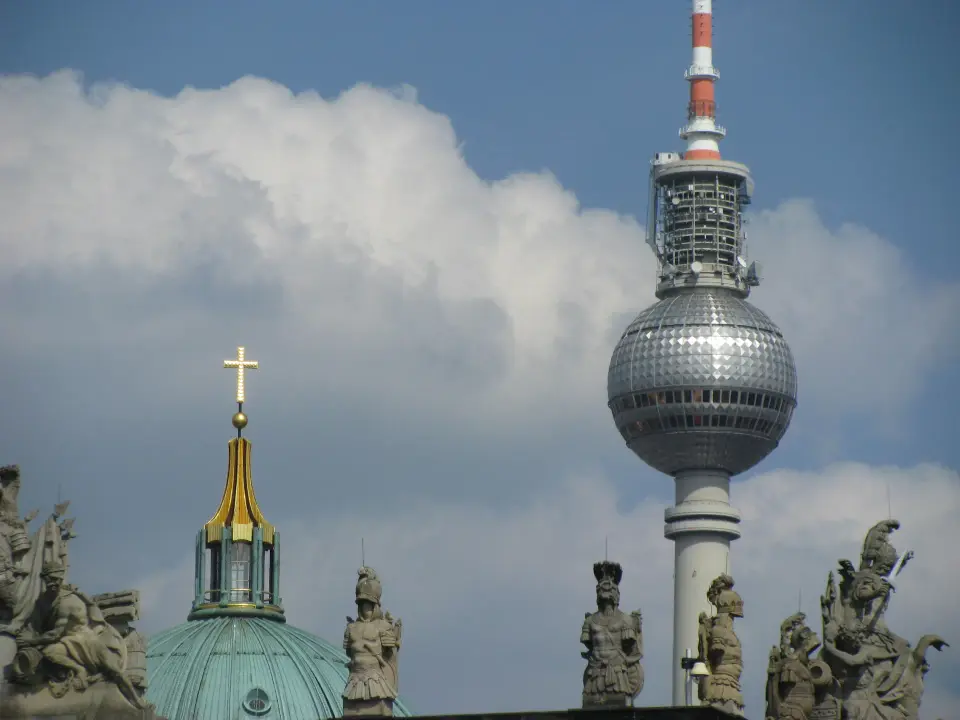
At 368 meters the tallest structure in Germany, with an observation deck and a revolving restaurant.
Rotes Rathaus
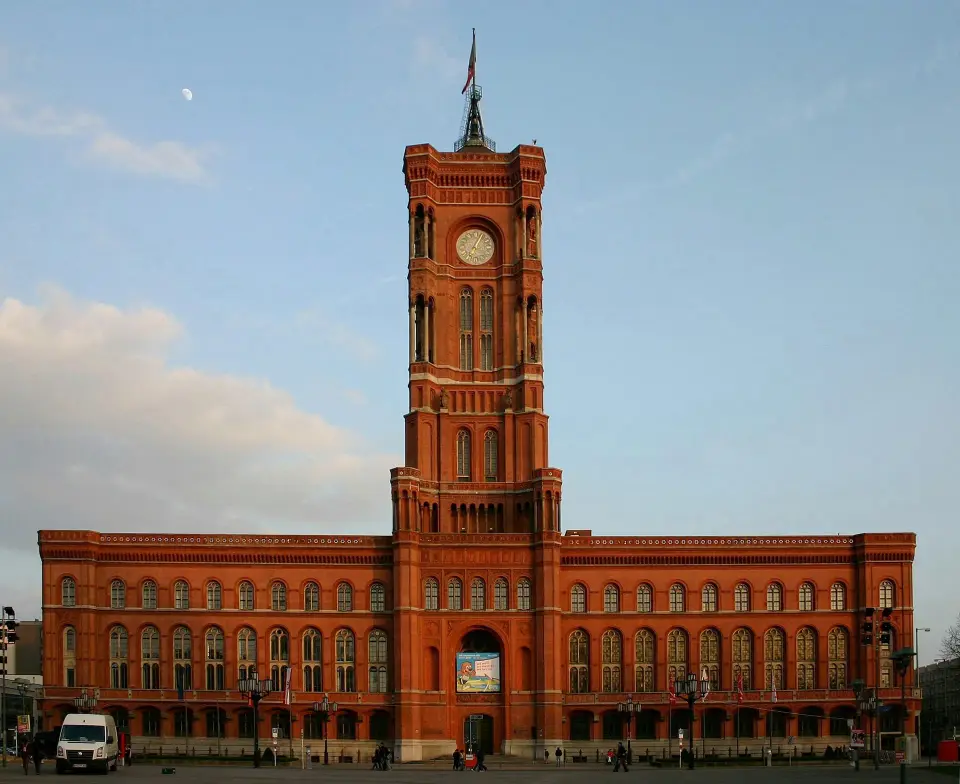
Berlin's striking brick city hall and seat of the Governing Mayor in the heart of the historic center.
Nikolai Quarter
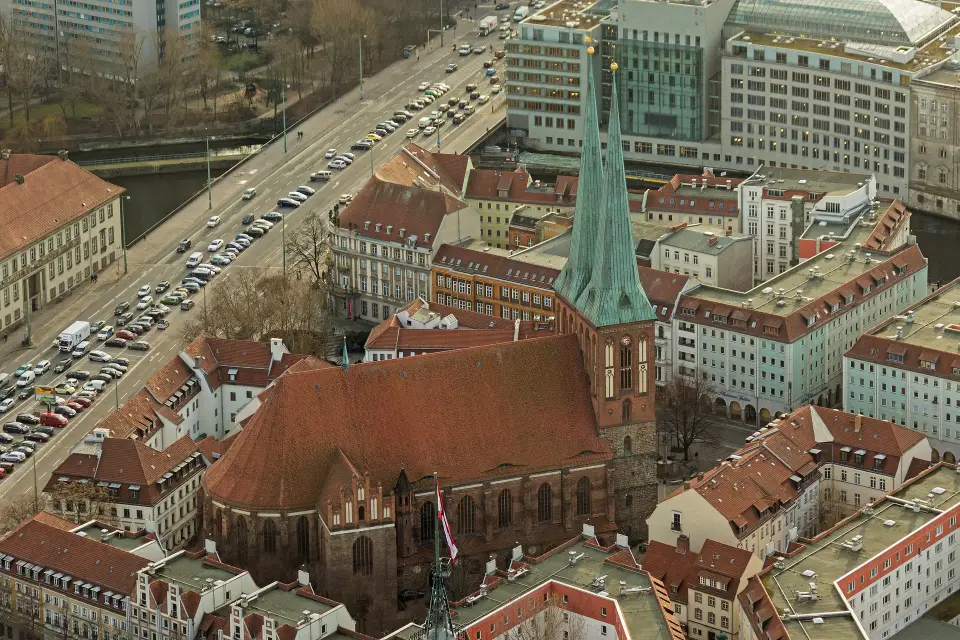
A reconstructed old town around the Nikolaikirche, with narrow lanes and views of the Spree.
More in Mitte
More attractions in Mitte
Other highlights in the same district that pair well with a visit to Alexanderplatz.
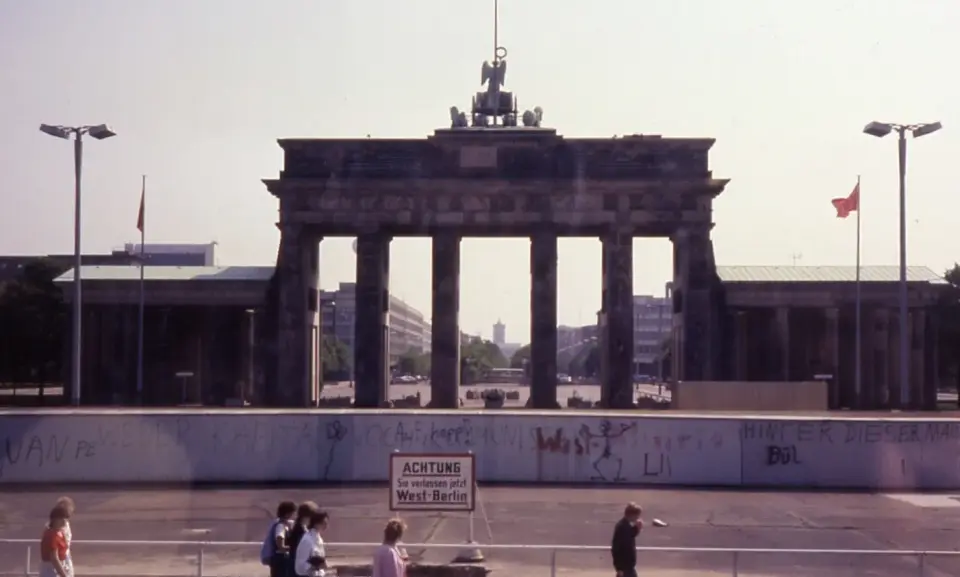
Brandenburg Gate
Berlin's most famous landmark on Pariser Platz, transformed from a symbol of division into a symbol of unity.
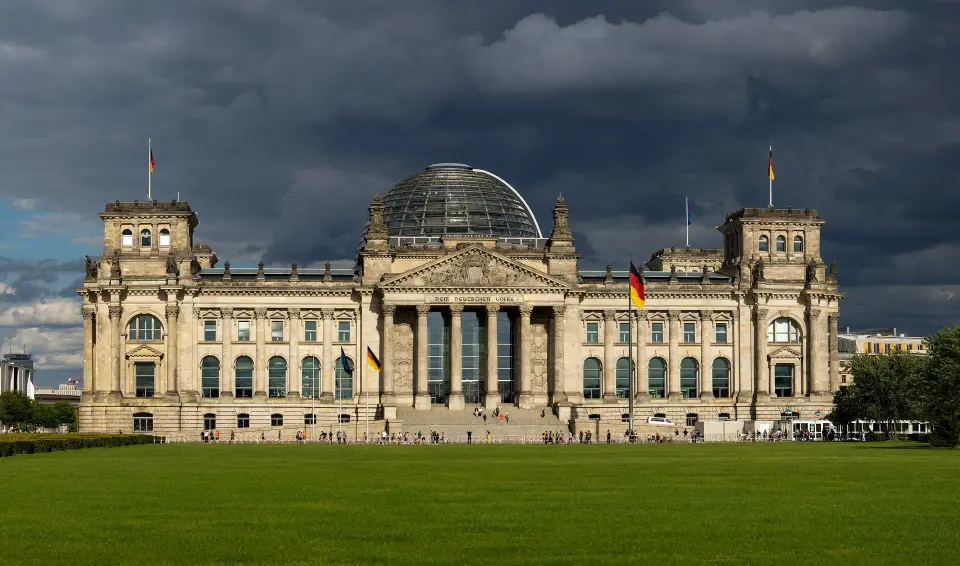
Reichstag Building
Seat of the German Bundestag, with a walk-up glass dome by Norman Foster and views over the government quarter.
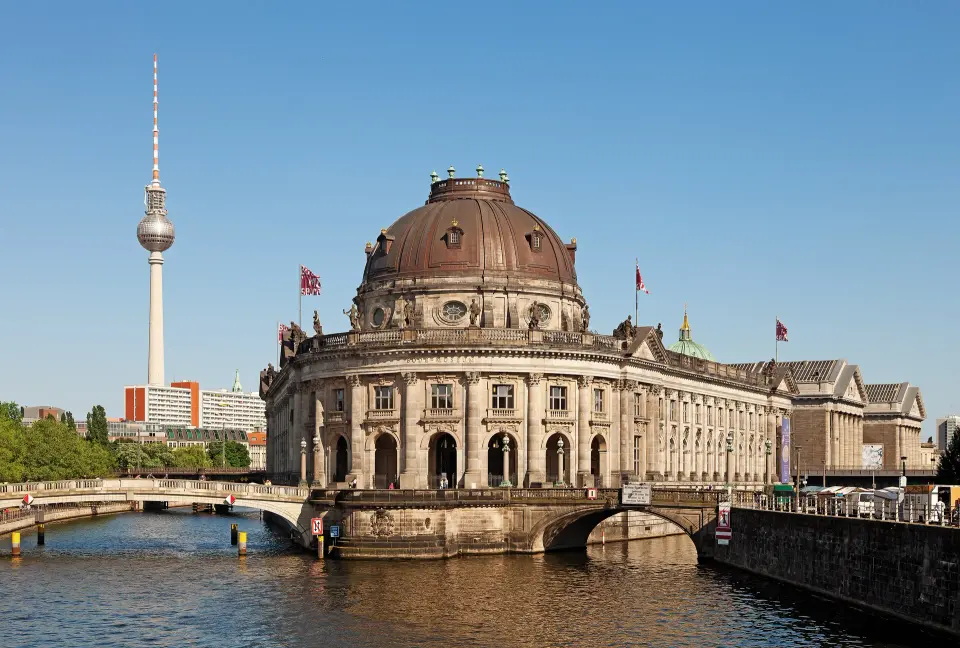
Museum Island
Five world-famous museums on an island in the Spree, a UNESCO World Heritage Site since 1999.
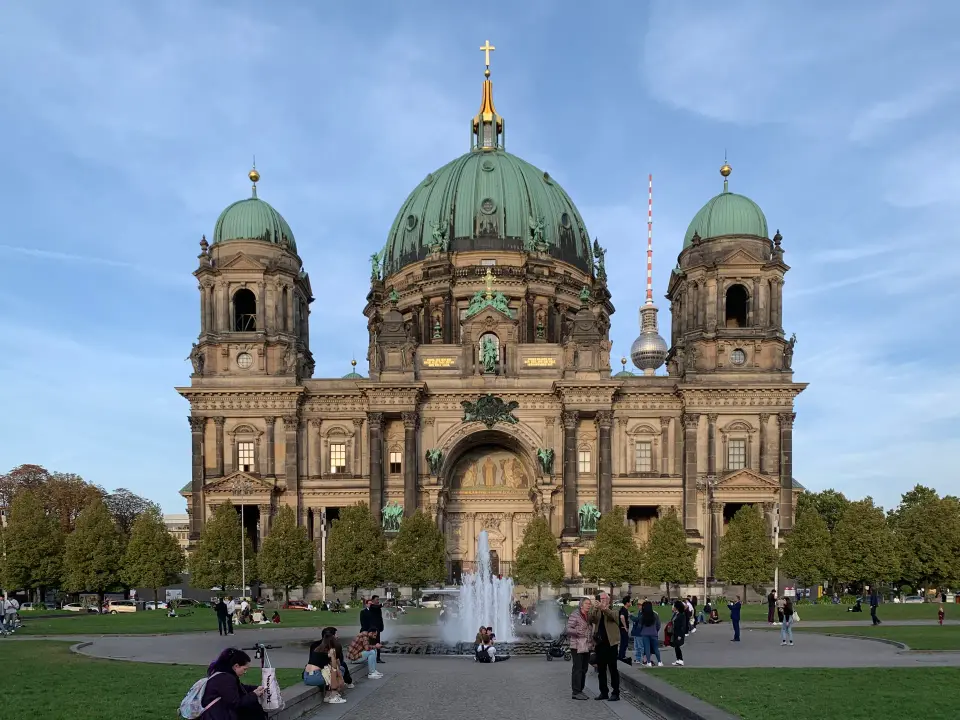
Berlin Cathedral
A monumental Protestant church on the Lustgarten with a walk-up dome and views over Museum Island.
Stay in the neighborhood
Find hotels in Mitte
Planning a visit to Alexanderplatz? Here you'll find places to stay in the Mitte district.