Museum · Art · Architecture
Alte Nationalgalerie
A temple-like museum on Museum Island with 19th-century art, from Caspar David Friedrich to the French Impressionists.
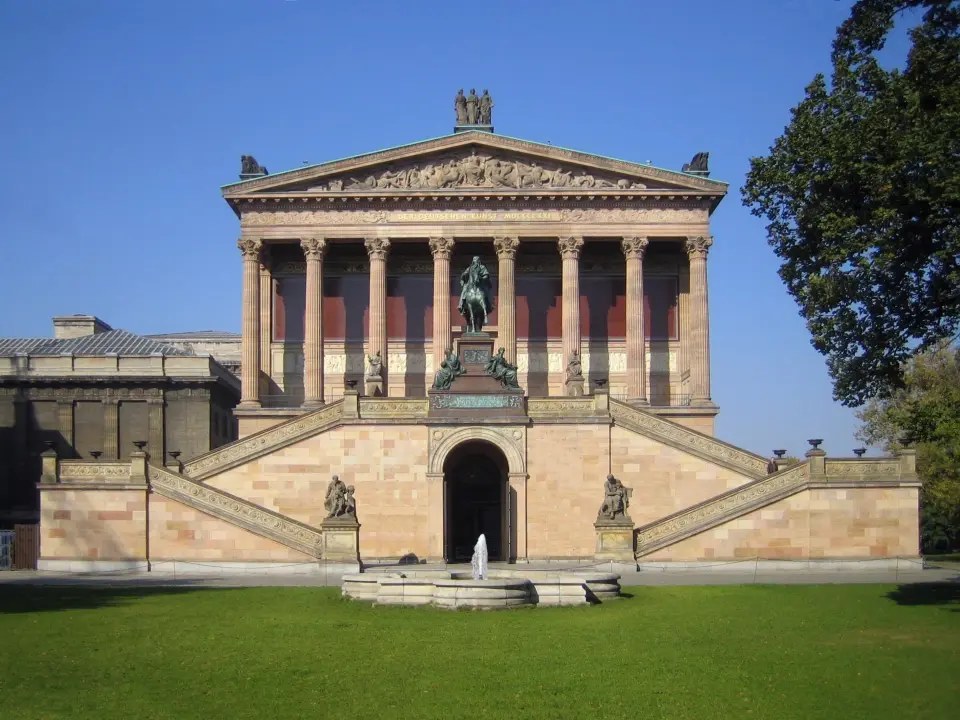
The Alte Nationalgalerie rises like an ancient temple in the middle of Museum Island, a UNESCO World Heritage Site since 1999. The building went up between 1867 and 1876 to designs by Friedrich August Stüler, carried out after his death by Johann Heinrich Strack. The Corinthian colonnade on its high base blends neoclassicism with neo-Renaissance and grew out of an idea by King Friedrich Wilhelm IV. The museum opened ceremonially on March 22, 1876, with Kaiser Wilhelm I in attendance.
Inside waits one of the most important collections of 19th-century art in Germany, run by the Staatliche Museen zu Berlin. The three floors are arranged by theme: the Goethe era and Romanticism at the top, Realism and Impressionism in the middle, neoclassicism and modern sculpture below. Highlights include works by Caspar David Friedrich and Karl Friedrich Schinkel, Adolph Menzel's famous paintings of Berlin, and French masters such as Monet, Manet and Renoir, along with sculptures by Auguste Rodin.
After heavy war damage and decades of division, the building was thoroughly restored from 1992 to 2001 and reopened on December 2, 2001 as the first building on Museum Island to return. One particular draw is Johann Gottfried Schadow's famous Princesses Group. To avoid lines, aim for a weekday and combine the visit with the neighboring museums on the island. Booking a timed entry slot online is smart, since weekends get busy.
A collection that began with a bequest
The collection was started by a banker, not a king. In 1861 Joachim Heinrich Wilhelm Wagener left his paintings to the Prussian state, along with the wish that they form a public gallery of contemporary art. That gift became the Nationalgalerie, and the building on Museum Island was put up to house it. The dedication “Der deutschen Kunst” (to German art) still runs above the entrance, and a bronze King Friedrich Wilhelm IV rides on the grand staircase in front.
The French Impressionists only got in against considerable resistance. Around 1900, director Hugo von Tschudi bought works by Manet, Monet and Cézanne, which displeased Kaiser Wilhelm II, who preferred a national art. In the end Tschudi had to leave Berlin. Under the Nazis, many modern works were confiscated as “degenerate,” a loss that still shapes the collection today.
Works to look out for
- Caspar David Friedrich: “The Monk by the Sea” and “Abbey in the Oak Wood” hang side by side as a pair, just as Friedrich exhibited them in 1810. After an extensive restoration, both look brighter than they did for decades.
- Adolph Menzel: His “Flute Concert of Frederick the Great at Sanssouci” depicts the courtly 18th century, while the “Iron Rolling Mill” shows 19th-century industry. Same painter, two very different worlds.
- Arnold Böcklin: A version of “Isle of the Dead,” one of the best-known paintings of Symbolism.
- Max Liebermann and Wilhelm Leibl: German Realism and early modernism, often hung in conversation with the French.
- Édouard Manet: “In the Conservatory,” one of the first French Impressionist works ever acquired by a German museum.
Planning your visit
- Opening hours: Tuesday to Sunday, 10 am to 6 pm, closed on Mondays, with special hours on public holidays (as of October 2026, please check smb.museum before you go).
- Getting there: The U5 stops at Museumsinsel station. From the S-Bahn stations Hackescher Markt and Friedrichstraße it is about a ten-minute walk, and the tram stops at Am Kupfergraben.
- How long: An hour and a half covers the highlights. If you want to see all three floors at a relaxed pace, allow two and a half.
Tips and common mistakes
Start at the top. Take the elevator or the stairs straight up to the third floor with the Romantic painters and work your way down. That way you see Friedrich and Schinkel while you are still fresh, then move on to Impressionism and finally the sculpture on the ground floor.
The Friedrich galleries tend to be the most crowded. If tour groups are packed in there, look at other rooms first and come back later. Pay attention to the building itself, too: a frieze by Otto Geyer runs around the stairwell, showing scenes from German cultural history. The large galleries have benches, an invitation to sit in front of a single painting rather than taking everything in on the move. Afterward you can take a break among the sculptures in the Kolonnadenhof (colonnade courtyard) in front of the museum, which is free to enter.
Nearby
The museum sits in the middle of Museum Island, with the Neues Museum right next door and the Bode-Museum at the northern tip. Berlin Cathedral stands in front of the island, and the DDR Museum is across the Spree. If all that painting leaves you in the mood for modern art, head to the Kulturforum and its Neue Nationalgalerie. For more on the area, see Mitte.
Frequently asked
What to know about Alte Nationalgalerie
What art is on view at the Alte Nationalgalerie?
The museum shows 19th-century art: Romanticism and the Goethe era (Caspar David Friedrich, Schinkel), Realism and Impressionism (Menzel, Monet, Manet, Renoir), plus neoclassicism and modern sculpture with works by Rodin and Schadow.
When was the Alte Nationalgalerie built?
It was built between 1867 and 1876 to plans by Friedrich August Stüler and opened on March 22, 1876. After a restoration running from 1992 to 2001 it was the first building on Museum Island to reopen.
Where is the Alte Nationalgalerie?
It stands in the Mitte district on Museum Island between the elevated railway and Bodestraße, right next to the Pergamon Museum, the Neues Museum and Berlin Cathedral.
Nearby & related
Pairs well with this
More attractions that combine nicely with a visit to Alte Nationalgalerie.
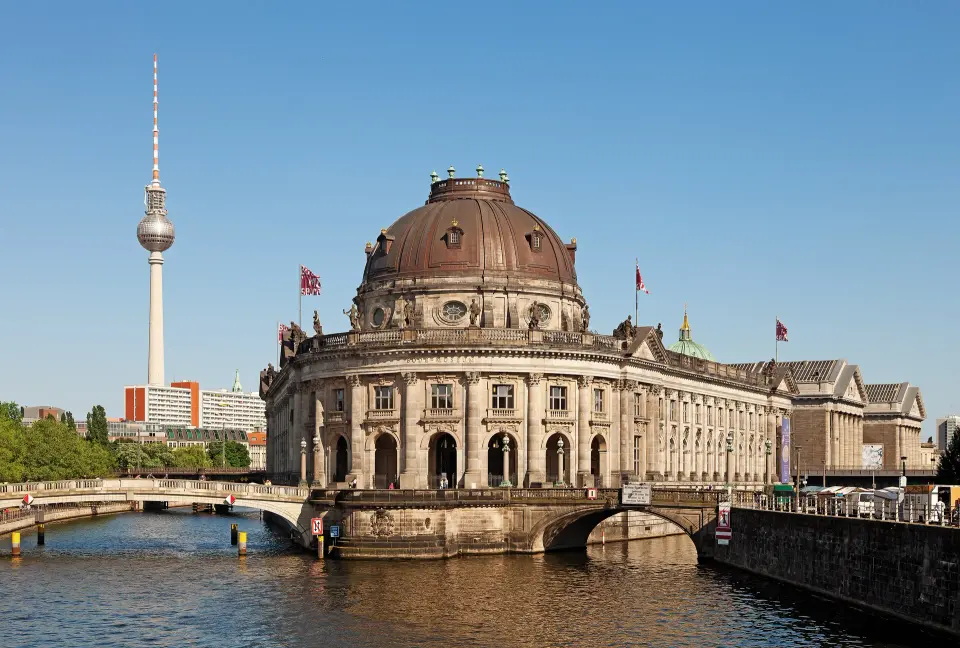
Museum Island
Five world-famous museums on an island in the Spree, a UNESCO World Heritage Site since 1999.
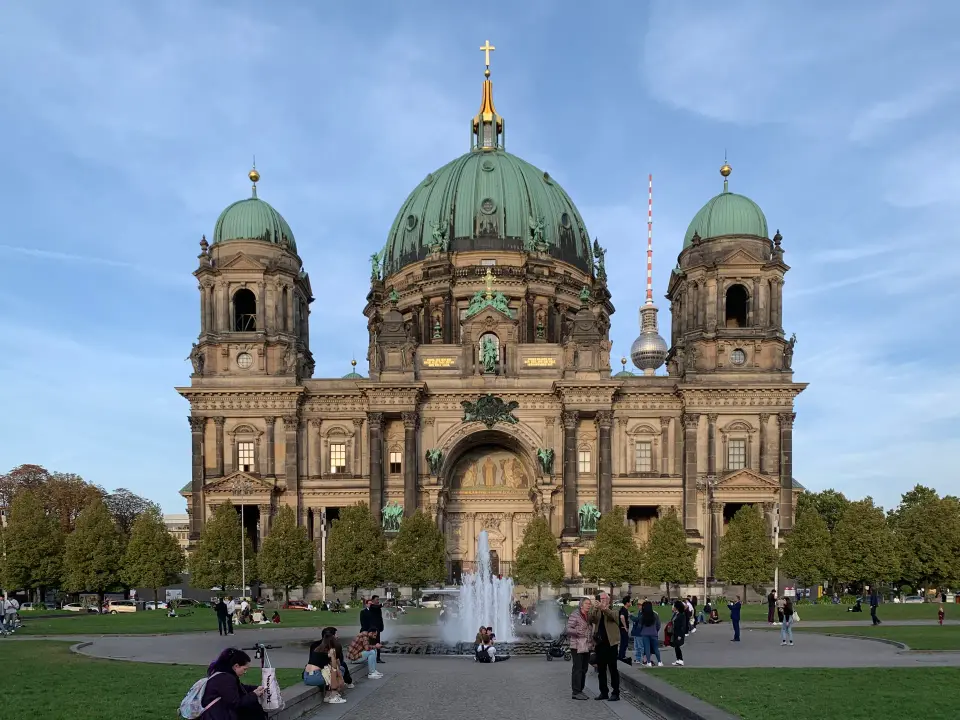
Berlin Cathedral
A monumental Protestant church on the Lustgarten with a walk-up dome and views over Museum Island.
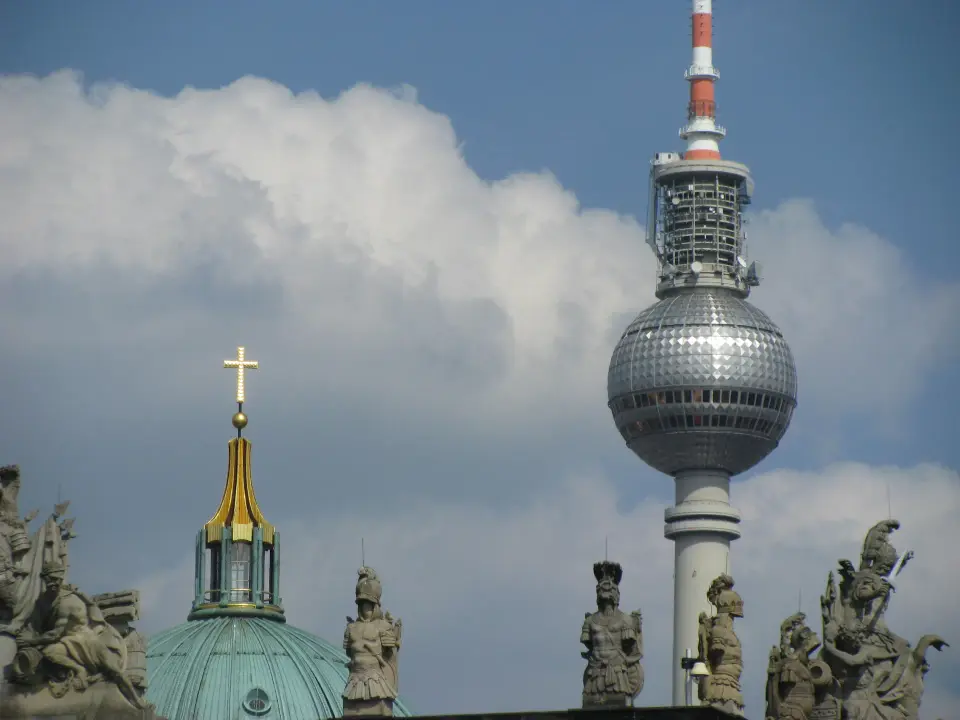
Berlin TV Tower
At 368 meters the tallest structure in Germany, with an observation deck and a revolving restaurant.
More in Mitte
More attractions in Mitte
Other highlights in the same district that pair well with a visit to Alte Nationalgalerie.
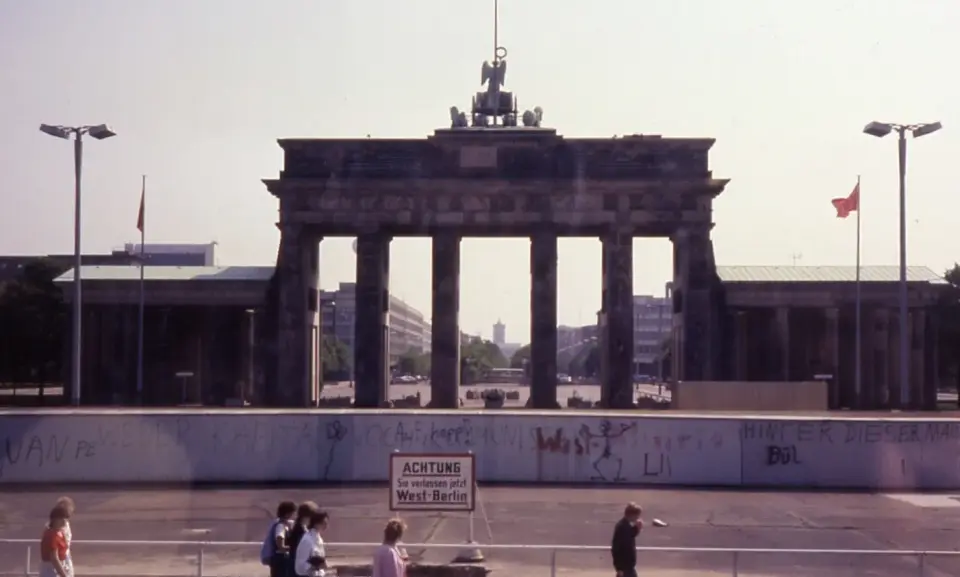
Brandenburg Gate
Berlin's most famous landmark on Pariser Platz, transformed from a symbol of division into a symbol of unity.
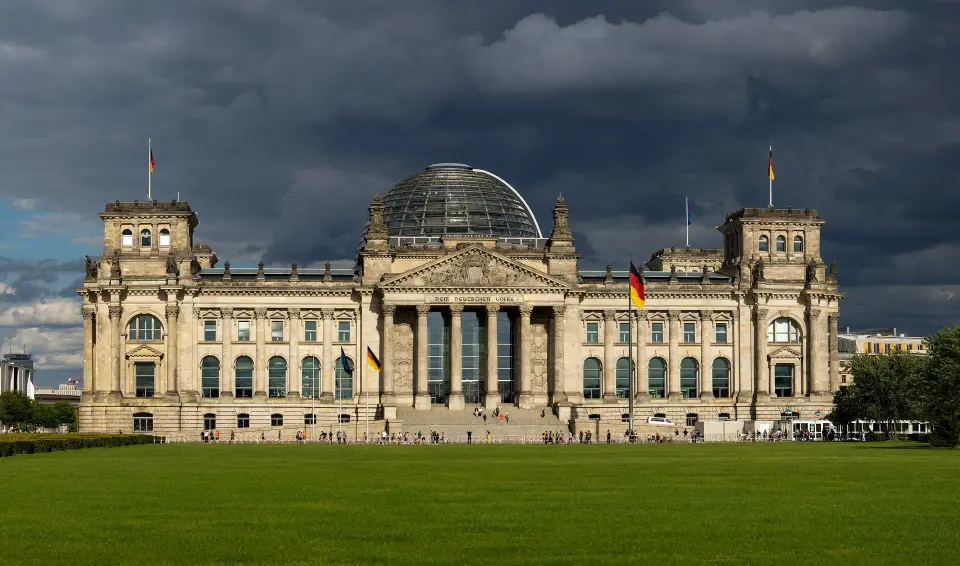
Reichstag Building
Seat of the German Bundestag, with a walk-up glass dome by Norman Foster and views over the government quarter.
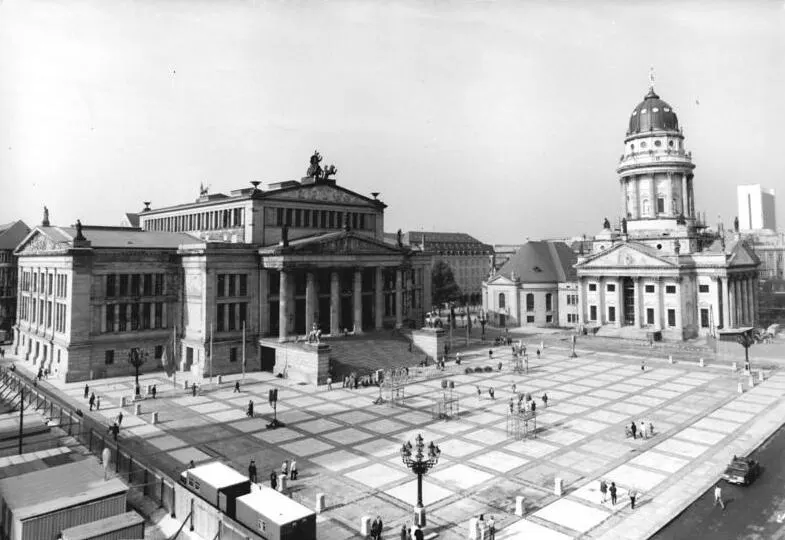
Gendarmenmarkt
One of the most beautiful squares in Berlin, with the Konzerthaus and the German and French cathedrals.
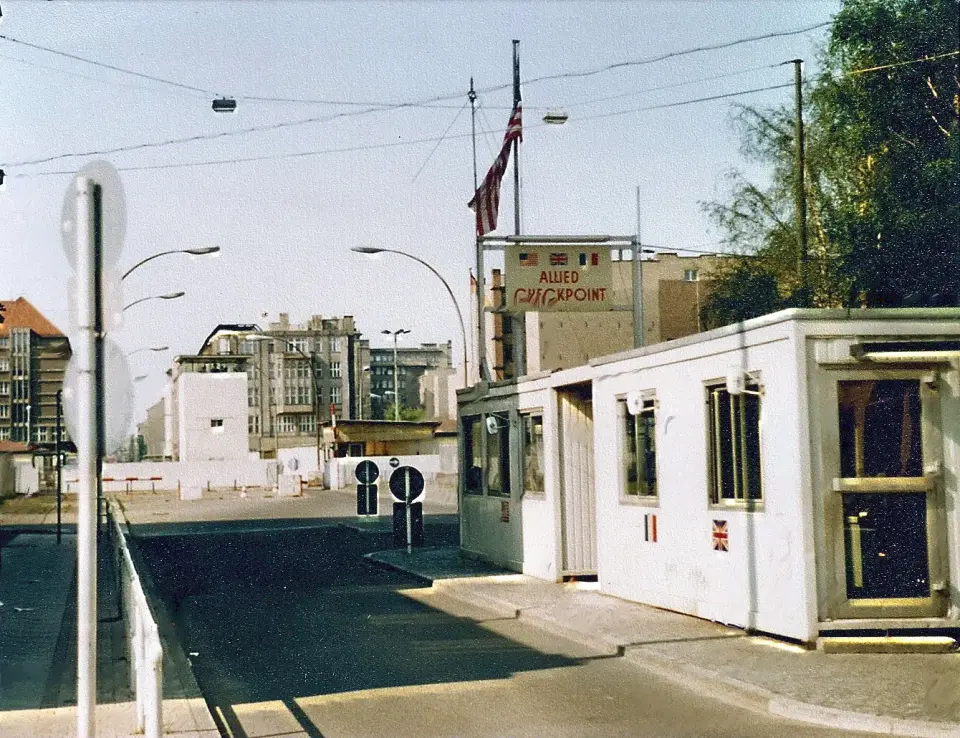
Checkpoint Charlie
The former border crossing between East and West, today a symbol of the Cold War.
Stay in the neighborhood
Find hotels in Mitte
Planning a visit to Alte Nationalgalerie? Here you'll find places to stay in the Mitte district.
Tours & tickets around Alte Nationalgalerie
Guided walks, skip-the-line tickets and experiences around Alte Nationalgalerie. A curated selection from GetYourGuide, bookable directly.
* Tours & tickets from GetYourGuide. If you book through the markers we earn a small commission at no extra cost to you.