Landmark · History
Brandenburg Gate
Berlin's most famous landmark on Pariser Platz, transformed from a symbol of division into a symbol of unity.
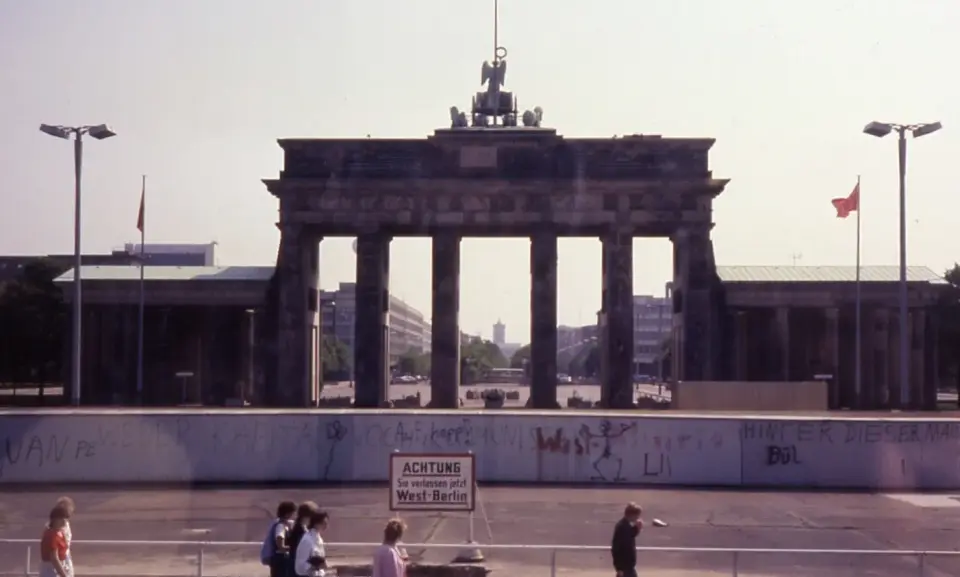
Standing at the western end of Unter den Linden since 1791, the Brandenburg Gate is the city's best-known landmark. Carl Gotthard Langhans modeled it on the Propylaea of the Athenian Acropolis, and it is crowned by the Quadriga bearing Victoria, the goddess of victory. During Germany's division the gate sat in the restricted zone right against the Wall, off-limits to both sides, which is why it became the image of reunification after 1989.
The Pariser Platz in front is now a broad pedestrian square framed by embassies, the Hotel Adlon and the Academy of Arts. It gets busy during the day, full of street performers and tour groups. If you want a quieter mood and better light for photos, come early in the morning or late in the evening when the gate is floodlit.
The gate makes a great starting point for a walk: head west into the Tiergarten toward the Victory Column, south to the Holocaust Memorial, or east along Unter den Linden to Museum Island. Admission is free, since you take in the monument from the outside.
The Quadriga and its travels
The sculpture group on top of the gate is by Johann Gottfried Schadow and was installed in 1793. After Prussia’s defeat, Napoleon had the Quadriga taken down in 1806 and shipped to Paris. It only came back in 1814, and on that occasion the goddess of victory received her staff with the Iron Cross and Prussian eagle, designed by Karl Friedrich Schinkel. The square in front of the gate got its current name at the same time: Pariser Platz, commemorating the Allies’ entry into Paris.
In World War II the Quadriga was almost completely destroyed. Because plaster casts had survived in the West, it could be hammered out anew in 1958 and mounted on the gate in the Soviet sector, one of the few joint efforts across the sector border. The last major restoration of the gate and the sculpture was completed in 2002.
What you see on site
The gate is about 26 meters (85 feet) high and has twelve Doric columns framing five passageways. The middle and widest one was once reserved for the royal family, and everyone else had to use the side passages. Two small gatehouses adjoin it left and right. Since 1994 the northern one has housed the Raum der Stille (Room of Silence), a simple room without religious symbols where you can sit for a few minutes. The southern gatehouse has a tourist information office.
Look at the ground west of the gate: a double row of cobblestones marks where the Wall ran. On this side, Platz des 18. März, Ronald Reagan gave his speech on June 12, 1987, calling on Gorbachev to tear down the Wall. On December 22, 1989, the gate was opened to pedestrians, a moment captured in countless TV images.
On Pariser Platz itself, take a look at the buildings: Haus Liebermann, where the painter Max Liebermann lived, the US and French embassies, and the Akademie der Künste (Academy of Arts) with its glass facade. In Frank Gehry’s bank building at Pariser Platz 3, you can partly see the curving interior through the entrance hall.
Planning your visit
- Getting there: S-Bahn lines S1, S2, S25 and U-Bahn line U5 stop at Brandenburger Tor station, directly beneath Pariser Platz. From the Hauptbahnhof (main station) it is just under 15 minutes on foot across the Spreebogen and past the Reichstag.
- How long: For the gate, the square and a short stop in the Room of Silence, 20 to 40 minutes is enough. Add the Reichstag and the Holocaust Memorial and it becomes half a day.
- Photography: The Quadriga faces east, toward Unter den Linden. You only get the classic shot of the four horses from the front from Pariser Platz. From the west side you see the figures from behind.
Tips and common mistakes
For big events such as the New Year’s Eve party, the Berlin Marathon finish in the fall, or public viewing zones for major matches, the area around the gate is fenced off, often days in advance for setup. If you are in town on those dates, do not be surprised to see the gate only from behind barriers.
On Pariser Platz you will often be approached by people with petition clipboards or by costumed characters who expect money for a photo. A polite no is enough. If you come early in the morning, you will have the square almost to yourself, with the light coming through the columns from behind.
Nearby
A few steps north is the Reichstag, to the south the Holocaust Memorial and farther on Potsdamer Platz. To the west opens the Tiergarten, with the Victory Column at the end of Straße des 17. Juni. To the east, the Unter den Linden boulevard leads past the State Opera and the Neue Wache to Museum Island. For more on the area, see our Mitte district guide.
Frequently asked
What to know about Brandenburg Gate
Is there an admission charge for the Brandenburg Gate?
No, the Brandenburg Gate is a freely accessible monument in a public square. There are no tickets; you view it from the outside on Pariser Platz.
When is the best time to visit?
Early morning is the quietest and the light is good for photos. In the evening the gate is beautifully floodlit, while during the day the square is often very crowded.
How do I get to the Brandenburg Gate?
The Brandenburger Tor S- and U-Bahn station (S1, S2, S25, U5) is right at the gate. The main station (Hauptbahnhof) is also about a 15-minute walk away.
Nearby & related
Pairs well with this
More attractions that combine nicely with a visit to Brandenburg Gate.
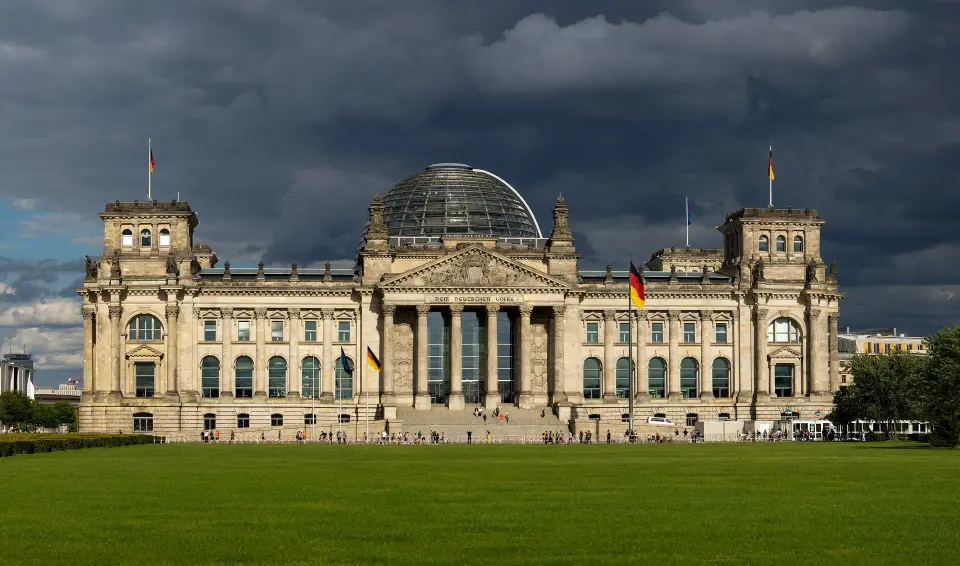
Reichstag Building
Seat of the German Bundestag, with a walk-up glass dome by Norman Foster and views over the government quarter.
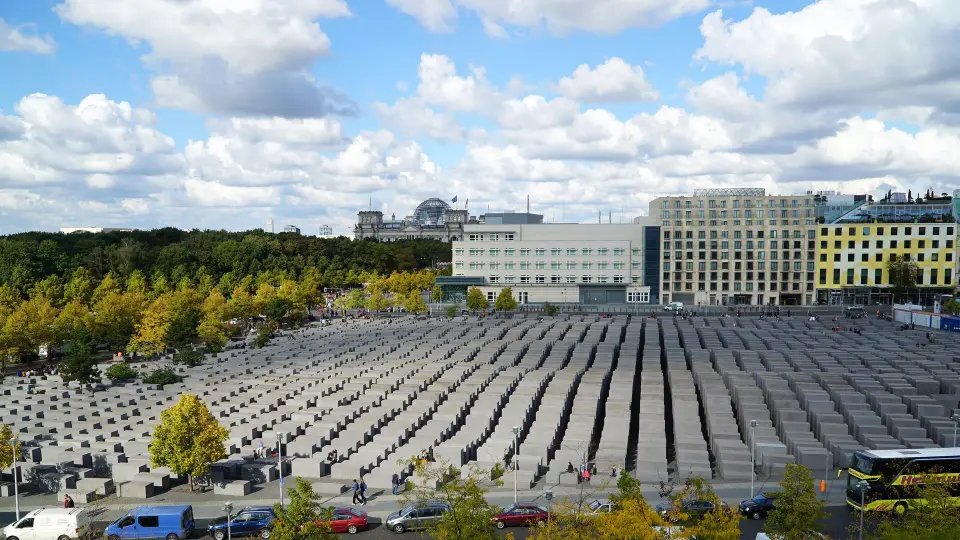
Holocaust Memorial
The Memorial to the Murdered Jews of Europe, with 2,711 concrete steles near the Brandenburg Gate.
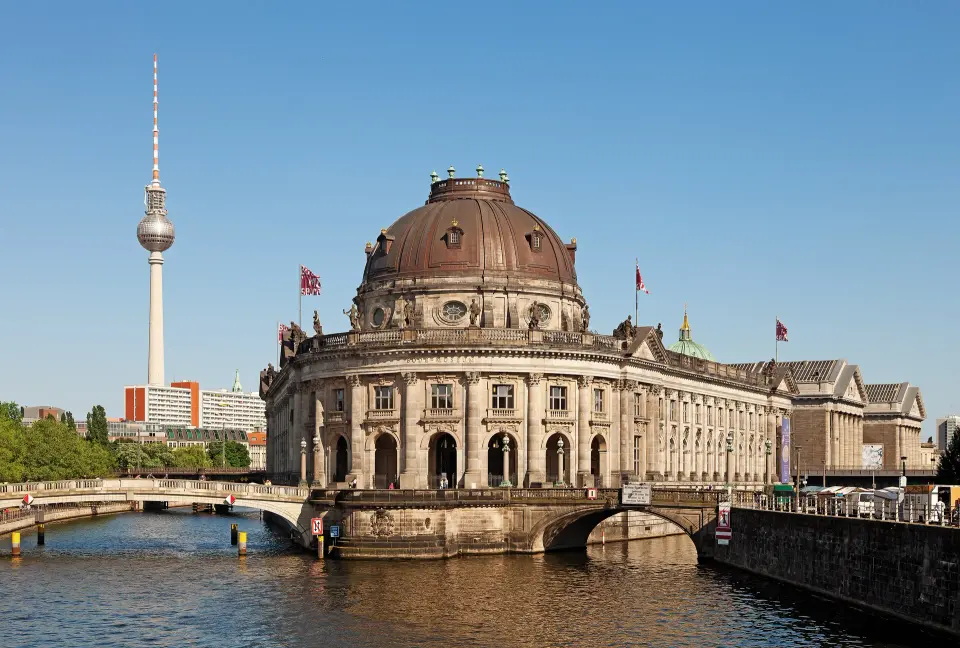
Museum Island
Five world-famous museums on an island in the Spree, a UNESCO World Heritage Site since 1999.
More in Mitte
More attractions in Mitte
Other highlights in the same district that pair well with a visit to Brandenburg Gate.
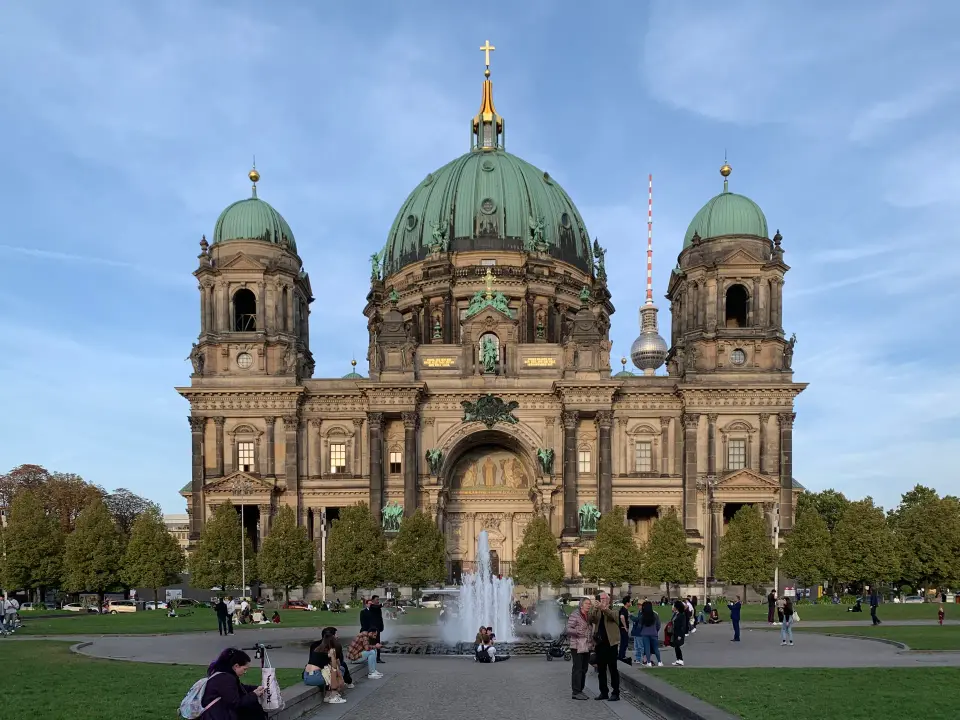
Berlin Cathedral
A monumental Protestant church on the Lustgarten with a walk-up dome and views over Museum Island.
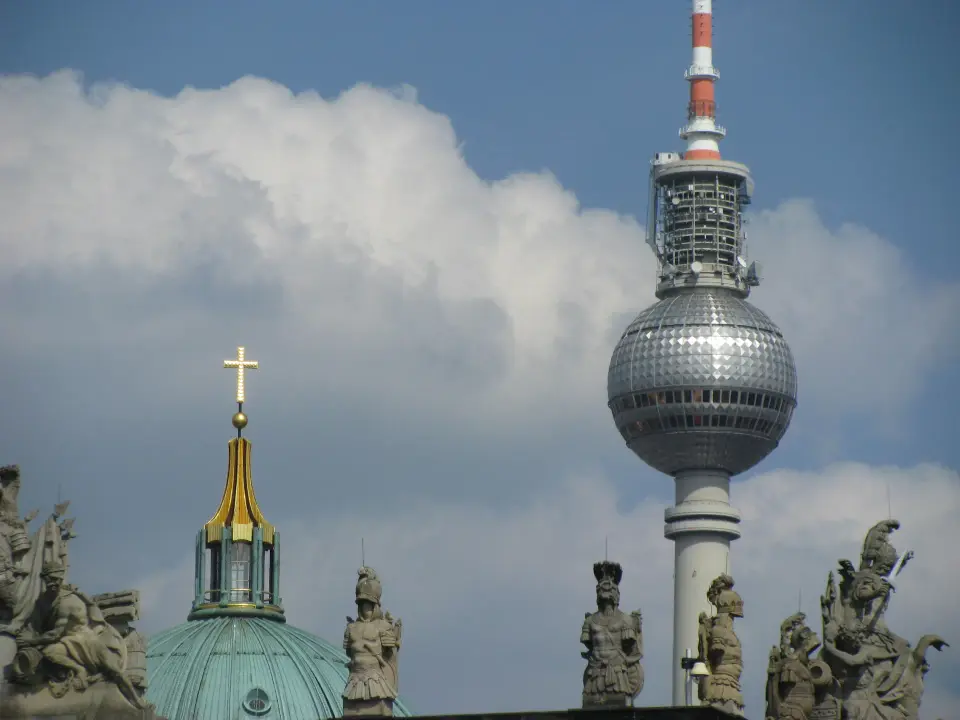
Berlin TV Tower
At 368 meters the tallest structure in Germany, with an observation deck and a revolving restaurant.
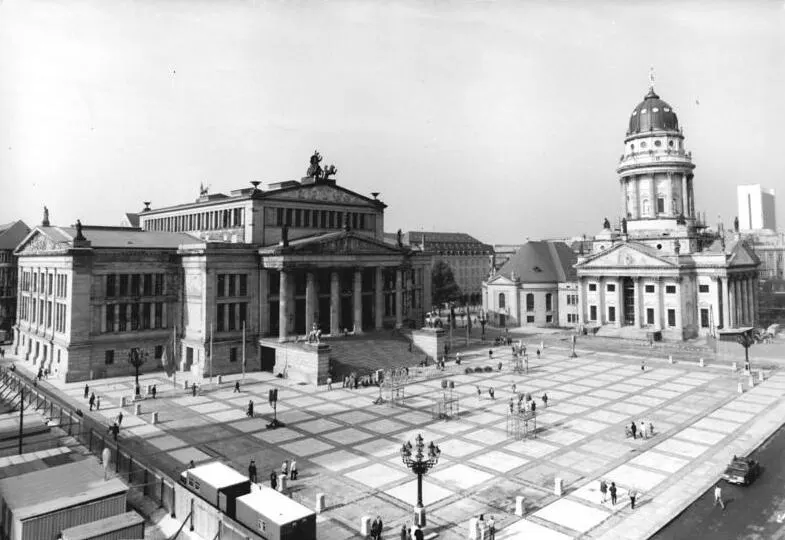
Gendarmenmarkt
One of the most beautiful squares in Berlin, with the Konzerthaus and the German and French cathedrals.
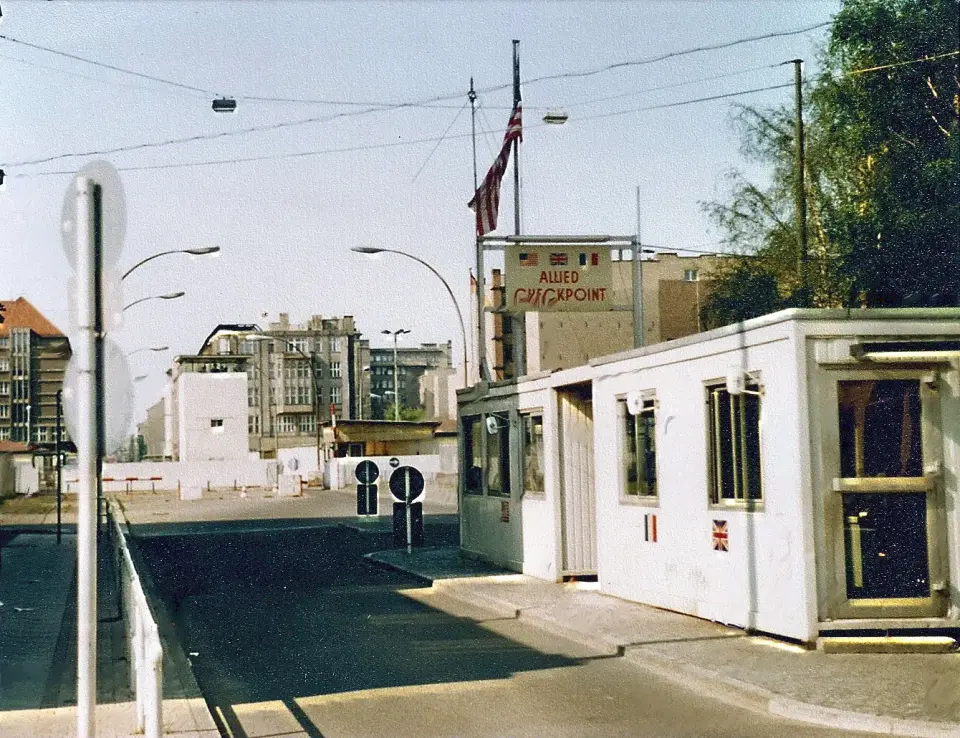
Checkpoint Charlie
The former border crossing between East and West, today a symbol of the Cold War.
Stay in the neighborhood
Find hotels in Mitte
Planning a visit to Brandenburg Gate? Here you'll find places to stay in the Mitte district.
Tours & tickets around Brandenburg Gate
Guided walks, skip-the-line tickets and experiences around Brandenburg Gate. A curated selection from GetYourGuide, bookable directly.
* Tours & tickets from GetYourGuide. If you book through the markers we earn a small commission at no extra cost to you.