Museum · Architecture · Culture
Kulturforum
A concentrated hub of high culture between the Tiergarten and Potsdamer Platz, with world-class museums, libraries and the famous Philharmonie.
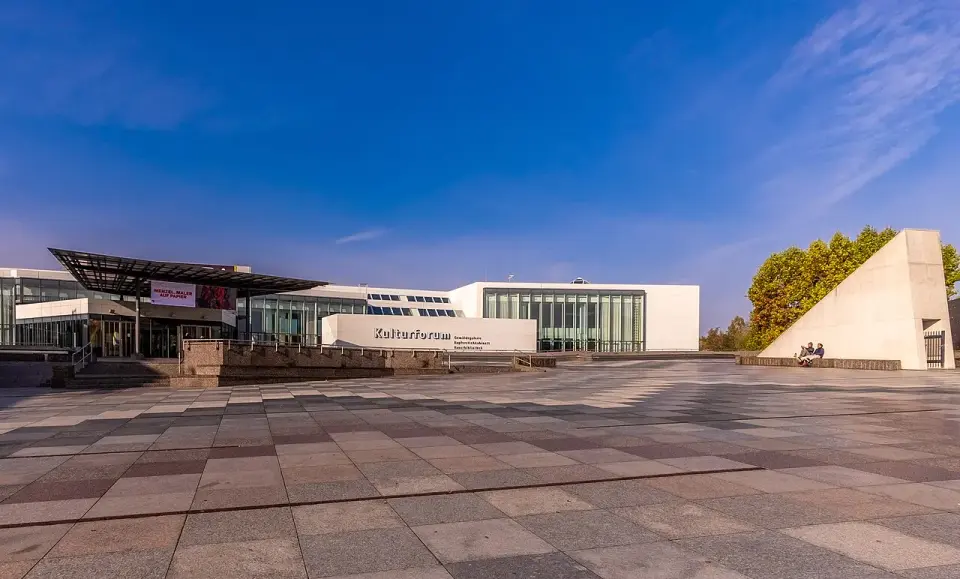
The Kulturforum occupies a stretch of the Tiergarten district between the Landwehr Canal, the Großer Tiergarten and Potsdamer Platz. The planning goes back to a 1958 competition, when West Berlin set out to build a cultural counterweight to Museum Island, which had ended up on the eastern side of the divided city. The defining voice is the organic, expressive architecture of Hans Scharoun, whose Philharmonie (1960 to 1963) became world famous for its tent-like curved roof and its concert hall built on the vineyard principle.
Around the Philharmonie and the later chamber music hall (1984 to 1987) sits an unusual density of institutions. The Neue Nationalgalerie, a glass and steel temple by Ludwig Mies van der Rohe (1965 to 1968), shows classical modern art. The Gemäldegalerie (1992 to 1998) holds one of the most significant collections of European painting from the 13th to the 18th century. Add to that the Museum of Decorative Arts, the print room, the art library, the Museum of Musical Instruments, plus Scharoun's striking state library and the neoclassical St. Matthew's Church of 1846.
For a visit, pick one or two houses deliberately, because there is no realistic way to do it all in a day. A concert at the Philharmonie plus a walk through the Gemäldegalerie is a well-balanced pairing. A new museum called berlin modern, by the architects Herzog & de Meuron, is currently going up on the central open space, intended to present 20th-century art and further raise the profile of the area.
A cultural landscape born of division
You can’t make sense of the Kulturforum without the division of Berlin. After the war, Prussia’s great art collections were scattered, and many holdings had been moved to West Berlin and West Germany for safekeeping. The city needed new buildings for them, since Museum Island lay in the eastern sector. The site chosen was the edge of the Tiergarten, where bombing raids and the Nazi plans for the axis of “Welthauptstadt Germania” (the projected world capital Germania) had left a largely empty area. After the Wall went up in 1961, the site suddenly found itself on the edge of the city, right next to the border. Only with the rebuilding of Potsdamer Platz in the 1990s did it move back to the center.
To this day the area feels like a collection of individual buildings scattered across a large open space, and that is exactly what people have argued about for decades. The new museum building berlin modern is meant to finally give the center a defined shape. The shell is complete, but after construction damage the Stiftung Preußischer Kulturbesitz (Prussian Cultural Heritage Foundation) does not expect it to open before 2030 (as of October 2026). Until then, the space between the Philharmonie and the Neue Nationalgalerie is a building site.
Which museum suits you?
For Old Master paintings: The Gemäldegalerie shows works by Rembrandt, Caravaggio, Vermeer, Dürer and Raphael, among others. The galleries are arranged around a long central hall. If you are short on time, focus on the Dutch and Flemish painting.
For classical modernism: The Neue Nationalgalerie reopened in 2021 after several years of comprehensive renovation by David Chipperfield Architects. The glass hall upstairs usually hosts one large single exhibition, while the collection is on the lower level. The building alone, Mies van der Rohe’s last major work, is worth the trip.
For music lovers: The Musikinstrumenten-Museum (Museum of Musical Instruments) next to the Philharmonie displays historic harpsichords, wind instruments and a Wurlitzer cinema organ.
For design and decorative arts: The Kunstgewerbemuseum (Museum of Decorative Arts) covers fashion, furniture and product design, with a large fashion collection on the lower floor.
Music at lunchtime
A little-known tip is the free lunchtime concert at the Philharmonie. From September to June, musicians play every Wednesday at 1 pm in the foyer of the Großer Saal (main hall), for about 40 to 50 minutes. There are no reservations and space is limited, so whoever arrives early gets a seat (as of October 2026). Exact dates are in the Berliner Philharmoniker’s calendar.
Planning your visit
- Getting there: Take the S1, S2, S25, S26 or U2 to Potsdamer Platz, then walk about ten minutes along Potsdamer Straße. Several bus lines stop at Kulturforum and Philharmonie.
- Time needed: One museum with a break takes two to three hours. Combining the Gemäldegalerie and the Neue Nationalgalerie takes a full day.
- Tickets: Each museum of the Staatliche Museen zu Berlin has its own tickets, and in some cases there are area tickets covering several houses at the Kulturforum. Prices and opening days are listed on smb.museum.
- Best time: Most of the museums are closed on Mondays. Weekday mornings are the quietest.
Common mistakes
Many people try to do too much at once. The Gemäldegalerie alone has dozens of rooms, and after three hours of Old Masters your head is full. A second mistake concerns the Philharmonie: without a concert ticket you won’t get into the main hall. For a look inside, join one of the guided tours or go to the lunchtime concert in the foyer.
Nearby
Right next door are the Berlin Philharmonie and Potsdamer Platz. On the Landwehr Canal stands the Bauhaus-Archiv, and to the north the Tiergarten begins. Within a 15-minute walk you reach Park am Gleisdreieck. For more on the surroundings, read our guide to Mitte.
Frequently asked
What to know about Kulturforum
Which museums are part of the Kulturforum?
The Kulturforum includes the Neue Nationalgalerie, the Gemäldegalerie, the Museum of Decorative Arts, the print room, the art library and the Museum of Musical Instruments, plus the Philharmonie, the chamber music hall and the state library.
Who designed the Philharmonie?
Hans Scharoun designed it, and it was built between 1960 and 1963. Its concert hall on the vineyard principle, with terraced blocks of seating around the orchestra, is considered an architectural milestone.
How much time should I plan for the Kulturforum?
Two to three hours is usually enough for a single museum. If you want to combine several houses or add a concert, plan on half a day to a full day.
Nearby & related
Pairs well with this
More attractions that combine nicely with a visit to Kulturforum.
More in Mitte
More attractions in Mitte
Other highlights in the same district that pair well with a visit to Kulturforum.
Brandenburg Gate
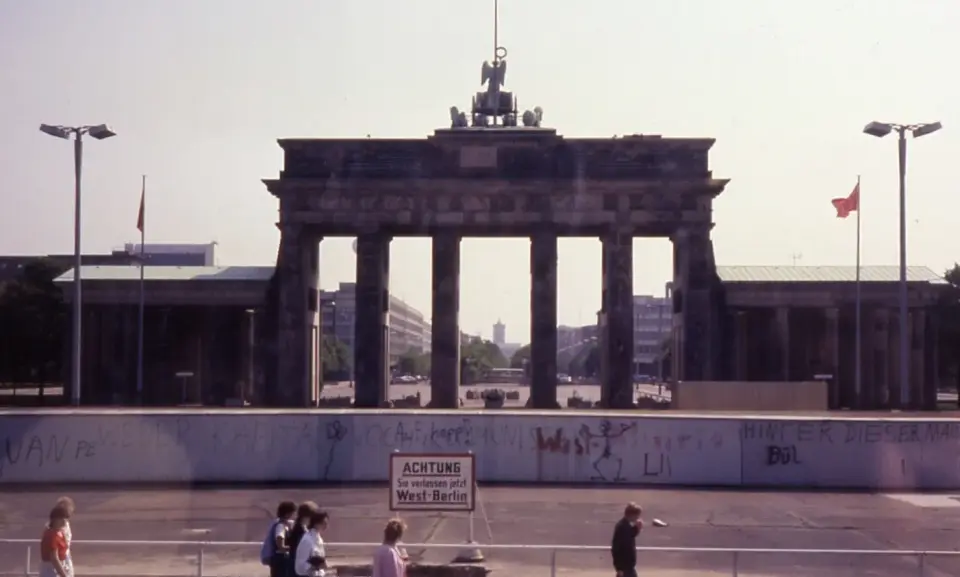
Berlin's most famous landmark on Pariser Platz, transformed from a symbol of division into a symbol of unity.
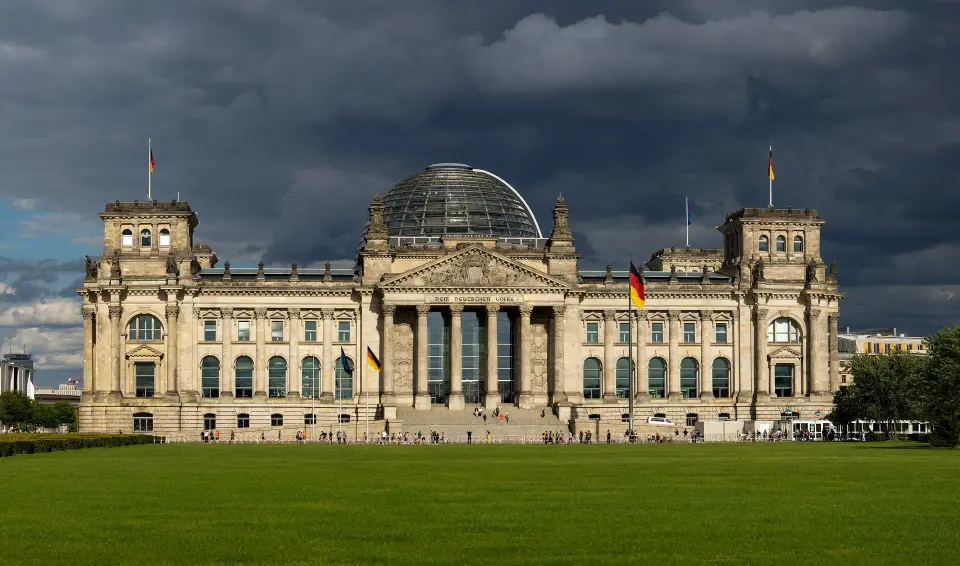
Reichstag Building
Seat of the German Bundestag, with a walk-up glass dome by Norman Foster and views over the government quarter.
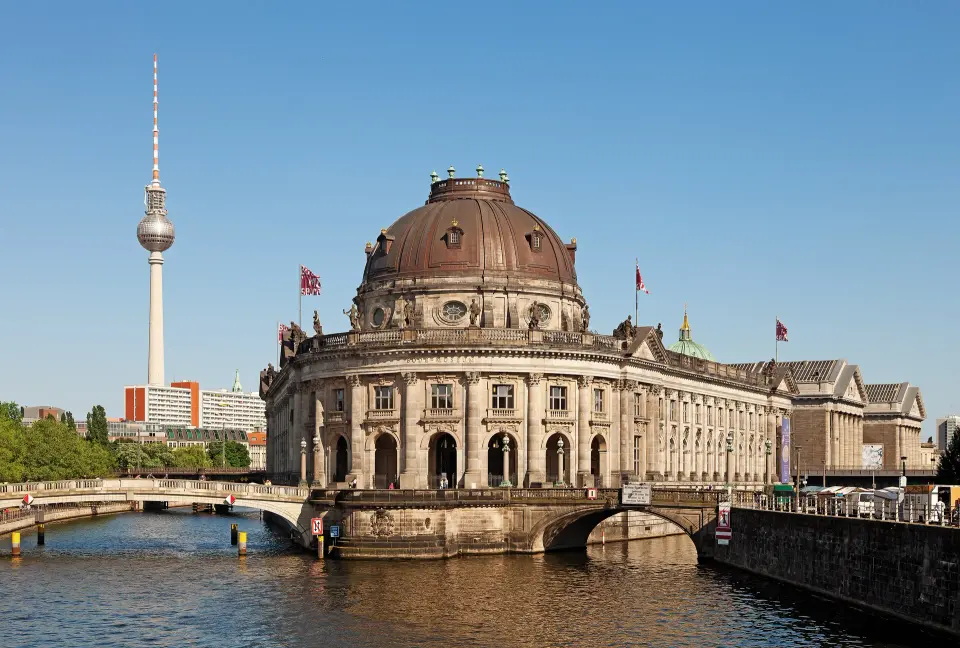
Museum Island
Five world-famous museums on an island in the Spree, a UNESCO World Heritage Site since 1999.
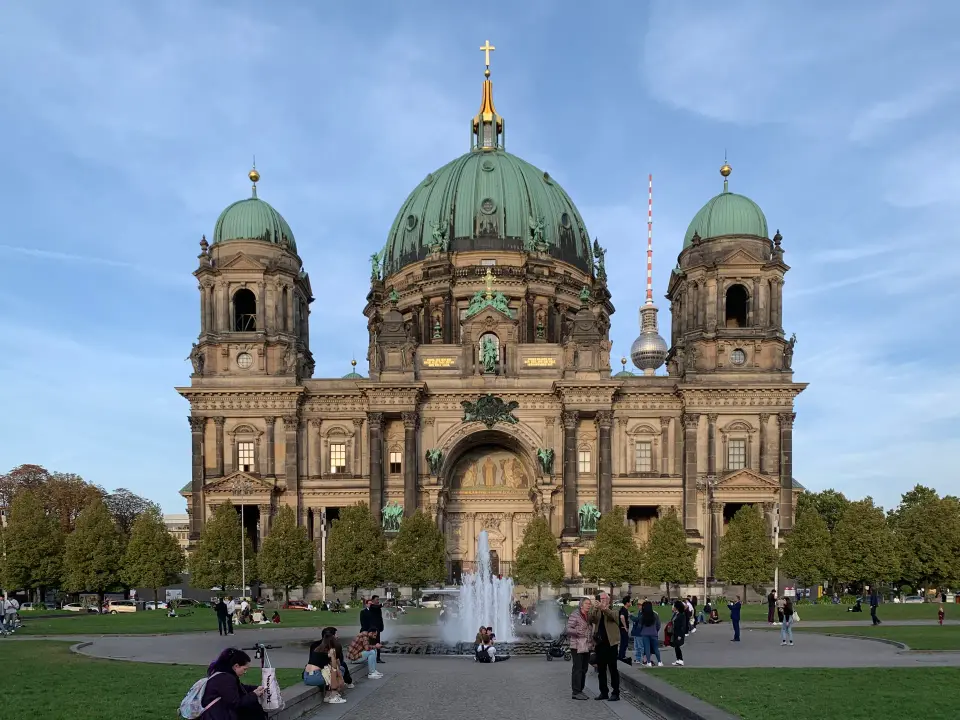
Berlin Cathedral
A monumental Protestant church on the Lustgarten with a walk-up dome and views over Museum Island.
Stay in the neighborhood
Find hotels in Mitte
Planning a visit to Kulturforum? Here you'll find places to stay in the Mitte district.
Tours & tickets around Kulturforum
Guided walks, skip-the-line tickets and experiences around Kulturforum. A curated selection from GetYourGuide, bookable directly.
* Tours & tickets from GetYourGuide. If you book through the markers we earn a small commission at no extra cost to you.