Architecture · Concert Hall · Culture
Berlin Philharmonie
The iconic concert hall by Hans Scharoun at the Kulturforum and home of the world-famous Berlin Philharmonic.
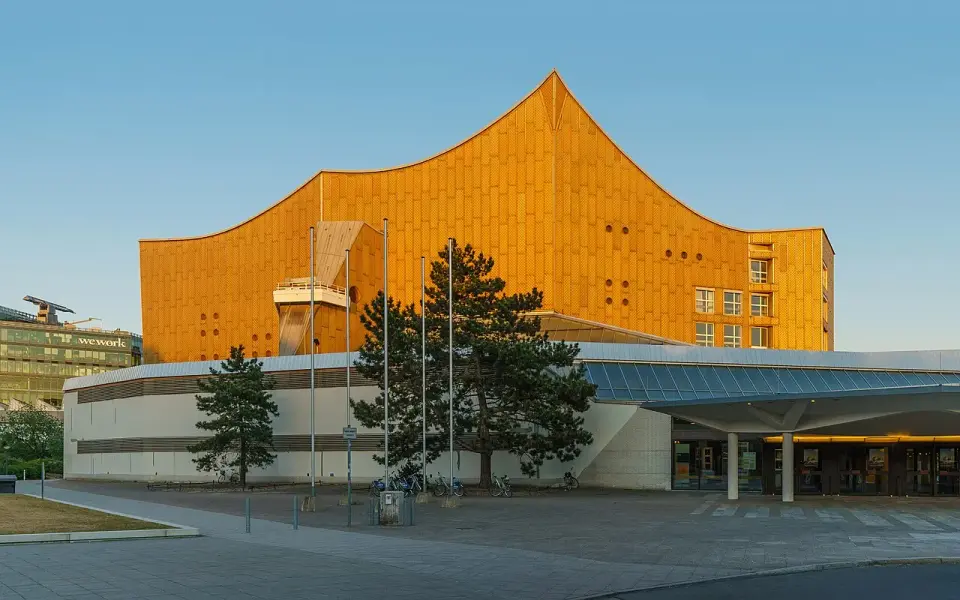
The Berliner Philharmonie at Herbert-von-Karajan-Straße 1, part of the Kulturforum, is the home of the world-famous Berlin Philharmonic. Built to plans by the architect Hans Scharoun between 1960 and 1963, it opened on October 15, 1963. Its tent-like, organically curving form counts as a key work of postwar modernism and has shaped the look of Berlin's concert life ever since.
Inside, Scharoun turned the Philharmonie into the model for modern concert halls worldwide. Under the so-called vineyard principle, the audience sits in terraced blocks rising all around a centrally placed orchestra, creating an unusual closeness between musicians and listeners. The main hall seats roughly 2,250 and is known for its exceptional acoustics. The large organ, built by the Berlin workshop of Karl Schuke, was completed in 1965. From 1984 to 1987, Edgar Wisniewski added the neighboring chamber music hall with about 1,136 seats, following Scharoun's concept.
There are several ways to experience the building: tickets for the Berlin Philharmonic and visiting orchestras, architecture tours of the building, or the regular free lunchtime concerts in the foyer. The Philharmonie sits in the middle of the Kulturforum next to the Neue Nationalgalerie and the state library, and pairs easily with a visit to the Tiergarten or Potsdamer Platz. Current schedules and tickets are on the hall's official website.
An orchestra in search of a home
The Berlin Philharmonic was founded in 1882 as a self-governing orchestra, and to this day its members vote on their conductors and on who joins. Its first venue, the old Philharmonie on Bernburger Straße in Kreuzberg, was destroyed in an air raid in 1944. For years afterward the orchestra played in temporary venues, among them the Titania-Palast in Steglitz.
Hans Scharoun won the competition for the new building in 1956. After 1961 the site on the edge of the Tiergarten suddenly sat right next to the Wall, on the edge of a cleared wasteland. That made the Philharmonie the starting point of the Kulturforum, which West Berlin built here as a counterpart to Museum Island in the East. The gold-colored aluminum cladding that makes the building so striking today was only added between 1978 and 1981.
Under Herbert von Karajan, chief conductor from 1955 to 1989, the orchestra became one of the best known in the world. The tent-like shape earned the building the nickname “Zirkus Karajani” (Circus Karajani). Kirill Petrenko has been chief conductor since 2019.
What you see inside
The foyer alone is worth the visit: stairs, galleries and bridges branch out over several levels, and hardly a line runs at a right angle. Scharoun wanted the audience to move around before a concert as if on a public square, finding their way into the hall from every side. In the Great Hall the seating forms small, staggered blocks, so even the back rows are relatively close to the stage. The ceiling hangs like a tent roof, with acoustic sails beneath it to spread the sound.
Planning your visit
- Lunchtime concerts: During the season from September to June there is a free chamber concert in the foyer on Wednesdays at 1 pm, lasting about 40 to 50 minutes, often with members of the orchestra. You cannot reserve, and space is limited (as of October 2026, dates on berliner-philharmoniker.de).
- Concert tickets: Tickets for Berlin Philharmonic concerts go on sale in fixed phases depending on the season, and popular dates sell out fast. At short notice, it is worth checking for remaining tickets at the box office on the night.
- Getting there: From Potsdamer Platz S-Bahn and U-Bahn station (S1, S2, S25, S26, U2) it is about a ten-minute walk. Buses 200 and 300 stop at Philharmonie.
- Tours: Architecture tours run regularly, with dates and tickets on the orchestra’s website.
Tips and common mistakes
The cheapest seats are often in the block behind the orchestra. From there you look the conductor in the face and hear the musicians very directly, although the balance with vocal soloists is different from the front. That makes it a good choice for symphony concerts, less so for song recitals.
For the lunchtime concert, arrive at least half an hour early, as the spots on the stairs and galleries fill up quickly. Food and drinks from the foyer catering cost extra, and you cannot bring your own food. If you cannot make it to Berlin, you can watch many concerts online in the orchestra’s Digital Concert Hall.
Nearby
Right next door are the Kammermusiksaal (chamber music hall) and the Kulturforum with the Gemäldegalerie, the Kunstgewerbemuseum (Museum of Decorative Arts) and the Neue Nationalgalerie. Five minutes’ walk east is Potsdamer Platz, and to the north the Tiergarten. Southwest on the Landwehr Canal is the Bauhaus-Archiv, which is closed for renovation. We cover the district under Mitte.
Frequently asked
What to know about Berlin Philharmonie
Who designed the Berlin Philharmonie?
The architect Hans Scharoun designed it, and it was built between 1960 and 1963, opening on October 15, 1963. The neighboring chamber music hall was added from 1984 to 1987 by Edgar Wisniewski, following Scharoun's concept.
What makes the architecture special?
The hall follows the vineyard principle: the audience sits in terraced blocks rising around a centrally placed orchestra. That creates unusual closeness between musicians and listeners and became the model for modern concert halls worldwide.
Can you visit the Philharmonie without attending a concert?
Yes. Architecture tours run regularly, and during the season the foyer often hosts free lunchtime concerts. Check dates and tickets on the official website in advance.
Nearby & related
Pairs well with this
More attractions that combine nicely with a visit to Berlin Philharmonie.
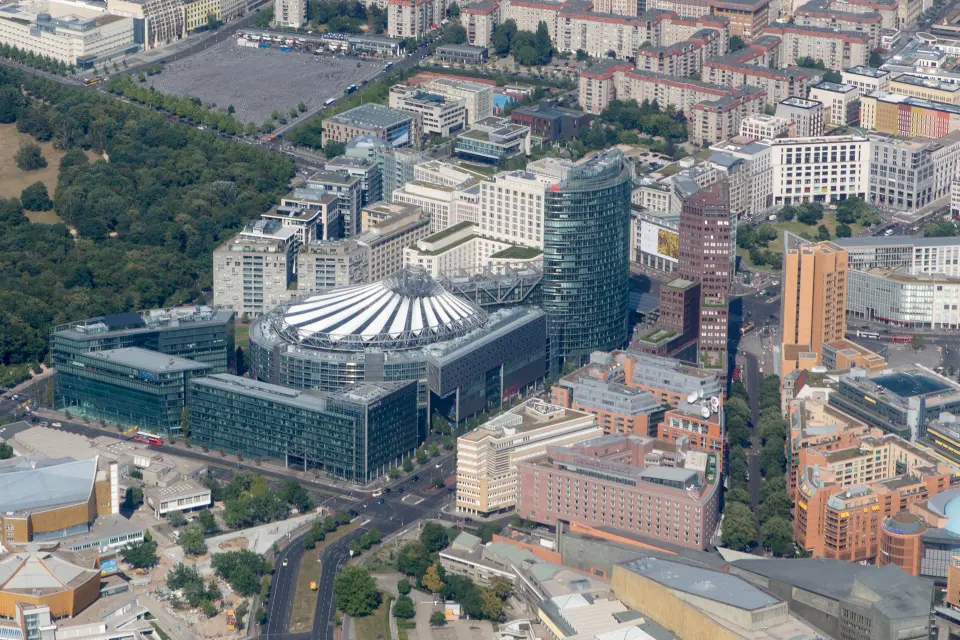
Potsdamer Platz
A modern square of glass and steel, rebuilt in the 1990s on a former stretch of the Wall.
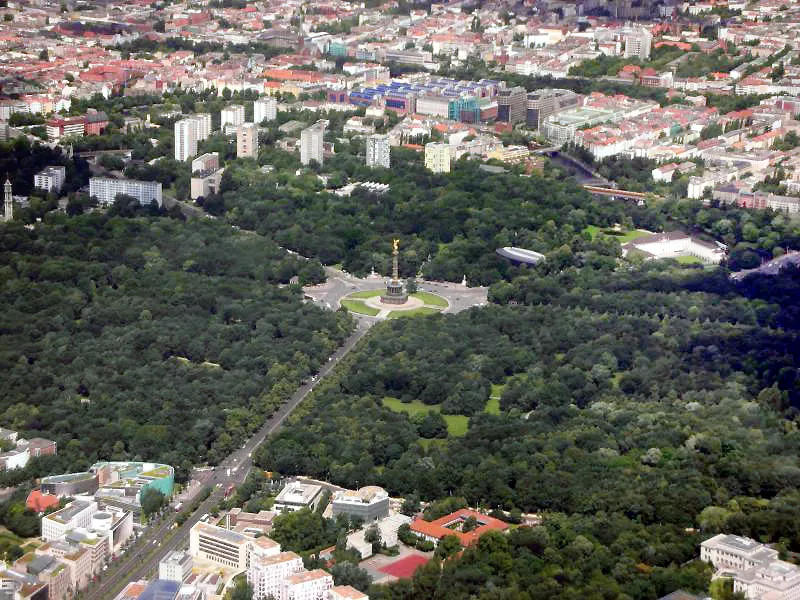
Großer Tiergarten
Berlin's green lung in the center of the city, with wide lawns, lakes and shady avenues.
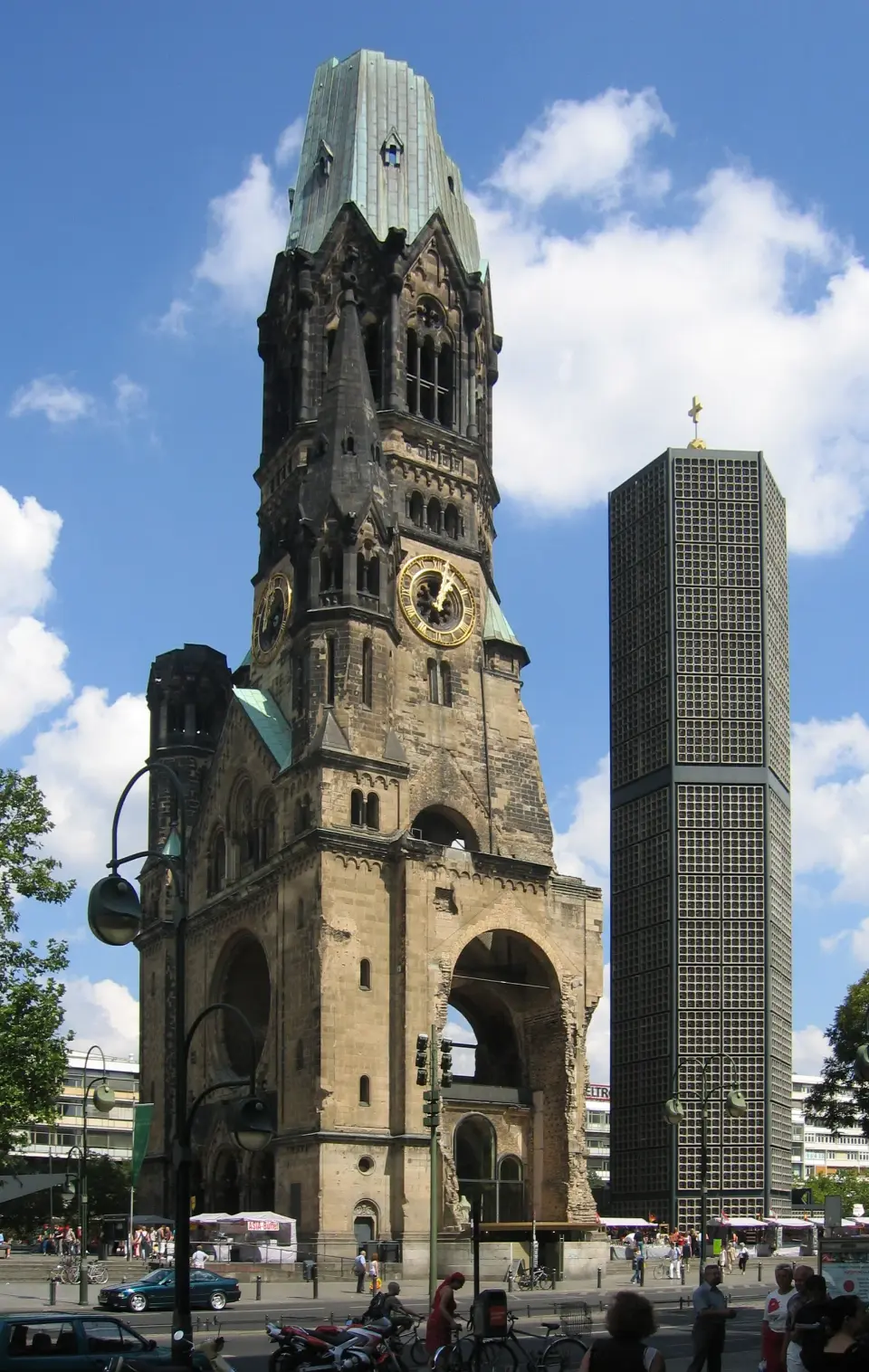
Kaiser-Wilhelm-Gedächtniskirche (Kaiser Wilhelm Memorial Church)
A war-ruined church tower kept standing as an anti-war memorial, paired with a modern sanctuary that glows deep blue.
More in Mitte
More attractions in Mitte
Other highlights in the same district that pair well with a visit to Berlin Philharmonie.
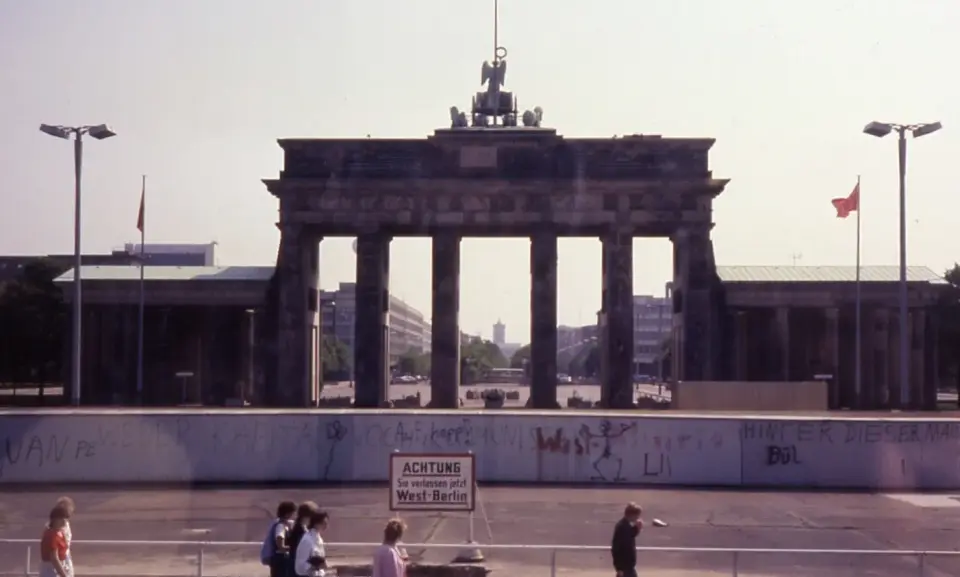
Brandenburg Gate
Berlin's most famous landmark on Pariser Platz, transformed from a symbol of division into a symbol of unity.
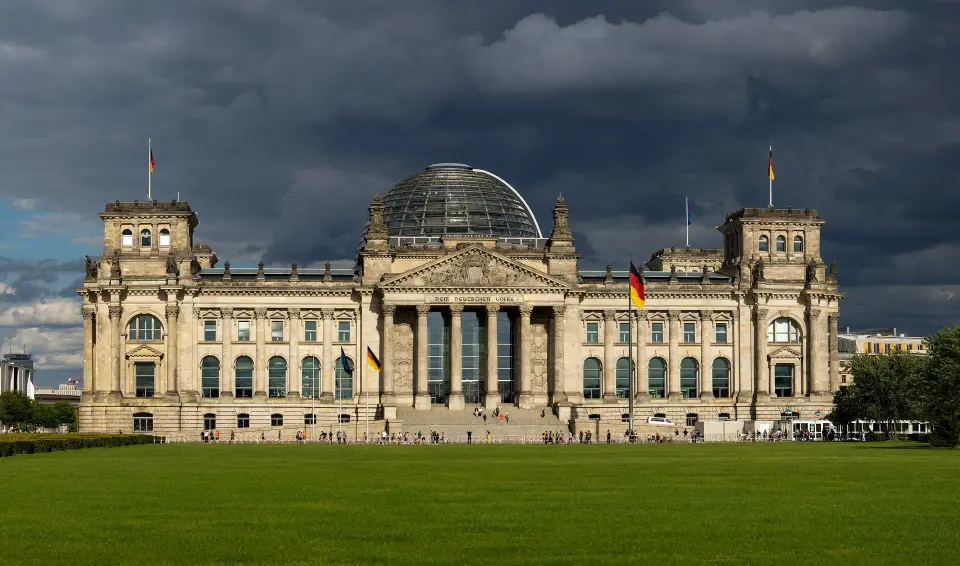
Reichstag Building
Seat of the German Bundestag, with a walk-up glass dome by Norman Foster and views over the government quarter.
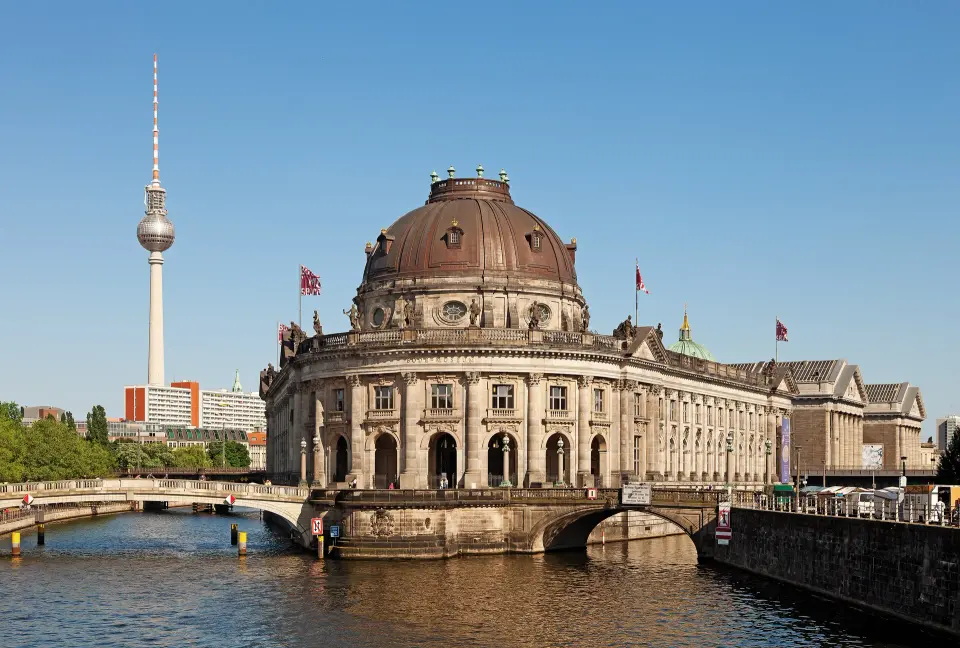
Museum Island
Five world-famous museums on an island in the Spree, a UNESCO World Heritage Site since 1999.
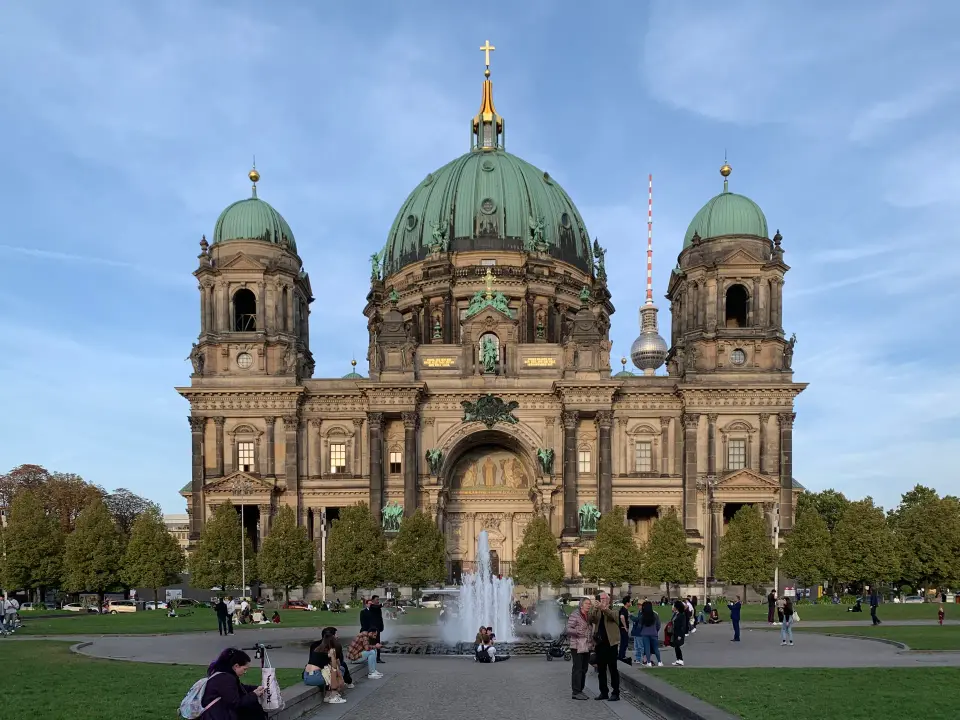
Berlin Cathedral
A monumental Protestant church on the Lustgarten with a walk-up dome and views over Museum Island.
Stay in the neighborhood
Find hotels in Mitte
Planning a visit to Berlin Philharmonie? Here you'll find places to stay in the Mitte district.
Tours & tickets around Berlin Philharmonie
Guided walks, skip-the-line tickets and experiences around Berlin Philharmonie. A curated selection from GetYourGuide, bookable directly.
* Tours & tickets from GetYourGuide. If you book through the markers we earn a small commission at no extra cost to you.