Housing estates · Gardens of the World
Marzahn
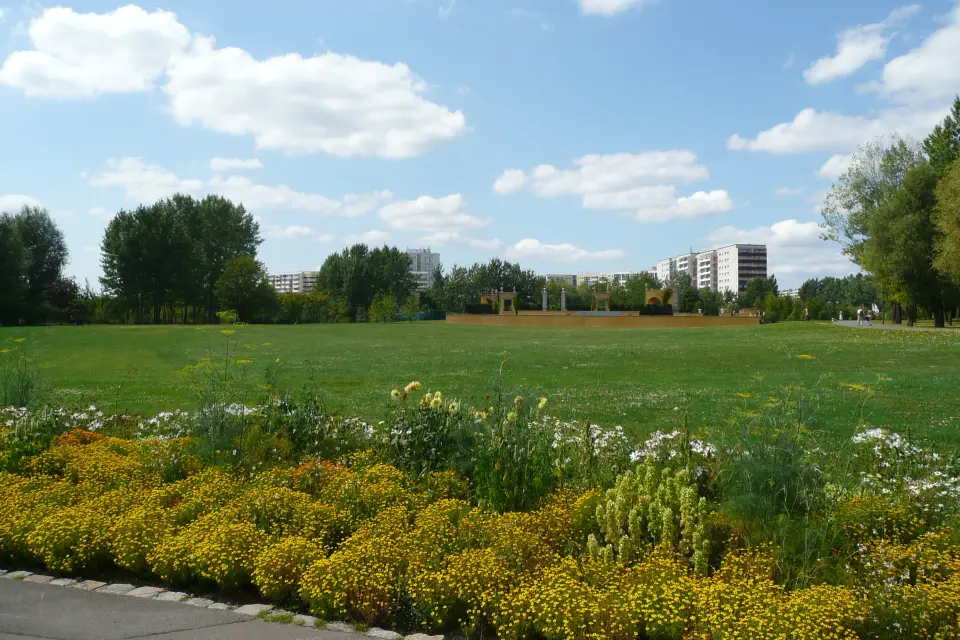
Marzahn stands like few other districts for the East Berlin of GDR modernism: sprawling estates of prefab high-rises, broad axes and surprisingly much greenery in between. Come here and you'll discover a district that left its image behind long ago. The absolute highlight is the Gardens of the World in the Marzahn recreation park, an expansive area with themed gardens from China, Japan, Korea, Bali and the Middle East, a cable car over the grounds and viewpoints across the high-rise skyline. Around the park, a stroll through the old village green of Alt-Marzahn with its church, post windmill and cobblestones is worthwhile.
For the active, Marzahn offers relaxed bike rides along the Wuhle and into the adjacent recreation area, plus museums like the Gründerzeit Museum in Mahlsdorf on the district's edge. If you stay overnight, you'll find quiet, affordable lodging away from the tourist bustle, and you're in the center in about 25 minutes by S-Bahn. Marzahn is especially suited to families and anyone who wants to get to know a green, down-to-earth side of Berlin.
A village that became a housing estate
Alt-Marzahn is a medieval village built around a green, and until the 1970s the area was mostly farmland and sewage fields. Then the GDR leadership launched its big housing program, and from 1977 one of the largest prefab housing estates in Europe rose here within a few years. Marzahn became a borough of its own in 1979, and Hellersdorf followed next door from the mid-1980s. At the time, apartments with district heating, a bathroom and a balcony were much sought after, and many young families moved here from unrenovated old buildings.
After 1990 the large estates lost many residents, and some high-rises were demolished or had floors taken off. A lot has happened since then: facades have been renovated, green spaces redesigned, and in 2017 the International Garden Exhibition (IGA) was held here. Since 2001, Marzahn and Hellersdorf have formed a single borough. Its second face is less well known: Biesdorf, Kaulsdorf and Mahlsdorf are among the largest continuous areas of single-family homes in Germany.
Where to look around
Around the Marzahner Promenade lies the old center of the estate, with a shopping center and the Freizeitforum leisure center. To get a feel for the architecture, walk through the residential courtyards between Allee der Kosmonauten and Märkische Allee, where prefab blocks from different building series stand side by side. Alt-Marzahn, right on Landsberger Allee, is a striking contrast: a village church, cobblestones and a post windmill on a small rise at the edge of the village.
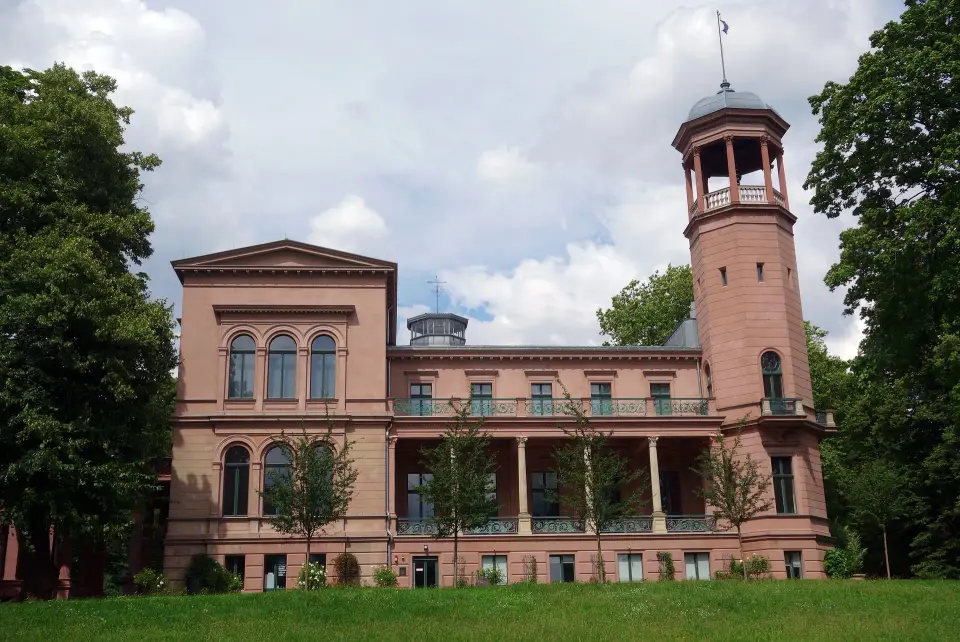
In Biesdorf, the late-neoclassical Biesdorf Palace stands in a large landscaped park and is now a venue for art exhibitions. On the southern edge of Mahlsdorf, the Gründerzeitmuseum, founded by Charlotte von Mahlsdorf, shows a collection of furniture and everyday objects from around 1900.
In Hellersdorf, take a look at the Helle Mitte around Alice-Salomon-Platz. This district center was only built in the 1990s to give the estate a focal point after the fact, with a university, a cinema, the town hall and shops. It shows well how the city tried after reunification to add to the prefab areas rather than tear them down. A common mistake is to come to Marzahn just for the gardens and leave straight away. If you allow an extra hour, you’ll understand the borough much better.
What to do here
The Gardens of the World are the main reason to visit and easily fill half a day. Since the IGA, the cable car has linked Kienberg (Gärten der Welt) U-Bahn station with the park, passing over the Kienberg hill. According to the operator Grün Berlin, it runs daily from April to September, with shorter hours in winter, and it is out of service in November for its annual technical inspection (as of October 2026; check the website before your visit). On the Kienberg, the Wolkenhain viewing platform lets you look out over the estate to the city center.
In Kienbergpark itself there is a summer toboggan run, and in the adjoining Wuhletal, paths follow the little Wuhle river south. For cyclists, the Wuhletal is one of the most attractive green corridors in the east.
Eating and going out
Food here is everyday fare: snack bars, bakeries, restaurants in the shopping centers, plus a few inns in the village centers of Biesdorf, Kaulsdorf and Mahlsdorf. You are more likely to find classic Berlin snack food than ambitious cooking; see currywurst spots. The Gardens of the World have cafés that open seasonally. The borough has no nightlife to speak of.
Green spaces and water
Besides the Gardens of the World and Kienbergpark, the borough has Biesdorf palace park, the Hönower Weiherkette chain of ponds and several small lakes in the south, such as the Habermannsee and the Butzer See in Kaulsdorf and Mahlsdorf. To the north, the fields and forests of the Barnim begin.
Getting there and around
The S7 runs from Ahrensfelde via Mehrower Allee, Raoul-Wallenberg-Straße, Marzahn and Springpfuhl and on via Ostkreuz to Alexanderplatz, Hauptbahnhof and Zoologischer Garten. From Marzahn it takes about 25 minutes to Alexanderplatz. The U5 crosses the borough from Hönow via Hellersdorf, Kienberg (Gärten der Welt), Wuhletal and Biesdorf-Süd and runs without changes to Brandenburger Tor and the Hauptbahnhof. The S5 stops at Biesdorf, Wuhletal, Kaulsdorf and Mahlsdorf. On top of that, several tram lines connect Marzahn with Lichtenberg and Prenzlauer Berg.
Who Marzahn suits
Families, garden lovers and visitors interested in the architecture and everyday life of GDR modernism. It’s also a good choice if you want plenty of space and a quiet night. If you’d like to head out spontaneously for dinner in Kreuzberg, expect a 40-minute ride each way.
Half a day on foot
Get off at Kienberg (Gärten der Welt) U-Bahn station. If the cable car is running, glide up to the Kienberg; otherwise walk up, about 20 minutes uphill. The Wolkenhain gives you the best overview. Then cross over into the Gardens of the World, where you should allow at least two hours for the Chinese, Japanese and Oriental gardens. The way back leads through Kienbergpark and along the bank of the Wuhle to Wuhletal U-Bahn station. That’s about five kilometers in total.
Highlights on the ground
Attractions in Marzahn
The key landmarks and spots you shouldn't miss in Marzahn.
Hungry & thirsty
Food & drink in Marzahn
Where to eat, drink and take a break in the neighborhood.
Stay in the neighborhood
Where to sleep in Marzahn?
In Marzahn you can stay cheaply and quietly, with a good S-Bahn connection into the center in about 25 minutes.
Keep exploring
All Berlin neighborhoods at a glance, or jump straight to the attractions and food & drink.