Museum · Architecture · Culture
Humboldt Forum
A museum and cultural center in the rebuilt Berlin Palace, with collections from Africa, Asia, the Americas and Oceania plus a rooftop terrace.
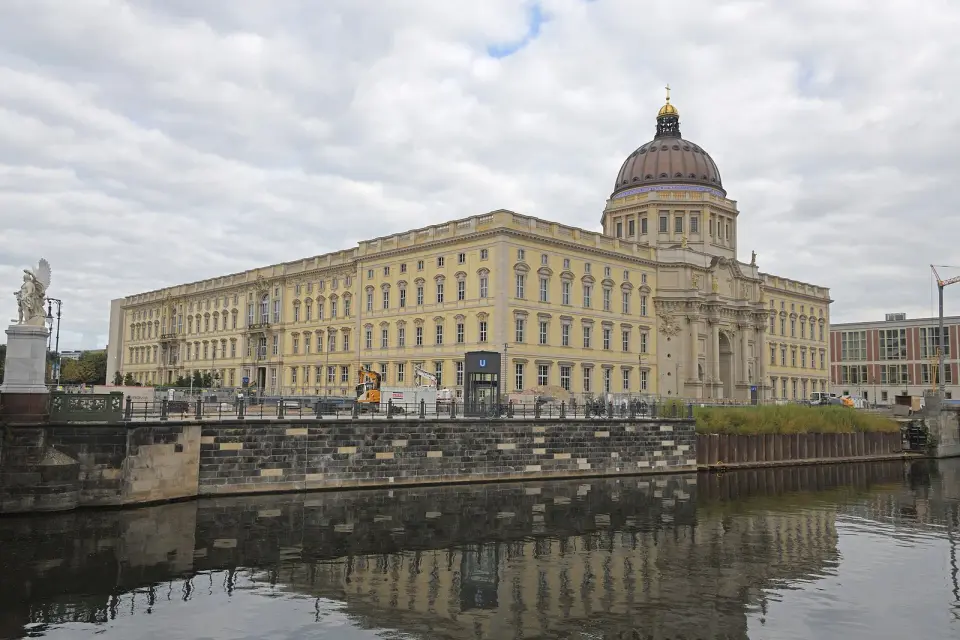
The Humboldt Forum stands where the Hohenzollerns' Berlin Palace stood for centuries. The GDR leadership had the war-damaged palace blown up in 1950, and part of the site later became home to the Palast der Republik (Palace of the Republic). After reunification the city argued for a long time over the future of the site. In 2002 the Bundestag decided to rebuild the palace in its outward form in place of the Palast, which had been demolished by 2008.
The result is a building with two faces. Three of the outer sides and the large Schlüterhof courtyard show the reconstructed baroque facades, while the Italian architect Franco Stella deliberately kept the east side facing the Spree plain and modern. Inside there are no historic rooms, just museum space, event halls and a large foyer. The building has been open to visitors since 2021.
In terms of content, the Forum brings several institutions together. On the upper floors, the Ethnological Museum and the Museum of Asian Art of the State Museums show objects from around the world, from the Luf boat from the South Seas to Buddhist cave paintings from the Silk Road. The exhibition "Berlin Global" explores the city's ties to the rest of the world, and Humboldt University runs its own lab for science topics. The origins of colonial-era collection items and questions of restitution are much debated. Part of the Benin Bronzes was transferred to Nigeria in 2022.
Especially rewarding for visitors are the rooftop terrace with views of the cathedral, the TV Tower and Museum Island, and the palace cellar, where archaeological remains of the old palace are on display. Whether individual areas are free or need a ticket has changed several times since the opening, so check current conditions on humboldtforum.org before your visit. The U5 drops you practically at the door at Museumsinsel station.
A site Berlin argued about for years
Hardly any building project of the post-reunification era was as hotly contested as this one. The Palast der Republik (Palace of the Republic), a cultural center with a bowling alley, restaurants and the assembly hall of the GDR parliament, the Volkskammer, held personal memories for many East Germans. It was closed in 1990 because of asbestos contamination. At the same time, a supporters’ association campaigned for the palace to return, and in 1993 it put up a painted full-size canvas of the facade for a few months to show how the site had once looked.
After the Bundestag voted for the project, it still took more than a decade for construction to begin. Private donors raised part of the cost of the Baroque facades. Building started in 2013. After a digital opening at the end of 2020 because of the pandemic, the museum opened to visitors step by step from summer 2021. The debate did not end with the opening. Criticism focused mainly on the dome with its cross and Bible inscription, and on the display of objects that came to Berlin during the colonial era under unclear or violent circumstances.
Finding your way around the building
Each level of the building has its own function.
- Ground floor: A large foyer, shop, places to eat, event spaces and access to the Schlüterhof courtyard. This is also where you find the sculpture hall with original figures and facade parts from the old palace.
- Basement: The palace cellar shows remains of walls from the Middle Ages to the modern era that were uncovered during construction.
- Second floor: The exhibition “Berlin Global” and space for temporary exhibitions.
- Third and fourth floors: The collections of the Ethnological Museum and the Museum of Asian Art.
- Roof: The roof terrace with a panoramic view, open depending on the weather and the season.
What awaits you in the collections
On the upper floors the holdings are arranged by region. Among the best-known objects are the large outrigger boat from the island of Luf in Papua New Guinea, ritual figures from Oceania, objects from the Kingdom of Benin and cave paintings from Buddhist monasteries along the Silk Road, which have been installed in the rooms of the Museum of Asian Art as if inside a cave. Many wall texts openly explain how the pieces came into the collection and what restitution claims exist. That makes a visit more demanding than a traditional ethnology museum, but also more honest.
Planning your visit
For a first impression with the foyer, the Schlüterhof, the palace cellar and the roof terrace, about an hour is enough. If you want to see the collections, you need at least two to three hours more, ideally spread over two separate visits. The museum is closed on Tuesdays. There are timed-entry tickets for the roof terrace and some exhibitions, which you should book online in advance.
The U5 stops at Museumsinsel station right in front of the building. Buses 100 and 300 stop at Lustgarten. On foot it takes about 15 minutes from Alexanderplatz.
Tips
- The Schlüterhof is freely accessible during opening hours and a quiet place to sit. In summer it often hosts concerts and other open-air events.
- The best view of the modern east facade is from the opposite bank of the Spree at the Marx-Engels-Forum.
- Head up to the roof terrace first while the weather holds. The exhibitions are just as good on a rainy day.
Nearby
Directly opposite is the Berliner Dom, and behind it Museum Island with the Neues Museum. Across the Schlossbrücke, the boulevard Unter den Linden begins. On the other side of the Spree you reach the DDR Museum and the Nikolaiviertel. For more on the district, see our page on Berlin-Mitte.
Frequently asked
What to know about Humboldt Forum
Is the Humboldt Forum the old Berlin Palace?
It is a new building whose outer facades on three sides and in the Schlüterhof reconstruct the historic palace. The original was blown up in 1950. Inside, the building is fitted out in a modern way as a museum and event venue.
What can you see at the Humboldt Forum?
The collections of the Ethnological Museum and the Museum of Asian Art, the exhibition "Berlin Global," changing exhibitions, the palace cellar with remains of the old palace and the rooftop terrace with a panoramic view over Mitte.
On which day is the Humboldt Forum closed?
According to current information, Tuesday is the closing day, and on the other days the building opens in the morning (as of October 2026). Please check times and prices on humboldtforum.org before your visit.
Nearby & related
Pairs well with this
More attractions that combine nicely with a visit to Humboldt Forum.
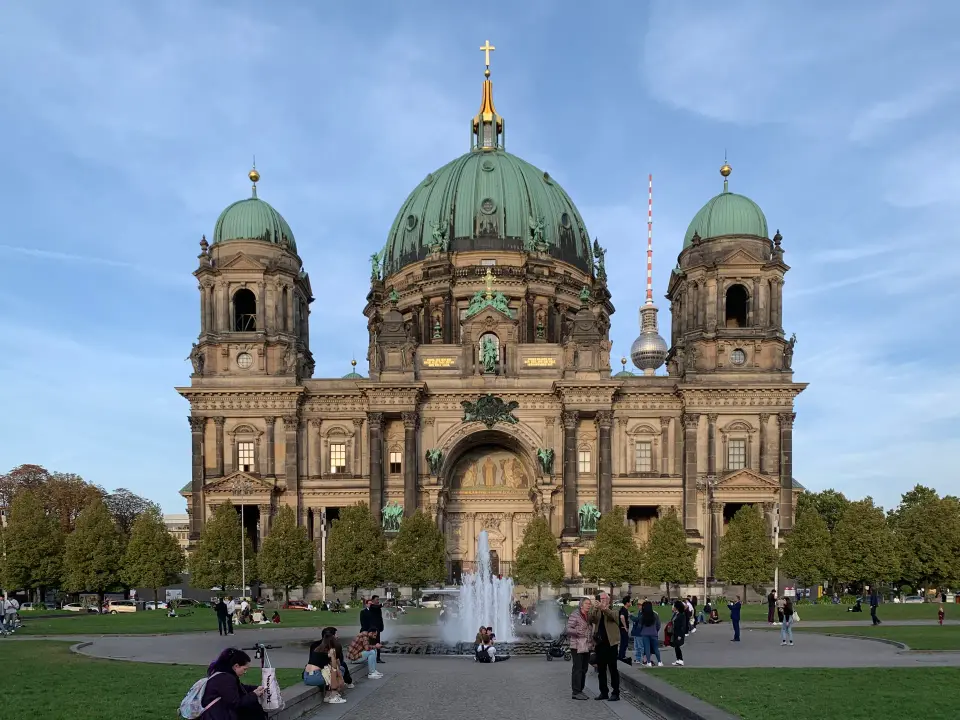
Berlin Cathedral
A monumental Protestant church on the Lustgarten with a walk-up dome and views over Museum Island.
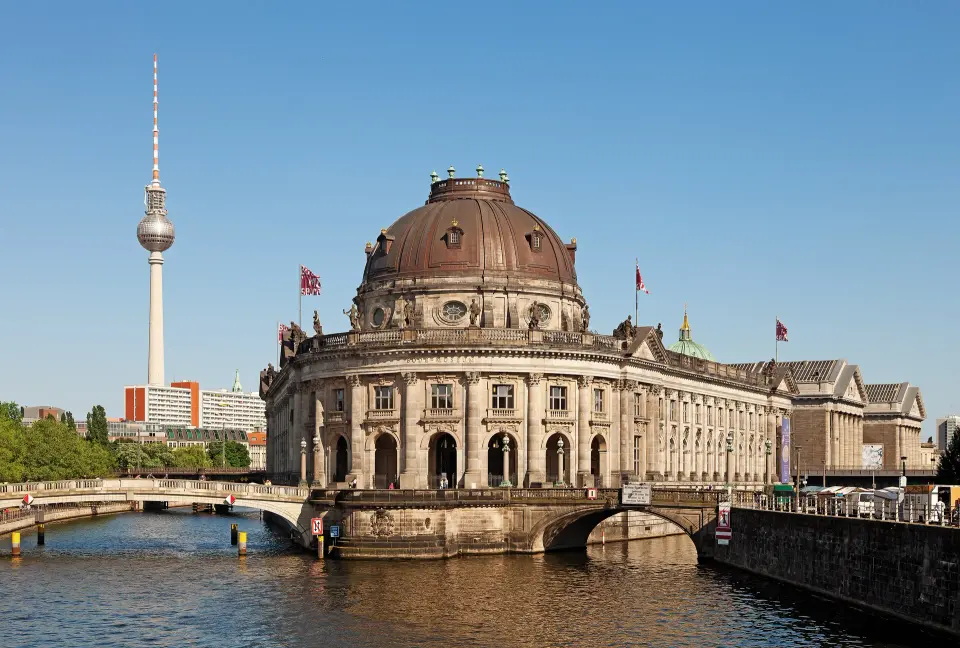
Museum Island
Five world-famous museums on an island in the Spree, a UNESCO World Heritage Site since 1999.
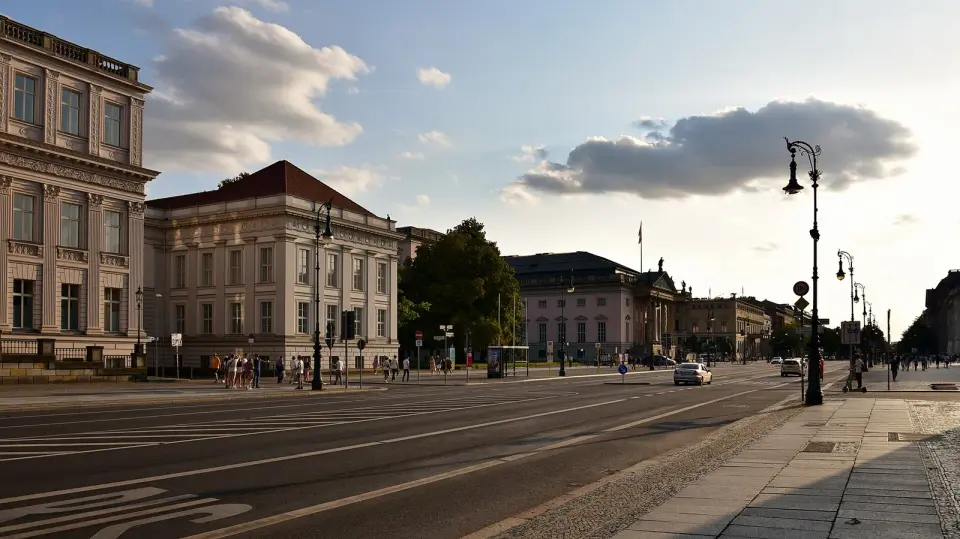
Unter den Linden
Berlin's grand boulevard between the Brandenburg Gate and Museum Island, lined with the opera, the university, the Zeughaus and linden trees.
More in Mitte
More attractions in Mitte
Other highlights in the same district that pair well with a visit to Humboldt Forum.
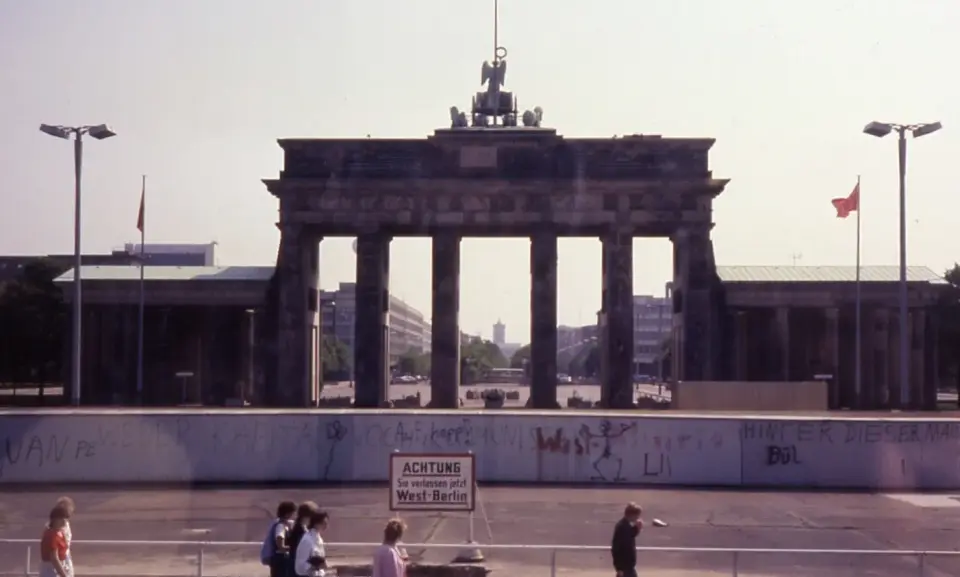
Brandenburg Gate
Berlin's most famous landmark on Pariser Platz, transformed from a symbol of division into a symbol of unity.
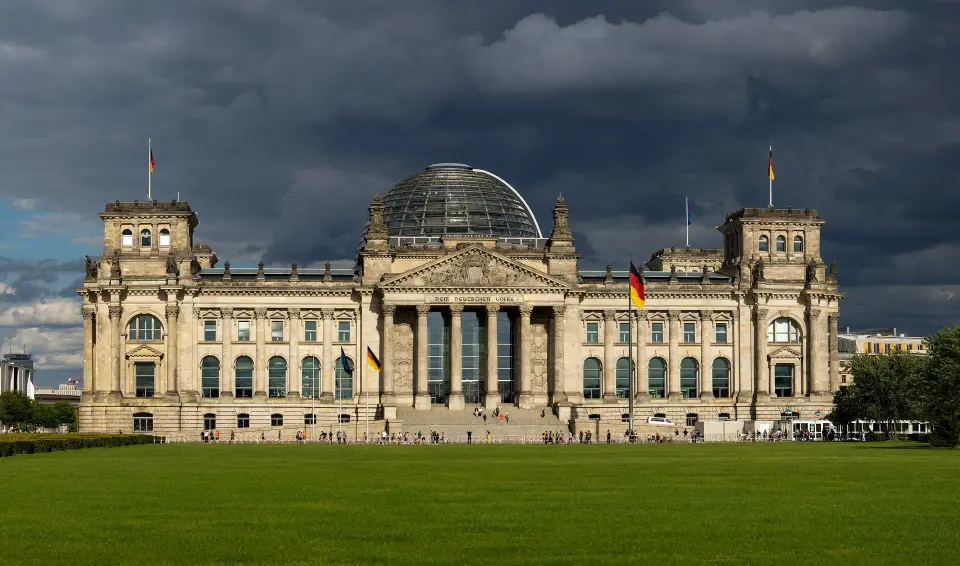
Reichstag Building
Seat of the German Bundestag, with a walk-up glass dome by Norman Foster and views over the government quarter.
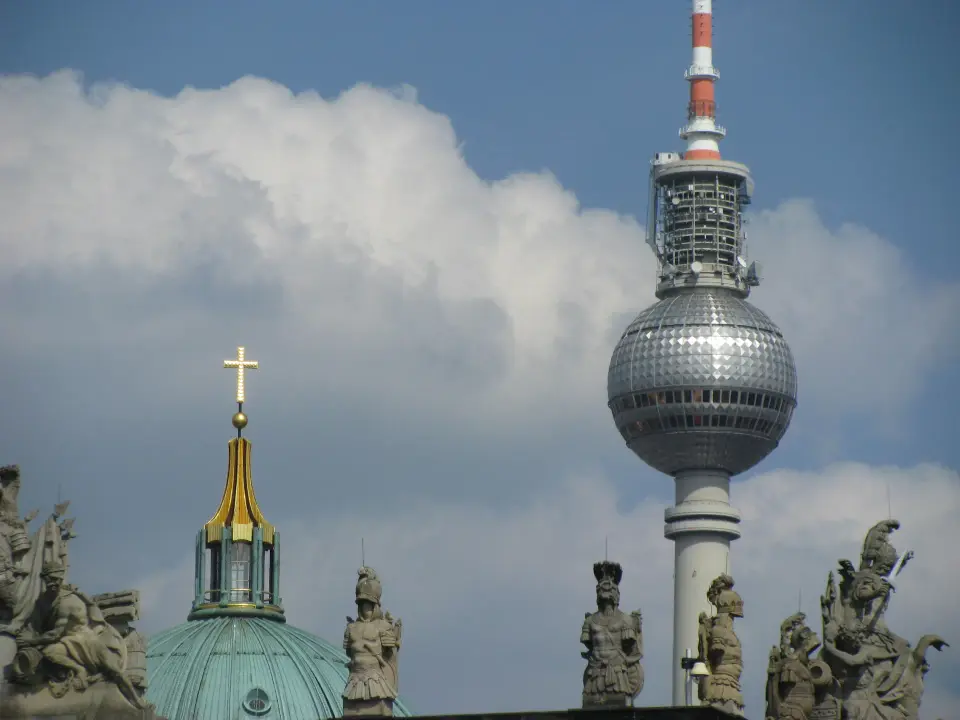
Berlin TV Tower
At 368 meters the tallest structure in Germany, with an observation deck and a revolving restaurant.
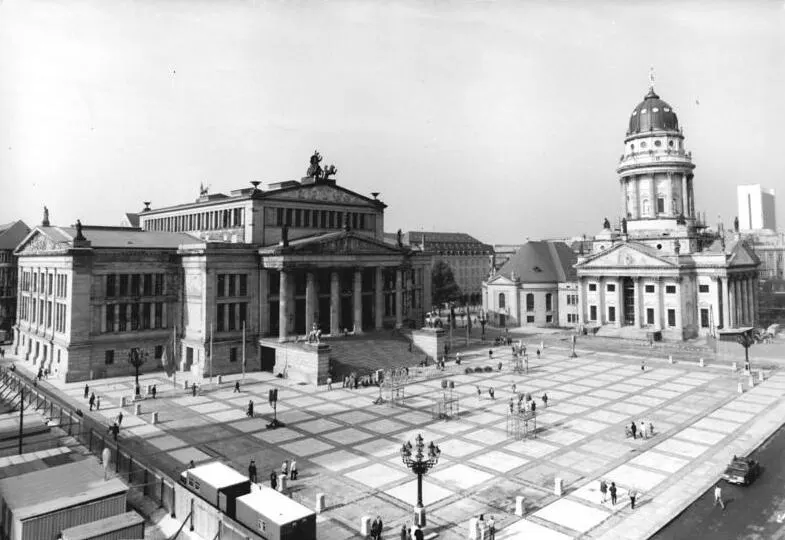
Gendarmenmarkt
One of the most beautiful squares in Berlin, with the Konzerthaus and the German and French cathedrals.
Stay in the neighborhood
Find hotels in Mitte
Planning a visit to Humboldt Forum? Here you'll find places to stay in the Mitte district.