Memorial · History · Cold War
Berlin-Hohenschönhausen Memorial
The Stasi's former central remand prison, which you get to know on guided tours through cell blocks and interrogation rooms.
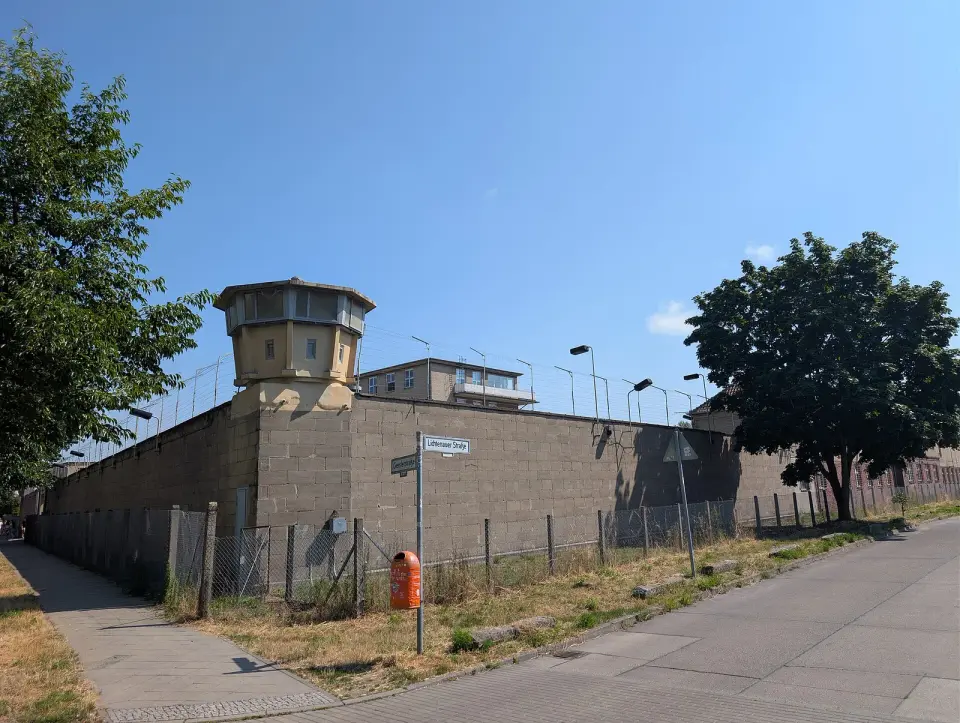
In an unremarkable residential and commercial area in the north of Lichtenberg lies one of Berlin's most harrowing places of remembrance. Until 1989, the central remand prison of the GDR's Ministry for State Security stood behind the high wall on Genslerstraße. The site was part of a restricted military zone and appeared on no city map.
The story of the place begins shortly after the end of the war. In 1945 the Soviet secret police set up a collection camp for internees in a former industrial kitchen, which later became a prison. In the basement they built windowless, damp cells that the prisoners called the "U-Boot" (submarine) because they were so cramped. In 1951 the Stasi took over the prison. In the late 1950s it had prisoners build a new block with more than 200 cells and interrogation rooms. The people held here had tried to flee, applied to leave the country or opposed the state politically. The methods increasingly relied on psychological pressure: isolation, sleep deprivation and uncertainty about one's own situation.
After the Stasi was dissolved, the prison closed in 1990. It has been a memorial since 1994 and is now run by a foundation. Because the buildings have survived almost unchanged, everyday life in detention feels very immediate here. You can enter the prison itself only on a guided tour. Tours last about 90 minutes and are offered in several languages. Some are led by eyewitnesses who were once held here themselves. You can also visit the permanent exhibition "Inhaftiert in Hohenschönhausen" (Imprisoned in Hohenschönhausen) on your own.
Getting there from Alexanderplatz takes about half an hour. The memorial recommends tram M5 to Freienwalder Straße, from where it is about a ten-minute walk. Alternatively, lines M6 and 16 stop at Genslerstraße. Do not head for Hohenschönhausen S-Bahn station, which is considerably farther away.
A prison that officially did not exist
For decades the grounds in Hohenschönhausen were a blank spot on the map. The prison was surrounded by office buildings, workshops and apartment blocks for employees of the Staatssicherheit (the Stasi, East Germany’s secret police), and the entire area was sealed off. Many prisoners did not know where they had been held even after their release. They were brought here in windowless vans, often disguised on the outside as food delivery trucks, and driven by roundabout routes to disorient them.
Conditions in custody changed over time. In the 1940s and early 1950s, physical violence, cold and hunger dominated life in the basement prison. Later the Stasi turned to methods that left no visible marks. Prisoners were not allowed to see each other, and signal lights in the corridors made sure no one ever ran into another inmate. Interrogators knew every detail of the detainees’ lives and used that knowledge deliberately. Many of the people held here were later sentenced to prison terms, and some were bought free by the West German government.
What the guided tour shows
Tours usually lead through both prison buildings. The exact route varies a little depending on the tour and the season.
- The “U-Boot” (submarine): The basement of the old building, with cramped, windowless cells from the Soviet period. Some rooms have been left exactly as they were found when the site was taken over.
- The new building: Long cell corridors with signal systems, cells with glass blocks instead of windows, and exercise cells in the yard that were closed off at the top only by bars.
- The interrogation rooms: A desk, a chair for the prisoner, tape recorders. This is where the interrogations took place, often over weeks and months.
- The garages and transport cells: This is where prisoners arrived, without knowing where they were.
When a former inmate leads the tour as a contemporary witness, it becomes very personal. The guides also answer questions, so plan a little time beyond the stated duration.
Planning your visit
For individual visitors there are scheduled tours in German and English, sometimes in other languages too. In high season the slots book up quickly. It is best to buy your ticket online in advance, especially on weekends. Also allow about an hour for the permanent exhibition, which you can visit on your own before or after the tour. It puts the history of the site in context and presents biographies of former prisoners.
Take the M5 tram from Alexanderplatz to the Freienwalder Straße stop. From there, walk along Freienwalder Straße to Genslerstraße. If you come by car, there is parking in the surrounding streets, but no large visitor parking lot.
Tips
- Read up a little on East German history beforehand, for example on Republikflucht (fleeing the GDR) and applications to emigrate. That will help you place the stories you hear.
- Dress warmly in winter. Parts of the tour cross the open grounds between the buildings.
- The guide explains at the start whether and where you may take photos. Always ask before photographing a contemporary witness.
Nearby
The memorial is off the usual routes, but combining it with the Stasi Museum still makes sense, since the two tell different sides of the same system. If you need some green afterward, head to the Landschaftspark Herzberge. Back in the city center, the Tränenpalast and the Berlin Wall Memorial continue the story of Germany’s division. You will find more about the district on our page about Lichtenberg.
Frequently asked
What to know about Berlin-Hohenschönhausen Memorial
Can you visit the Hohenschönhausen Memorial without a guided tour?
The permanent exhibition is open without a tour. The prison's cell blocks and interrogation rooms, however, can only be entered as part of a guided tour. Individual visitors can join tours at fixed times, and groups register in advance.
How do I get to the Hohenschönhausen Memorial?
The best way is tram M5 to Freienwalder Straße, then about ten minutes on foot. Lines M6 and 16 stop at Genslerstraße, and bus 256 at Große-Leege-Straße/Freienwalder Straße.
Is the tour suitable for children?
The content is serious and at times distressing, and the tour is usually too much for younger children. For teenagers and school classes, the memorial offers its own formats that you can request in advance.
Nearby & related
Pairs well with this
More attractions that combine nicely with a visit to Berlin-Hohenschönhausen Memorial.
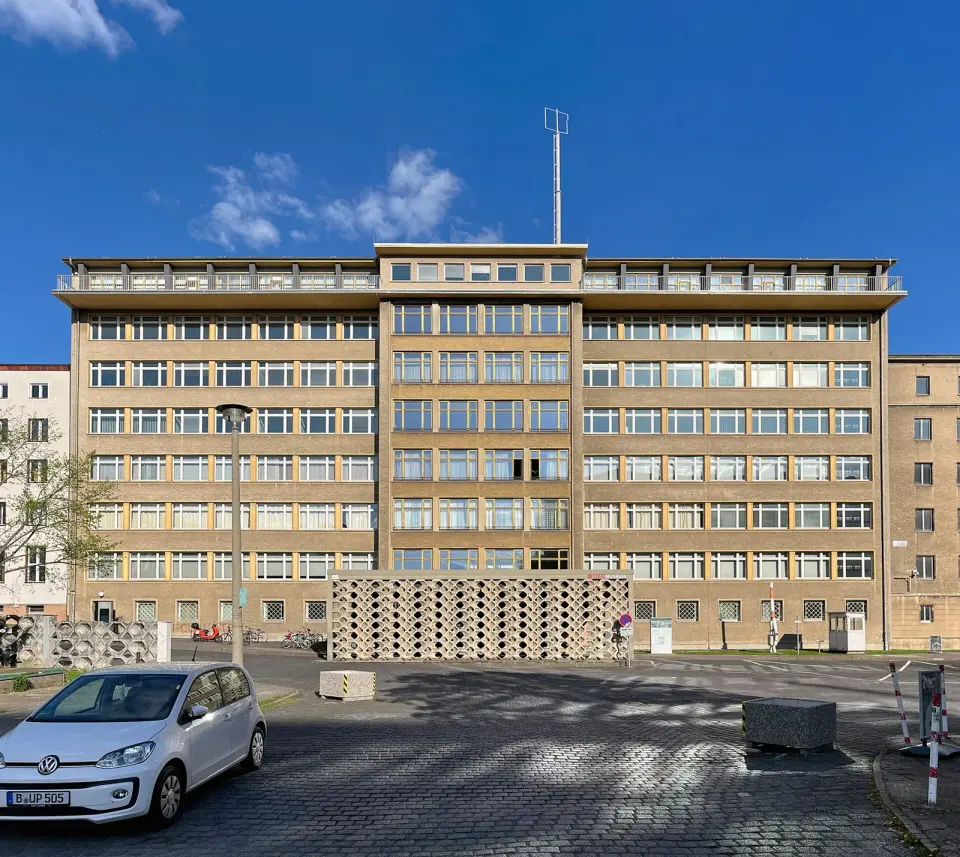
Stasi Museum
A museum in the former headquarters of the GDR's state security service in Lichtenberg, with Erich Mielke's office preserved in its original state.
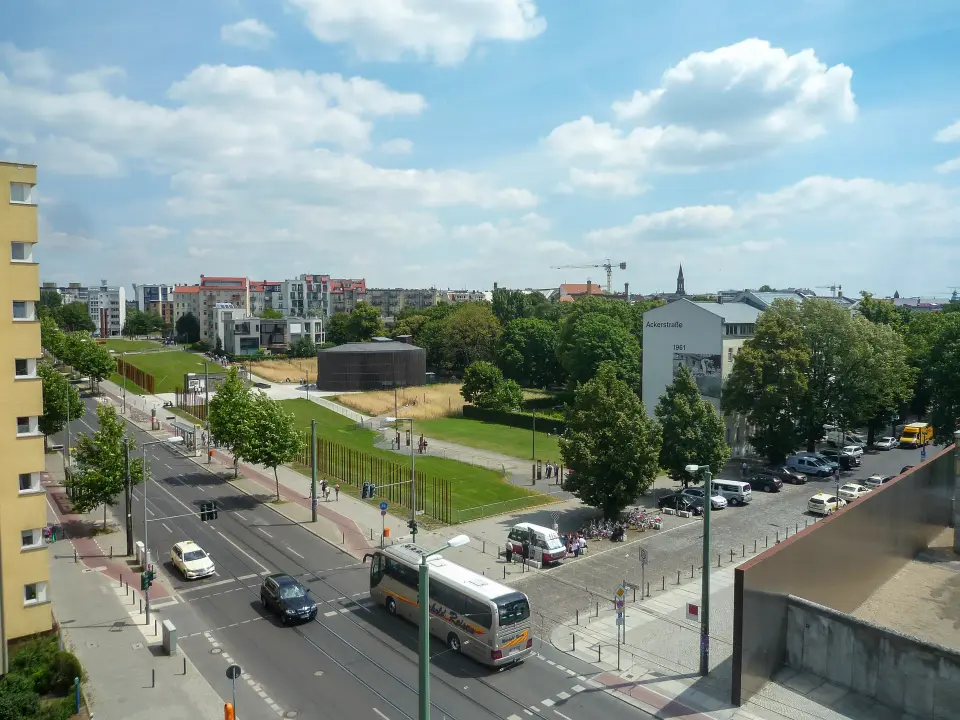
Berlin Wall Memorial
The central place of remembrance for the division, with a preserved border strip on Bernauer Straße.
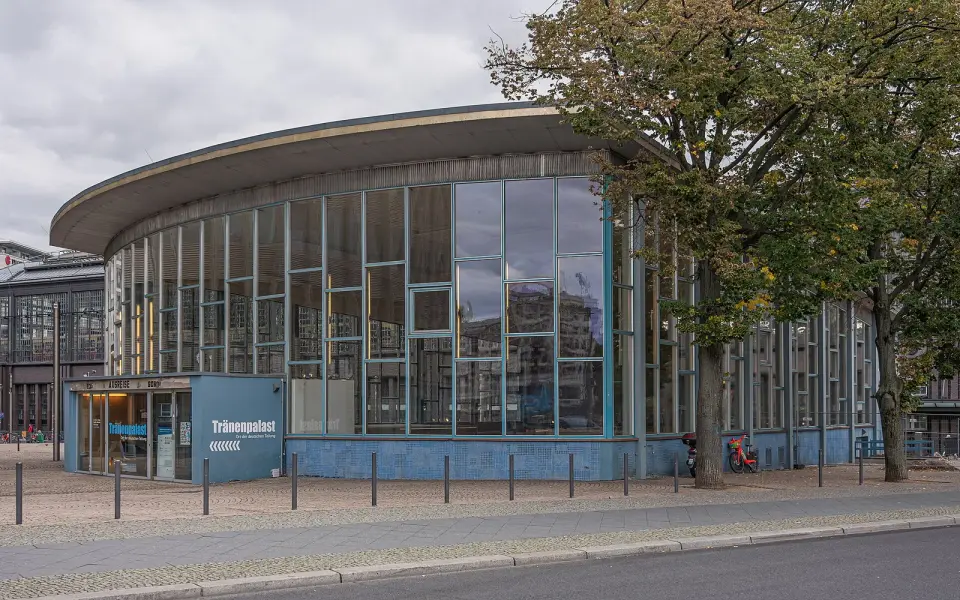
Palace of Tears (Tränenpalast)
The former departure hall of the border crossing at Friedrichstraße station, now a free museum about everyday life in divided Germany.
More in Lichtenberg
More attractions in Lichtenberg
Other highlights in the same district that pair well with a visit to Berlin-Hohenschönhausen Memorial.
Stay in the neighborhood
Find hotels in Lichtenberg
Planning a visit to Berlin-Hohenschönhausen Memorial? Here you'll find places to stay in the Lichtenberg district.