Museum · History · Cold War
Palace of Tears (Tränenpalast)
The former departure hall of the border crossing at Friedrichstraße station, now a free museum about everyday life in divided Germany.
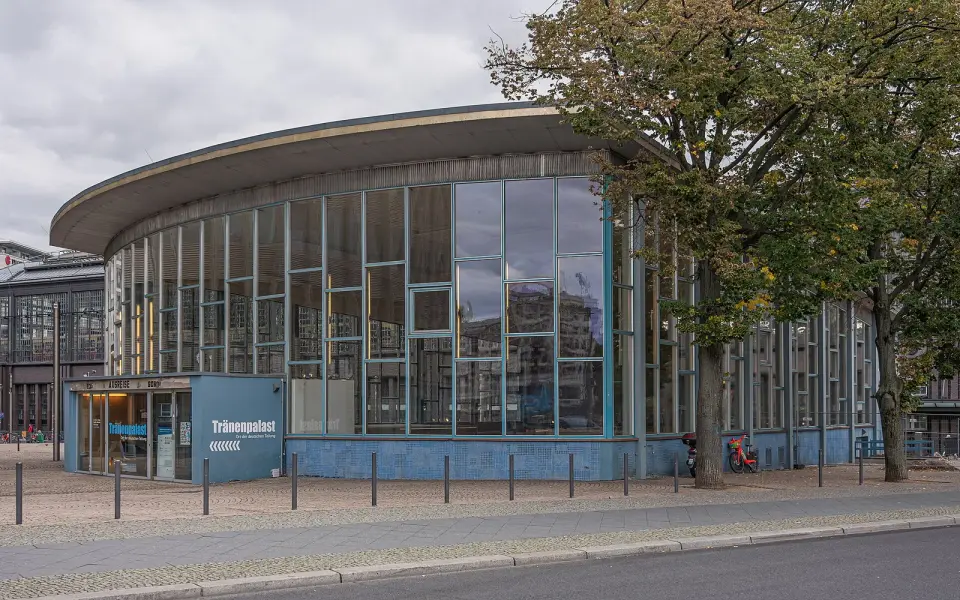
The Tränenpalast (Palace of Tears) is a low steel-and-glass pavilion right next to Friedrichstraße station. It was built in 1962 as a departure hall, one year after the Wall went up. Although the station lay in the middle of East Berlin, it served as a border crossing. From here S-Bahn, U-Bahn and long-distance trains ran to West Berlin and West Germany. Anyone allowed to leave the GDR, usually visitors from the West on their way back, had to pass through this hall.
Berliners gave it its name themselves. In front of the building, families and friends said goodbye without knowing when they would see each other again. East Berliners could only go as far as the door, and only the travelers went inside. Waiting for them were passport control, customs and, quite often, hours of uncertainty. After the Wall fell, the hall lost its purpose. In the 1990s it was used as an event venue and club, before the Stiftung Haus der Geschichte der Bundesrepublik Deutschland, the foundation behind Germany's national contemporary history museums, opened a permanent exhibition here in 2011.
The exhibition "GrenzErfahrungen. Alltag der deutschen Teilung" (Border Experiences: Everyday Life in Divided Germany) uses original objects, photos, documents and interviews to show how the border shaped life on both sides. The focus is on personal stories: parcels sent to the East, separated couples, applications to leave and failed escapes. Some of the original inspection booths survive, and travelers were funneled through their narrow passages one at a time. They give you a sense of how oppressive the moment of inspection must have felt.
Admission is free, and individual visitors do not need to register. It is closed on Mondays (as of October 2026, please check times on hdg.de beforehand). You reach the Tränenpalast via Friedrichstraße station, served by numerous S-Bahn lines and the U6. From the Reichstag and the Brandenburg Gate it is about a ten-minute walk.
Friedrichstraße station as a border crossing
To understand the Tränenpalast (Palace of Tears), it helps to look at the station next door. After the Wall went up in 1961, Friedrichstraße station lay entirely in East Berlin. Even so, lines from the West ended and started here: the S-Bahn from West Berlin had its terminus on a sealed-off platform, and the West Berlin U-Bahn line under Friedrichstraße ran through the station without East Berliners being able to board. Inside, the station was split into an eastern and a western section by steel walls, screens and checkpoints. Anyone leaving for the West was not processed in the station itself but in the departure hall built in front of it in 1962, and only afterward led through a passage to the platforms.
For travelers from the West, this crossing was one of the most important routes into East Berlin. They arrived by S-Bahn, went through the checks and had to make a mandatory exchange of money into East German marks. In the evening they went back through the departure hall. For GDR pensioners, who were allowed to travel to the West from the mid-1960s, the hall was likewise the gateway to the other world.
After the border opened in November 1989, the processing soon came to an end. The hall stood empty for a while, was then used as an event venue and was eventually listed as a historic monument. In September 2011, the year of the 50th anniversary of the construction of the Wall, the current exhibition opened.
How the exhibition is organized
The route roughly follows the path travelers took back then.
- Division and the building of the Wall: The introduction explains how the division came about and what it meant for families.
- The Friedrichstraße border crossing: Plans and models show how the station was divided. You see how travelers were channeled and where they had to wait.
- The processing: Original inspection booths, passport photos, forms and items from customs. This is where the procedure becomes most tangible.
- Everyday life at the border: Parcels from the West, goods from the Intershop (the GDR’s hard-currency stores), letters, visiting rules.
- The end of division: The road to the opening of the Wall in 1989.
At media stations, contemporary witnesses talk about their experiences in short interviews. Most texts are bilingual, in German and English.
Planning your visit
Since admission is free and the exhibition is compact, the Tränenpalast works well as a stop between two bigger sights. It is quietest on weekday mornings. Many groups come on weekends. The address is Reichstagufer 17. The step-free entrance is at the back of the building, and the entire exhibition is on one level.
Friedrichstraße station is one of the most important hubs downtown: the S-Bahn lines S1, S2, S25, S26, S3, S5, S7 and S9 stop here, as do the U6 and regional trains. From the Hauptbahnhof (main station), it is one stop by S-Bahn.
Tips
- Walk through Friedrichstraße station after your visit. With what you learned in the exhibition, you will see the stairs and passages with different eyes.
- On the opposite bank of the Spree stands the Theater am Schiffbauerdamm, home stage of the Berliner Ensemble. The riverside promenade is lovely for a short stroll.
- For school classes and groups, the Stiftung Haus der Geschichte (the foundation that runs the site) offers accompanied visits that must be booked in advance.
Nearby
About ten minutes west along the Spree is the Reichstag. To the south, Friedrichstraße takes you in a few minutes to Unter den Linden and the Brandenburg Gate. If you want to explore the division further, head to the Berlin Wall Memorial on Bernauer Straße or to Checkpoint Charlie. The prison side of Germany’s division is the subject of the Berlin-Hohenschönhausen Memorial.
Frequently asked
What to know about Palace of Tears (Tränenpalast)
Why is it called the Palace of Tears?
In front of the departure hall at Friedrichstraße station, East Berliners had to say goodbye to their visitors from the West. The many tearful farewells gave the building its name.
Does the Tränenpalast charge admission?
No, the permanent exhibition is free. Public guided tours are offered at set times, and groups should register in advance.
How long does a visit take?
45 to 90 minutes is usually enough for the exhibition. If you take your time with the interviews and audio stations, you will need a little longer.
Nearby & related
Pairs well with this
More attractions that combine nicely with a visit to Palace of Tears (Tränenpalast).
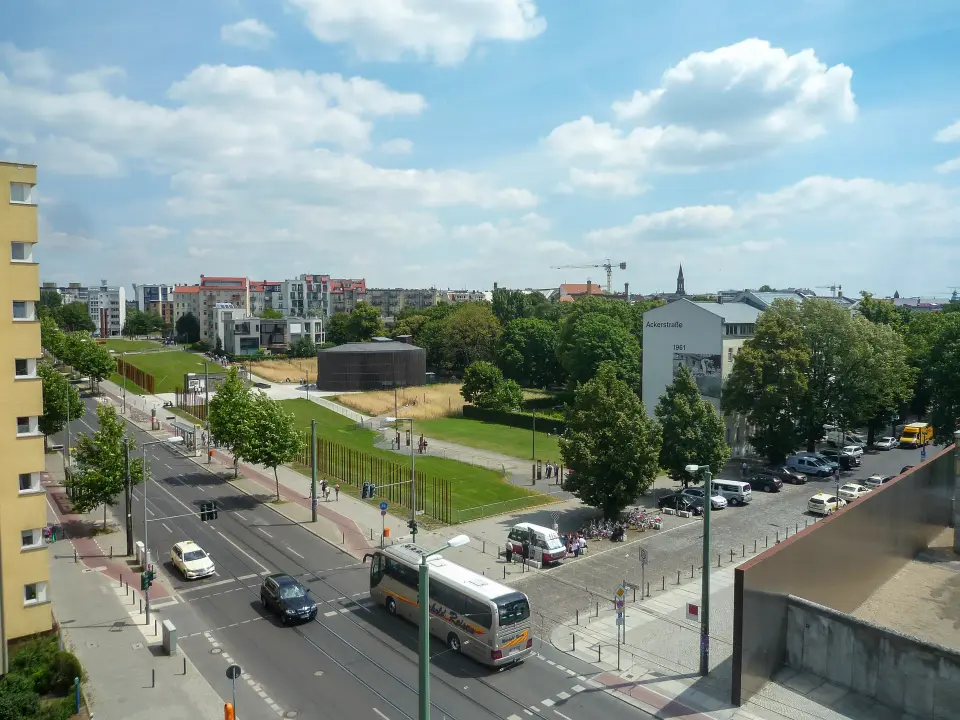
Berlin Wall Memorial
The central place of remembrance for the division, with a preserved border strip on Bernauer Straße.
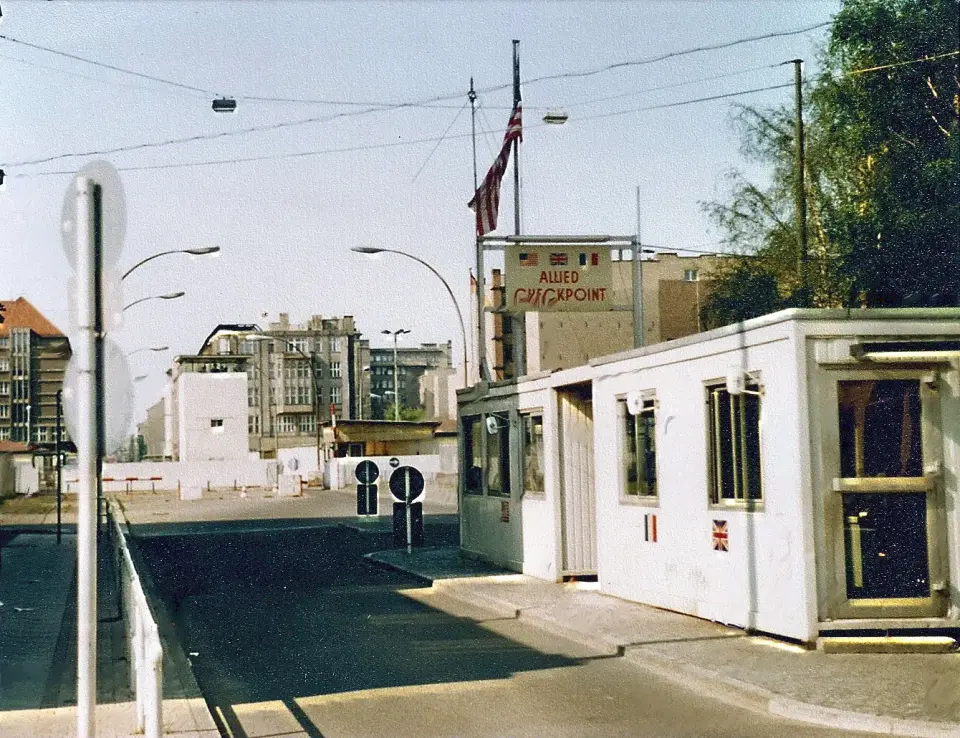
Checkpoint Charlie
The former border crossing between East and West, today a symbol of the Cold War.
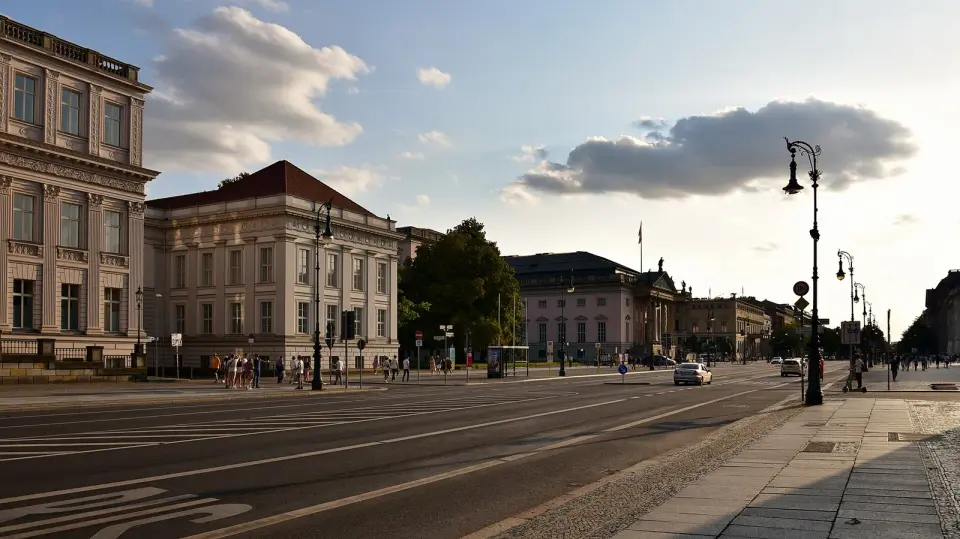
Unter den Linden
Berlin's grand boulevard between the Brandenburg Gate and Museum Island, lined with the opera, the university, the Zeughaus and linden trees.
More in Mitte
More attractions in Mitte
Other highlights in the same district that pair well with a visit to Palace of Tears (Tränenpalast).
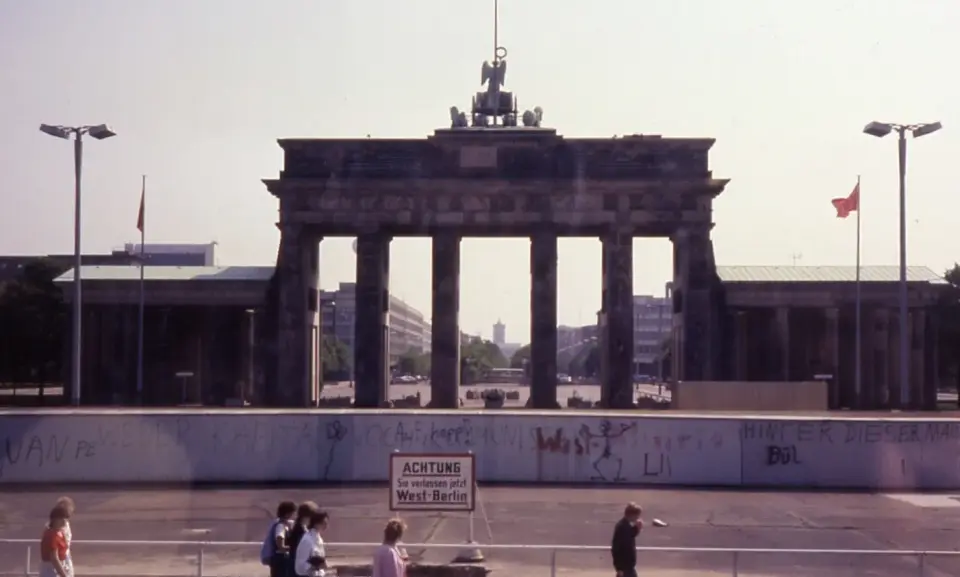
Brandenburg Gate
Berlin's most famous landmark on Pariser Platz, transformed from a symbol of division into a symbol of unity.
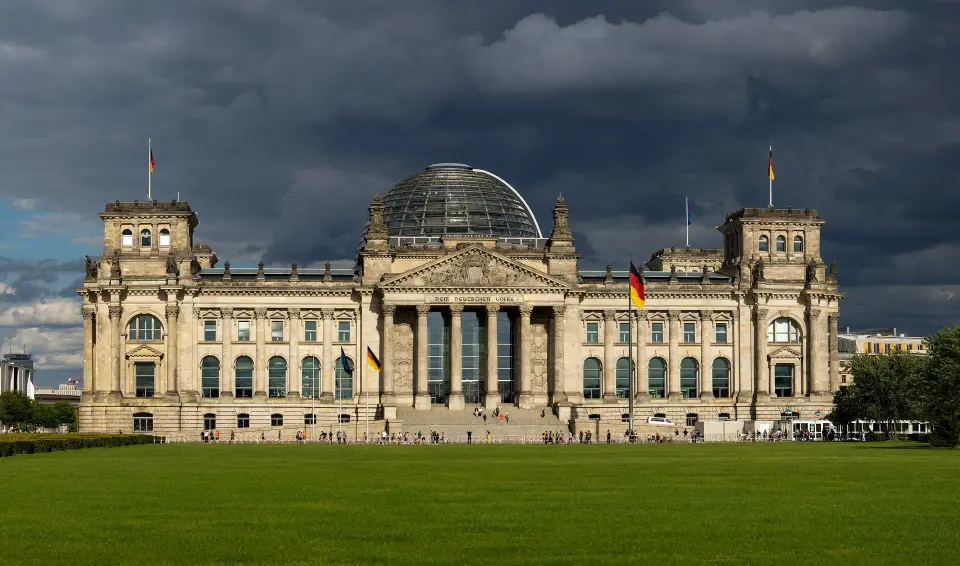
Reichstag Building
Seat of the German Bundestag, with a walk-up glass dome by Norman Foster and views over the government quarter.
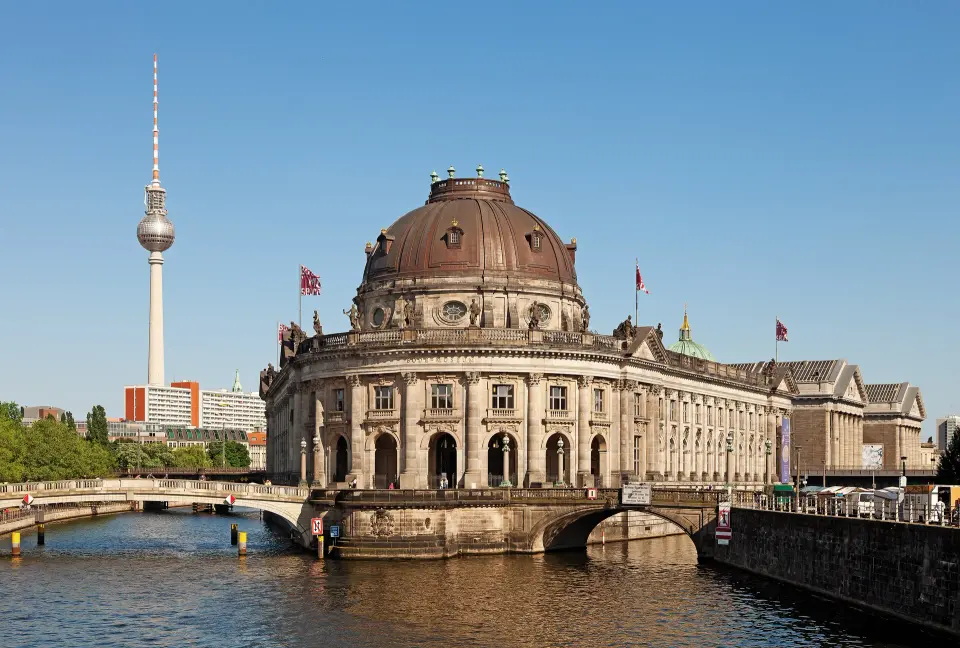
Museum Island
Five world-famous museums on an island in the Spree, a UNESCO World Heritage Site since 1999.
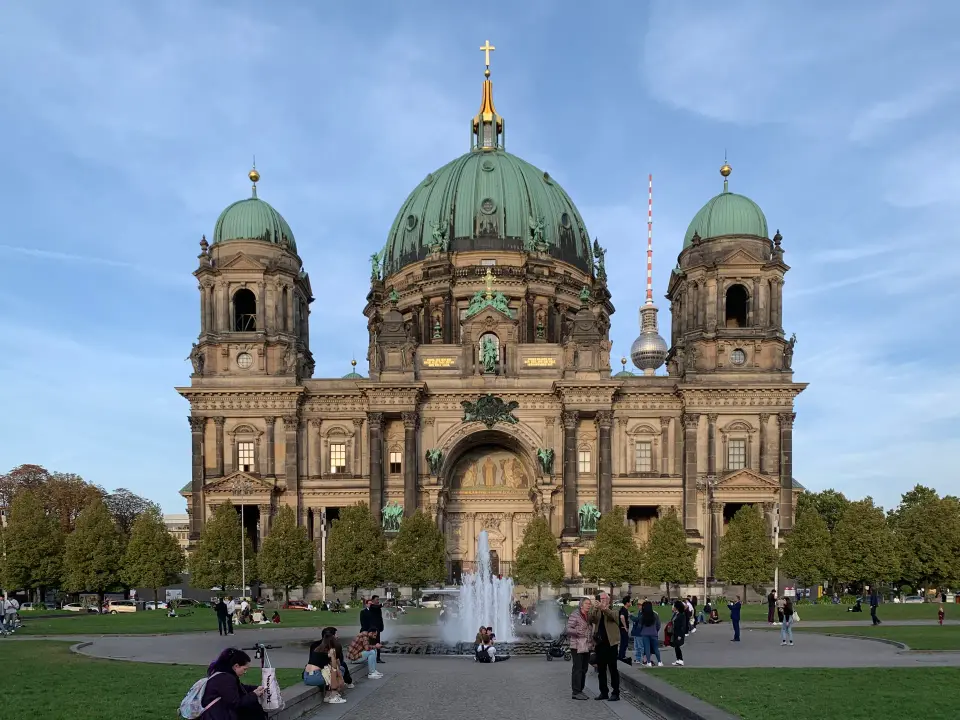
Berlin Cathedral
A monumental Protestant church on the Lustgarten with a walk-up dome and views over Museum Island.
Stay in the neighborhood
Find hotels in Mitte
Planning a visit to Palace of Tears (Tränenpalast)? Here you'll find places to stay in the Mitte district.