Museum · History · Cold War
Stasi Museum
A museum in the former headquarters of the GDR's state security service in Lichtenberg, with Erich Mielke's office preserved in its original state.
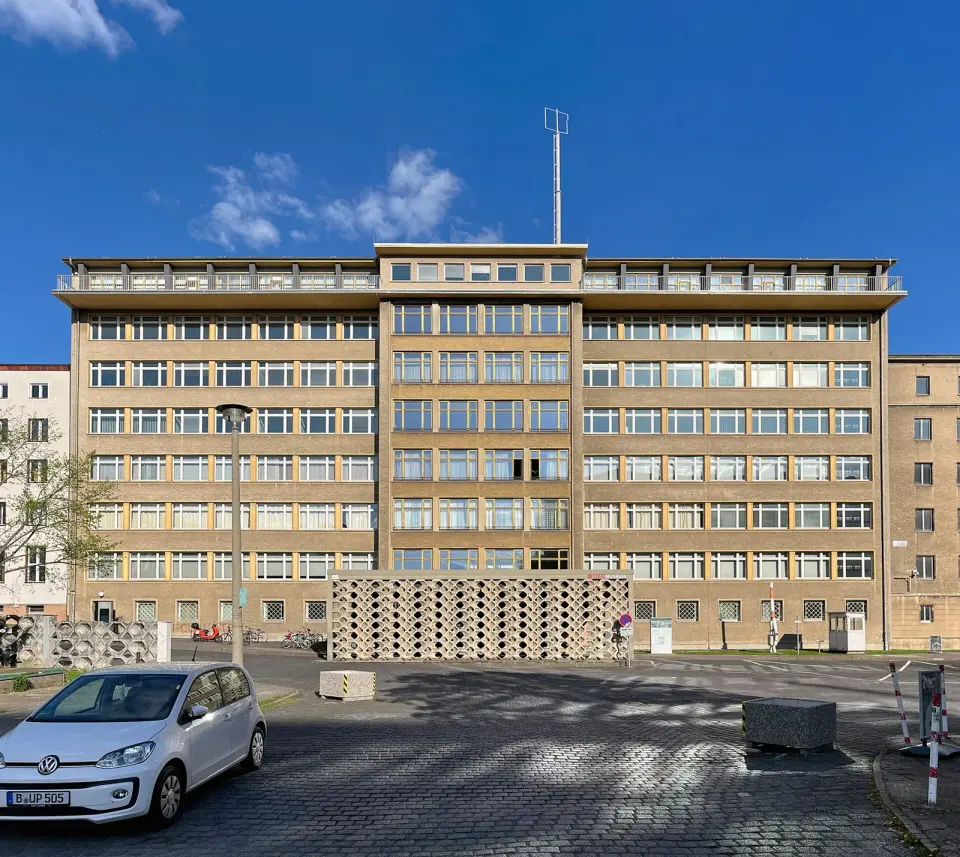
The Stasimuseum is in Haus 1 (Building 1) of the former headquarters of the Ministry for State Security on Ruschestraße in Lichtenberg. From this complex, which by 1989 had grown to cover several city blocks, the Stasi directed its surveillance of the country's own population. Haus 1 was the office building of Minister Erich Mielke, who led the ministry from 1957 to 1989.
On January 15, 1990, demonstrators forced their way into the headquarters to stop the further destruction of files. That same year, civil rights activists founded a research center and memorial in the building. The association ASTAK still runs the museum today. The building was renovated in 2015, and since then a redesigned permanent exhibition has shown how state security was structured, how it worked and how the SED, East Germany's ruling party, used it as an instrument of its rule.
Most striking is the floor with the minister's offices. Mielke's office, his anteroom, the conference room and a small dining room are preserved as they were in the 1960s and 1970s, with wood-paneled walls, heavy furniture and telephone systems. Nearby, display cases show bugging equipment, cameras hidden in buttonholes, watering cans or tree trunks and other surveillance tools. Many texts are bilingual in German and English.
The museum is part of the "Campus für Demokratie" (Campus for Democracy). The grounds also house the Stasi Records Archive, part of the Federal Archives since 2021, which offers its own tours and exhibitions. If you combine both, plan half a day. The nearest station is Magdalenenstraße on the U5, just a few minutes' walk away. Check opening hours and prices on stasimuseum.de before your visit, as they can change with the season.
The headquarters on Normannenstraße
The Ministerium für Staatssicherheit (Ministry for State Security) was founded in 1950 and soon moved onto the grounds between Frankfurter Allee, Ruschestraße, Normannenstraße and Magdalenenstraße. Over the decades the complex grew into a small town with dozens of buildings. There were offices, archives, a computer center, a cafeteria, shops, an outpatient clinic and even its own barber. Thousands of employees worked here, screened off from the surrounding neighborhood.
Haus 1 (Building 1) went up in the early 1960s as the minister’s seat. Erich Mielke held the post for more than three decades. His rooms are furnished in a style that was upscale by the standards of the time but not lavish, matching the taste of a senior party official of the Ulbricht and Honecker era.
In the fall of 1989, Stasi employees began destroying files. By December, citizens’ committees had already occupied several district offices across the GDR. On January 15, 1990, the gates on Normannenstraße opened as well. Thousands of demonstrators pushed onto the grounds, and civil rights activists, together with government representatives, began overseeing the dissolution of the ministry. Many of the files that were saved can be consulted today in the archive on the same grounds.
What you see in the exhibition
The tour is spread over several floors and falls roughly into three parts.
- Introduction: The history of the site and the role of the Stasi as the “shield and sword of the party,” plus objects and photos from the occupation in 1990.
- Minister’s floor: Mielke’s office, the anteroom for his secretaries, the conference room and lounges. Look out for the telephone system and the furniture dating from when the building was constructed.
- Theme rooms: Topics such as unofficial informants, mail surveillance, the monitoring of churches and the opposition, and cooperation with other intelligence services in the Eastern Bloc.
The surveillance equipment is especially revealing: miniature cameras, bugs, and scent samples in preserving jars that were meant to put tracking dogs on people’s trail. The exhibition design is sober, but the explanations are good, with labels in German and English.
Exploring the campus
If you have time after the museum, take a look around the grounds. In the courtyard, panels explain what the individual buildings were used for. The Stasi Records Archive at the Bundesarchiv (Federal Archives) regularly offers guided tours through the storage rooms, which hold miles of files. The campus also has an open-air exhibition on the Peaceful Revolution that traces the events of 1989/90 in pictures.
Planning your visit
Take the U5 from Alexanderplatz to Magdalenenstraße, a ride of about ten minutes. Use the exit toward Ruschestraße, and from there the way to Haus 1 is signposted. The Frankfurter Allee S-Bahn station (on the Ringbahn, the circle line) is about a ten-minute walk away. An hour and a half is enough for the museum alone. With an archive tour and the outdoor grounds, it becomes half a day.
Tips
- Opening hours on weekends may differ from those on weekdays. Check them beforehand on stasimuseum.de.
- If you want to go deeper, you can book a public guided tour. Dates are listed on the museum’s website.
- If you want to know whether a file exists on you or on deceased relatives, you can apply to view records at the Stasi Records Archive. Information is available on site.
Nearby
The former central remand prison, today the Berlin-Hohenschönhausen Memorial, is about 20 minutes away by bus and train. For a walk, try the Landschaftspark Herzberge. The U5 gets you back to the center quickly, for example to the DDR Museum, which shows everyday life in the GDR from a very different angle. We collect more places in the east of the city on our page about Lichtenberg.
Frequently asked
What to know about Stasi Museum
Where is the Stasi Museum?
In Haus 1 of the former Stasi headquarters, Ruschestraße 103, in Berlin-Lichtenberg. The nearest U-Bahn station is Magdalenenstraße on the U5, about a ten-minute ride from Alexanderplatz.
How is it different from the Hohenschönhausen Memorial?
The Stasi Museum shows the center of power: the organization, its methods and the leadership's offices. Hohenschönhausen was the central remand prison and shows the prisoners' side. The two places complement each other well.
Can you see Mielke's office?
Yes. Erich Mielke's rooms, with his office, anteroom and conference room, are largely preserved in their original state and are part of the museum tour.
Nearby & related
Pairs well with this
More attractions that combine nicely with a visit to Stasi Museum.
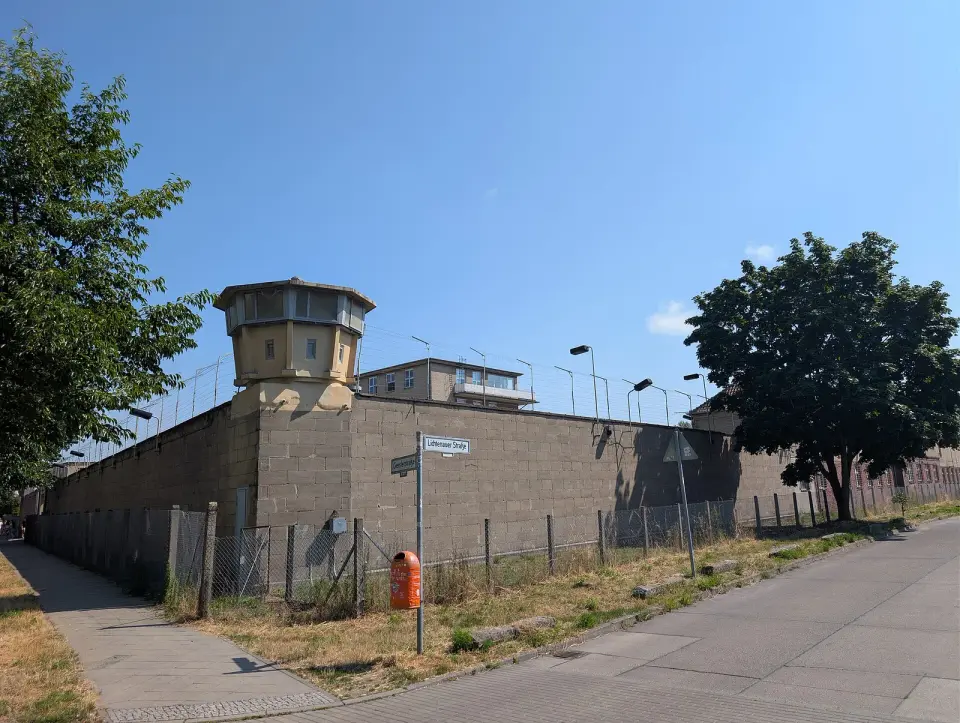
Berlin-Hohenschönhausen Memorial
The Stasi's former central remand prison, which you get to know on guided tours through cell blocks and interrogation rooms.

DDR Museum
An interactive museum on everyday life in the GDR, right on the Spree opposite the cathedral.
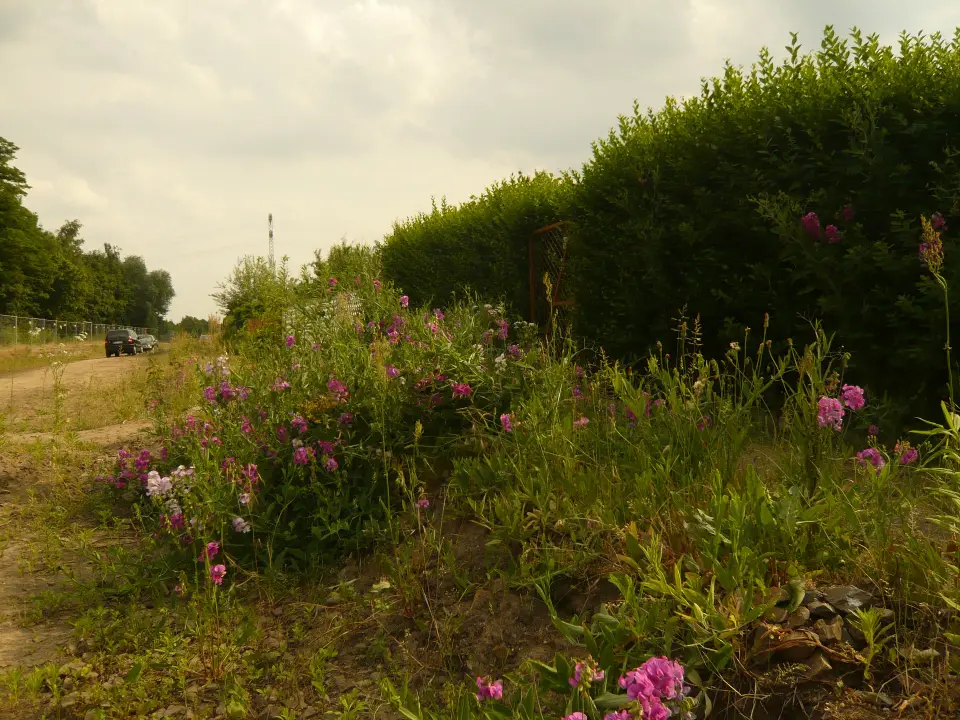
Herzberge Landscape Park
Around 100 hectares of urban landscape in Lichtenberg with grazing Pomeranian sheep, biotopes and wide meadows.
More in Lichtenberg
More attractions in Lichtenberg
Other highlights in the same district that pair well with a visit to Stasi Museum.
Stay in the neighborhood
Find hotels in Lichtenberg
Planning a visit to Stasi Museum? Here you'll find places to stay in the Lichtenberg district.