Museum · Science · Modern
Futurium
A free "House of Futures" on the Spree riverbank near Hauptbahnhof, with an interactive exhibition, a hands-on lab and a rooftop terrace.
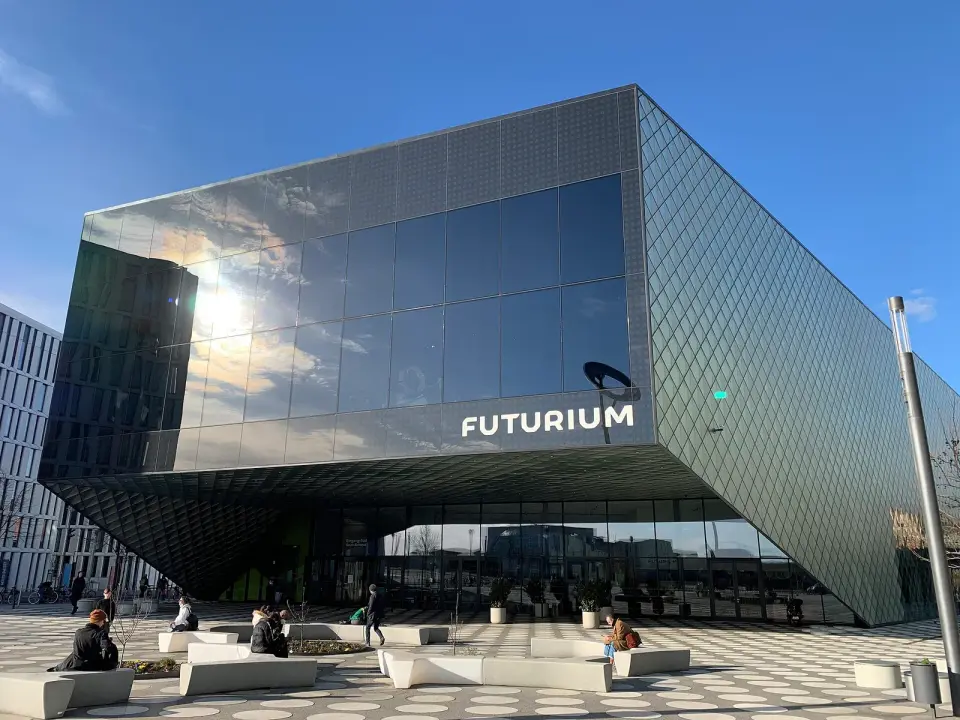
The Futurium sits on Alexanderufer between Hauptbahnhof and the Charité hospital and calls itself a "House of Futures." It opened in September 2019 and deals not with the past but with the question of how we want to live, work and do business in the future. It is backed by the federal government together with partners from science, foundations and business.
The building itself catches the eye. The Berlin architecture firm Richter Musikowski designed an angular structure whose facade consists of thousands of glass and metal panels that look very different depending on the light. Photovoltaic and solar thermal systems on the roof are part of the energy concept. In suitable weather, part of the roof is open as a skywalk, with views over the government quarter and the Spree.
The permanent exhibition on the upper floor is divided into three large "thinking spaces": people, nature and technology. Instead of finished answers, it presents scenarios and invites you to weigh them up. Topics include food, mobility, cities, health and artificial intelligence. At many stations you can vote, record your own ideas or try out prototypes. The lower level houses the Futurium Lab, a workshop with experiment stations, robots and equipment like 3D printers. There is also a forum for events, workshops and discussions, plus a café.
Admission is free. The Futurium is closed on Tuesdays, stays open later on Thursdays and is open from 10 a.m. to 6 p.m. on the other days (as of October 2026, please check futurium.de beforehand). It is about 350 meters (a quarter mile) on foot from Hauptbahnhof, where the U5 also stops. Trams M5, M8 and M10 and bus 245 also run nearby. A visit combines well with the Hamburger Bahnhof or a walk through the Spreebogen.
The idea behind the building
The Futurium is not a museum in the classic sense, since it does not collect historical objects. It grew out of the thought that debates about climate change, digitalization or health often stay abstract and need a place where they can be made tangible and discussed together. The federal government paid for the building, and it is run by a nonprofit company whose partners include, besides the research ministry, major science organizations, foundations and businesses.
The location on the bank of the Spree was chosen deliberately. Right next door are the Hauptbahnhof (main station), the Charité hospital, several ministries and the Bundestag, so politics, science and transport sit in close quarters. The building itself was also meant to show how a public building can get by on little energy. The solar panels on the roof are therefore not decoration but part of the building’s energy supply.
How to explore the exhibition
The exhibition on the upper floor has an open layout with no fixed route. Three large areas divide the space.
- Denkraum Mensch (Thinking Space: Humans): This area covers health, work, living together and the question of how technology changes our bodies and our relationships.
- Denkraum Natur (Thinking Space: Nature): Climate, food, biodiversity and resources. Some of the exhibits show how nature itself supplies solutions to technical problems.
- Denkraum Technik (Thinking Space: Technology): Robotics, artificial intelligence, mobility and energy. Many stations display prototypes and research projects.
At several points you are asked what kind of future you want, and you can share your opinion or leave your own ideas. That makes the visit more personal than the sober architecture would suggest.
Besides the permanent exhibition, the Futurium regularly puts on special exhibitions that go deeper into individual questions about the future. They change several times a year, and a look at the website before your visit shows what is currently on. These exhibitions are usually free as well.
The Futurium Lab
On the lower floor is the area that draws families and school classes in particular. Here you can tinker yourself: program robots, experiment with sensors, build prototypes. On weekends and during school vacations there are supervised hands-on activities. Plan a good hour here if you have kids with you, or you will run short on time.
Planning your visit
An hour and a half is enough for the exhibition upstairs; with the Lab and a break, it fills half an afternoon. Since admission is free, you can also fit the Futurium in on the spur of the moment, for example before catching a train at the Hauptbahnhof. On Thursdays the building is open until 8 p.m., a good slot after work or after a day in the city. Groups have their own guided tours, which must be booked in advance.
From the south exit of the Hauptbahnhof (Washingtonplatz), walk east along the bank of the Spree. If you are carrying a lot of luggage, use the lockers in the station first.
Tips
- Check the events program. In the evenings there are often discussions, readings and film screenings on future topics, many of them free.
- The skywalk on the roof is not always open, for example in wind or rain. Ask at the entrance.
- There is a café in the building, handy for a break between the exhibition and the Lab.
Nearby
The Futurium’s neighbors are the Hauptbahnhof and, across the Spree, the Federal Chancellery. On Invalidenstraße you will find the Hamburger Bahnhof with contemporary art and the Natural History Museum. Crossing the Spree, you reach the Reichstag and the buildings of the Spreebogen in a quarter of an hour.
Frequently asked
What to know about Futurium
Does the Futurium charge admission?
No, admission is free. Individual workshops, tours or events may cost extra (as of October 2026).
When is the Futurium open?
Monday, Wednesday, Friday, Saturday and Sunday from 10 a.m. to 6 p.m., Thursdays from 10 a.m. to 8 p.m. It is closed on Tuesdays (as of October 2026).
Is the Futurium good for kids?
Yes. The Futurium Lab on the lower level with its experiment stations is especially popular with children and teens. The exhibition upstairs is aimed more at teenagers and adults.
Nearby & related
Pairs well with this
More attractions that combine nicely with a visit to Futurium.
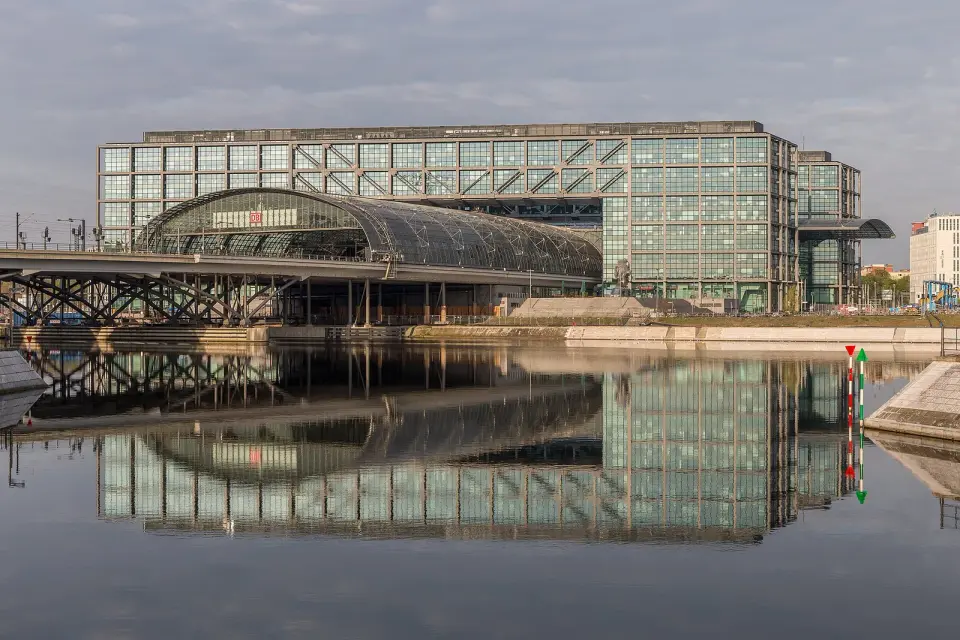
Berlin Hauptbahnhof
A glass interchange station from 2006 where long-distance trains meet on two levels, and for many visitors their first glimpse of Berlin.
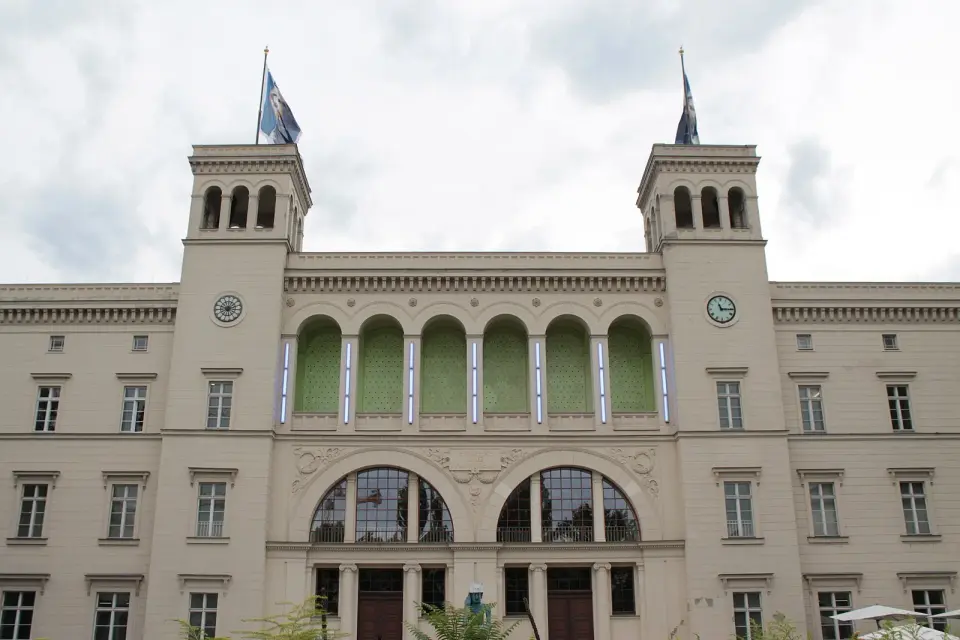
Hamburger Bahnhof
A former terminal station from 1847, now one of Berlin's most important venues for contemporary art as the Nationalgalerie der Gegenwart.
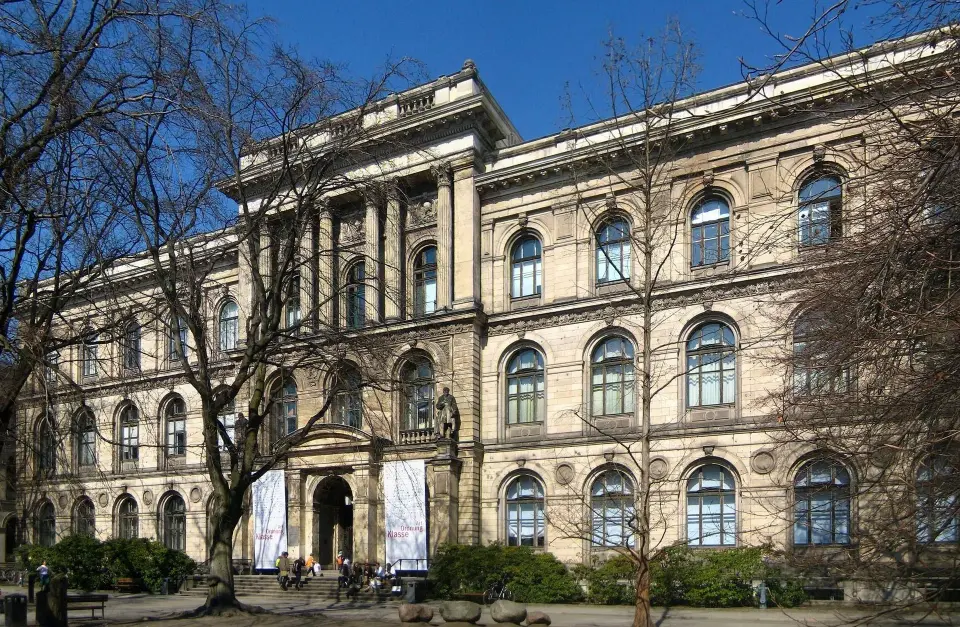
Natural History Museum
Germany's largest natural history museum, home to the tallest mounted dinosaur skeleton in the world.
More in Mitte
More attractions in Mitte
Other highlights in the same district that pair well with a visit to Futurium.
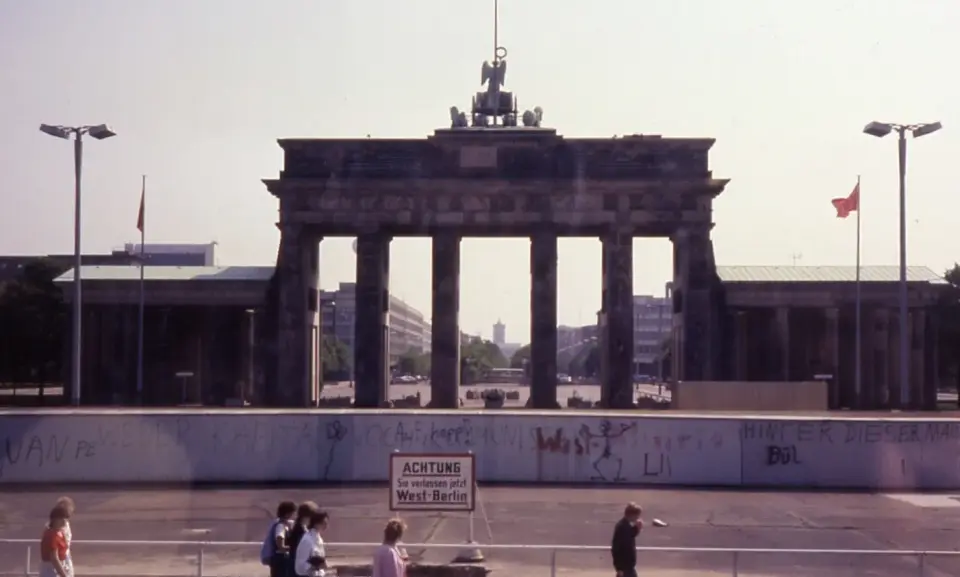
Brandenburg Gate
Berlin's most famous landmark on Pariser Platz, transformed from a symbol of division into a symbol of unity.
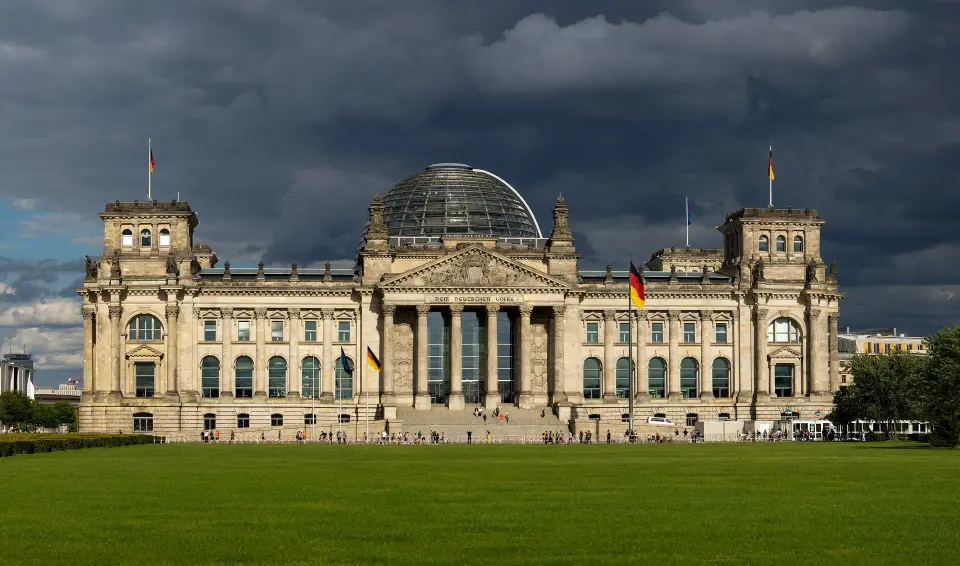
Reichstag Building
Seat of the German Bundestag, with a walk-up glass dome by Norman Foster and views over the government quarter.
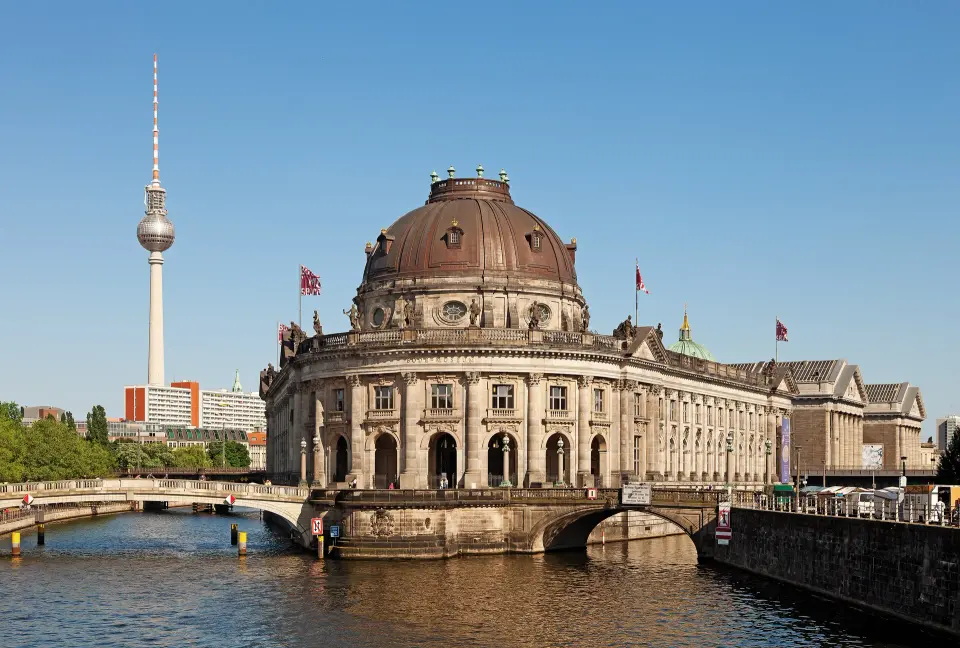
Museum Island
Five world-famous museums on an island in the Spree, a UNESCO World Heritage Site since 1999.
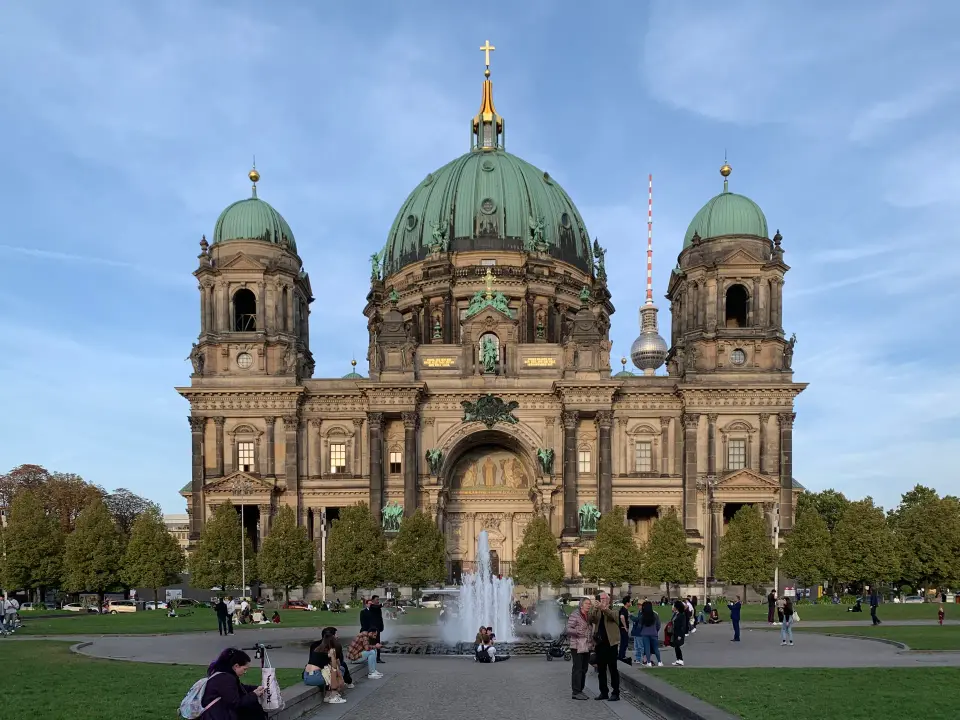
Berlin Cathedral
A monumental Protestant church on the Lustgarten with a walk-up dome and views over Museum Island.
Stay in the neighborhood
Find hotels in Mitte
Planning a visit to Futurium? Here you'll find places to stay in the Mitte district.