Politics · Architecture · Modern
Federal Chancellery
The official seat and workplace of the German chancellor in the Spreebogen, a striking building by Axel Schultes and Charlotte Frank.
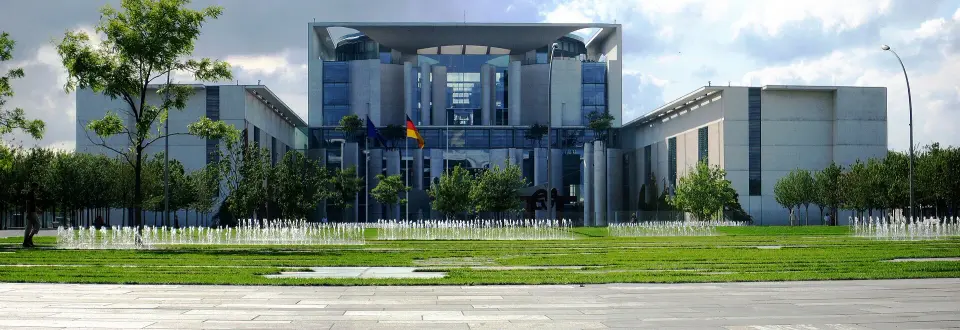
The Federal Chancellery stands in the Spreebogen, the bend of the Spree River, just a few hundred meters northwest of the Reichstag building, and has been the official seat of the German head of government since 2001. It was designed by the Berlin architects Axel Schultes and Charlotte Frank. They also came up with the urban design concept of the "Band des Bundes" (Federal Ribbon), a chain of government and parliament buildings laid across the Spree that symbolically links the formerly divided city.
Its heart is the pale, cube-shaped central building. The large round openings in its facade have earned it the Berlin nickname "Waschmaschine" (washing machine). Long, lower administrative wings extend to the left and right. In front of the main entrance lies the Ehrenhof (Court of Honor), where state guests are received with military honors. This is also where you will find the rust-red steel sculpture "Berlin" by the Basque sculptor Eduardo Chillida. Behind the building, a bridge leads across the Spree to the Chancellor's Park on the western bank, where an extension has been under construction for several years.
You normally cannot go inside. The Chancellery opens its doors only on special occasions, above all during the federal government's annual open house, and to registered groups. The outside is still worth a look. From Platz der Republik and the riverbank you see the west facade, and from the Reichstag dome you can take in the whole complex. The building shows off best from a Spree boat tour, when the boats glide past the Chancellery through the Spreebogen.
The closest stop is the Bundestag U-Bahn station on the U5. From Hauptbahnhof it is about a ten-minute walk. The riverside paths around the Spreebogen are open to everyone and make it easy to see the Chancellery, the Paul-Löbe-Haus and the Reichstag one after another on a single walk.
How the Chancellery came to Berlin
With the Bundestag’s capital decision of June 1991, it was settled that parliament and government would move from Bonn to Berlin. For the new government quarter in the Spreebogen, the bend of the Spree where densely built neighborhoods stood until 1945 and the no-man’s-land along the Wall later ran, a major urban design competition was held in 1992/93. Axel Schultes and Charlotte Frank won it with the idea of the “Band des Bundes” (Federal Ribbon): a long, unbroken row of buildings running east to west that crosses the Spree twice and so symbolically clamps together the formerly divided halves of the city.
Schultes and Frank also won the follow-up competition for the Chancellery itself. Chancellor Helmut Kohl had championed their design, but it was his successor Gerhard Schröder who moved in, in 2001. Until then, the Chancellery’s Berlin operations were housed temporarily in the former GDR State Council building on Schlossplatz.
The Federal Ribbon is still not complete. In the east, the originally planned “Bürgerforum” (Citizens’ Forum) between the Chancellery and the Paul-Löbe-Haus was never built, and the site is still a lawn. In the west, an extension has been going up in the Chancellery Park for several years to provide additional offices.
What you can make out from outside
- The main building: The tall central section is clearly higher than the side wings. Its upper floors contain the chancellor’s office and the cabinet room. The large semicircular and circular shapes in the facade let light into the halls behind them.
- The side wings: The Chancellery’s staff work in the long, lower buildings. Their facades are more finely divided and repeat the motif of the round wall openings on a smaller scale.
- The Court of Honor: When state guests are received, soldiers of the Guard Battalion line up here. During official visits the area is cordoned off, but you can often watch the preparations from the edge.
- The Spree bridge: It connects the Chancellery with the Chancellery Park and the helipad behind it.
Planning your visit
For most travelers, visiting the Chancellery means walking around the building. The best starting point is Bundestag U-Bahn station (U5). From there, cross the lawn between the Reichstag and the Chancellery, then head to the Spree and follow the riverbank to the Moltkebrücke. From there you get a side view of the building and a view of Hauptbahnhof.
If you want to look inside, keep the federal government’s open house day in mind. It usually takes place in summer but is announced anew each year. Expect crowds and long lines. School classes and other groups can also try to arrange a guided tour outside that date, usually through the member of parliament for their own constituency.
Tips
- In the evening, when the government quarter is quieter, the complex looks especially crisp. The opposite bank of the Spree by the Moltkebrücke offers good photos.
- During state visits and major political events, the surrounding area is closed off over a wide radius. A look at the day’s news can save you a detour.
- Photographing from outside is allowed. Drones are banned throughout the government quarter.
- The dome of the Reichstag building offers the best view from above, but only with free advance registration with the Bundestag.
Nearby
Right next door are the Reichstag and the buildings of the Spreebogen. Across the Moltkebrücke you reach Hauptbahnhof and, beyond it, the Futurium. To the south the Tiergarten begins, and on the edge of the park stands the Soviet War Memorial. A few minutes to the west, tucked away in the park, is Schloss Bellevue, the official residence of the Federal President.
Frequently asked
What to know about Federal Chancellery
Can you visit the Federal Chancellery?
Only on special occasions. The federal government opens the Chancellery during its annual open house, which took place on June 20 and 21 in 2026. Visits are also possible for registered groups, for example through members of the Bundestag.
Why is the Chancellery called the "washing machine"?
The nickname refers to the large circular openings in the facade of the cube-shaped central building, which look like the porthole of a washing machine.
Where is the best view of the Chancellery?
You can see it well from Platz der Republik, from the banks of the Spree and from the dome of the Reichstag building. The view from the water on a Spree river tour is especially impressive.
Nearby & related
Pairs well with this
More attractions that combine nicely with a visit to Federal Chancellery.
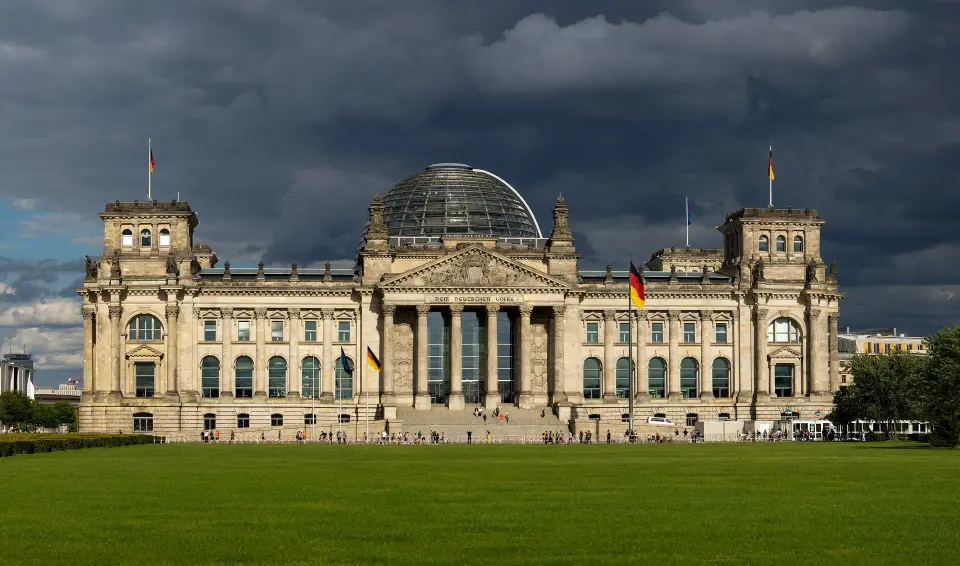
Reichstag Building
Seat of the German Bundestag, with a walk-up glass dome by Norman Foster and views over the government quarter.
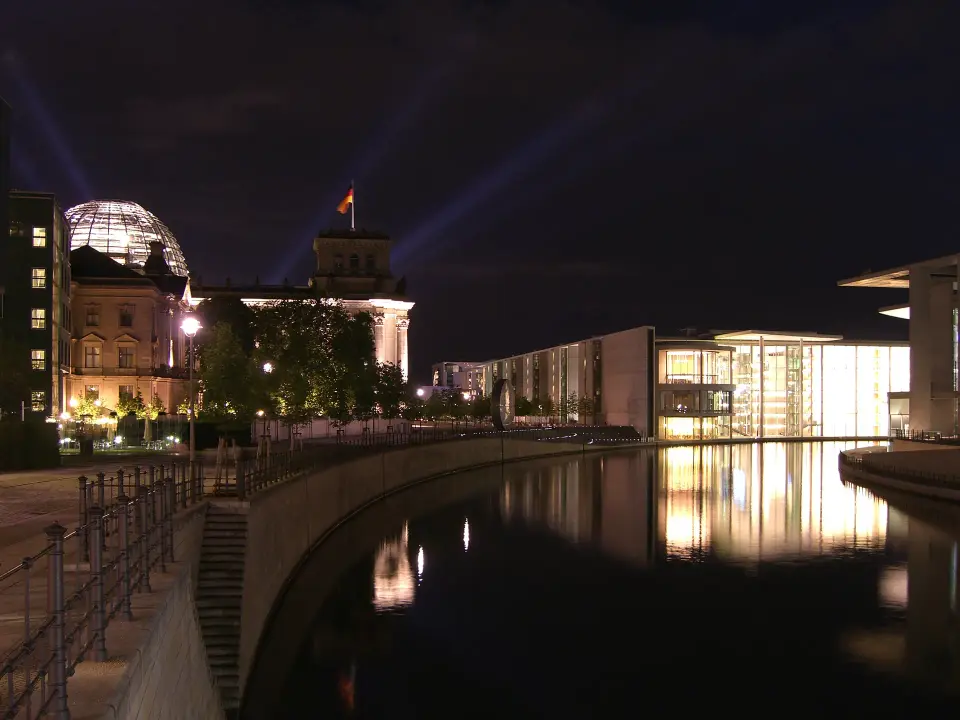
Spreebogen
The striking bend of the Spree at the heart of Berlin's government quarter, with the Reichstag and the Chancellery.
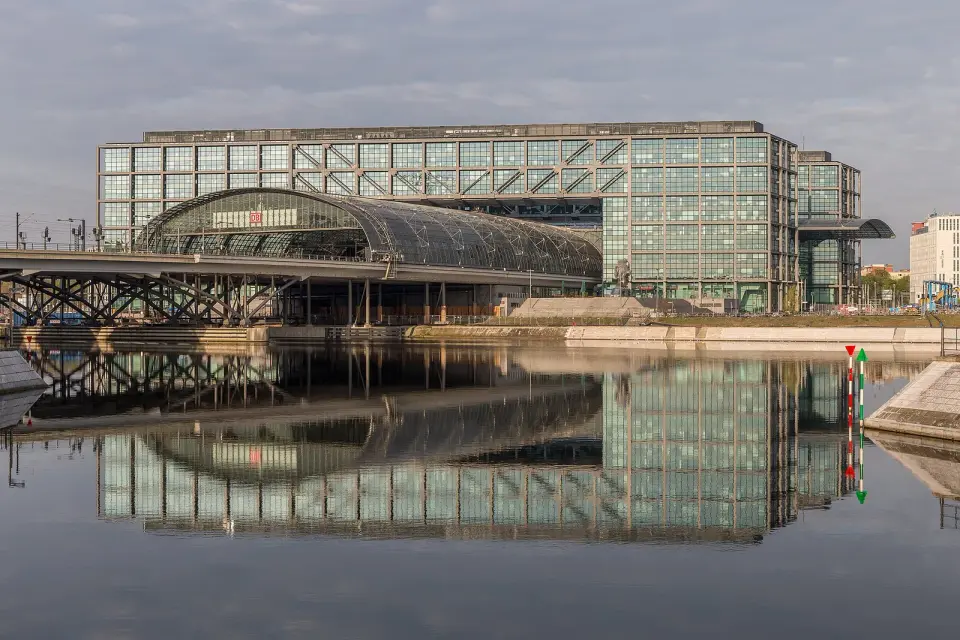
Berlin Hauptbahnhof
A glass interchange station from 2006 where long-distance trains meet on two levels, and for many visitors their first glimpse of Berlin.
More in Mitte
More attractions in Mitte
Other highlights in the same district that pair well with a visit to Federal Chancellery.
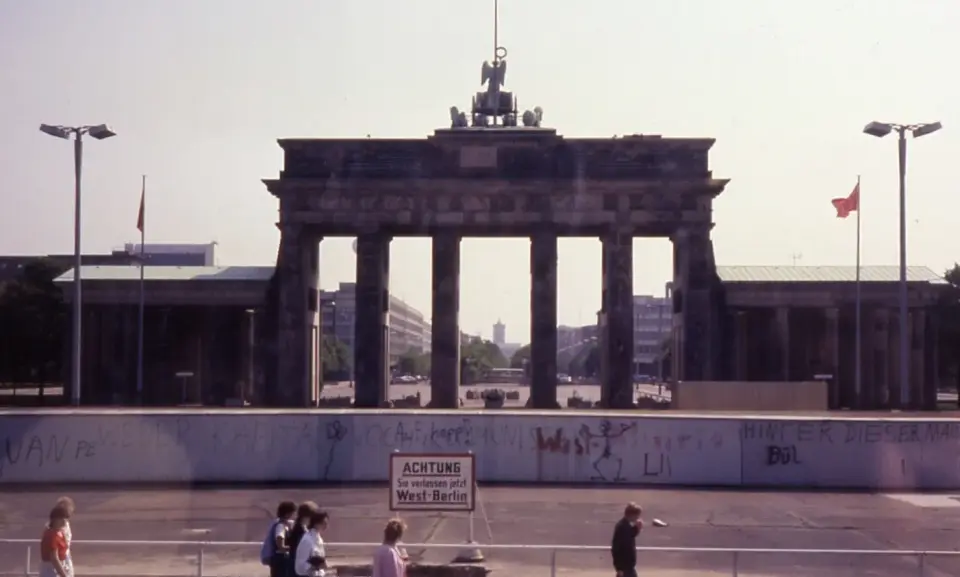
Brandenburg Gate
Berlin's most famous landmark on Pariser Platz, transformed from a symbol of division into a symbol of unity.
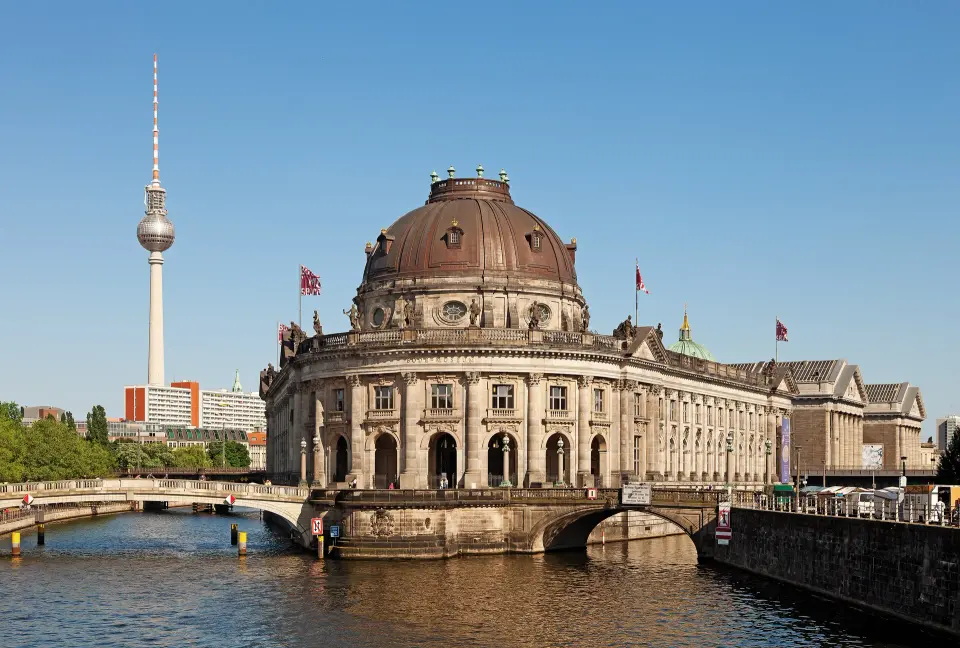
Museum Island
Five world-famous museums on an island in the Spree, a UNESCO World Heritage Site since 1999.
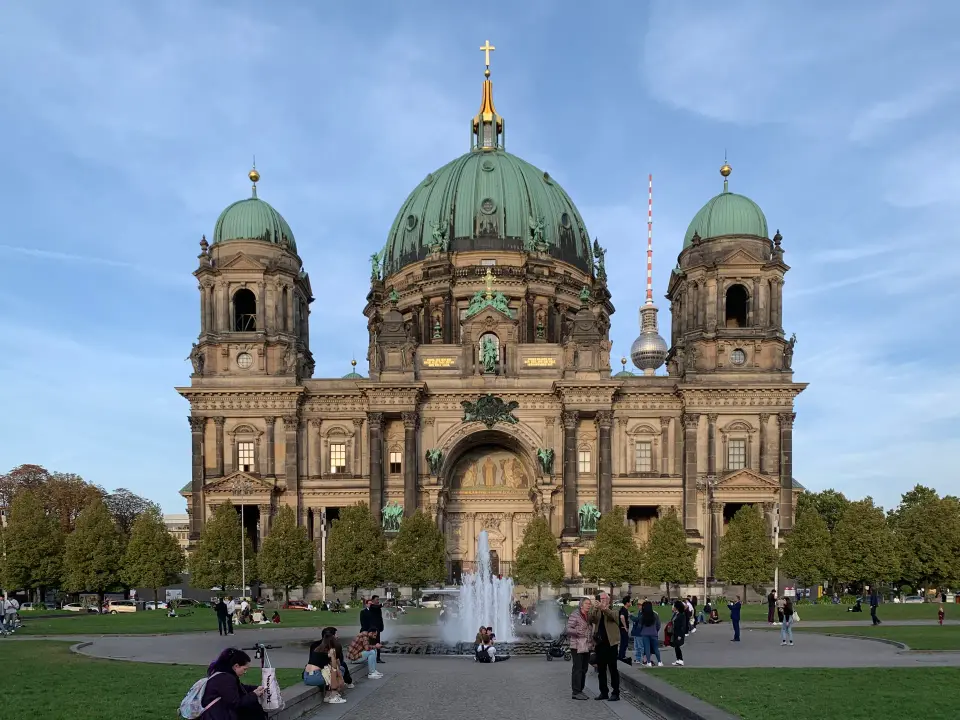
Berlin Cathedral
A monumental Protestant church on the Lustgarten with a walk-up dome and views over Museum Island.
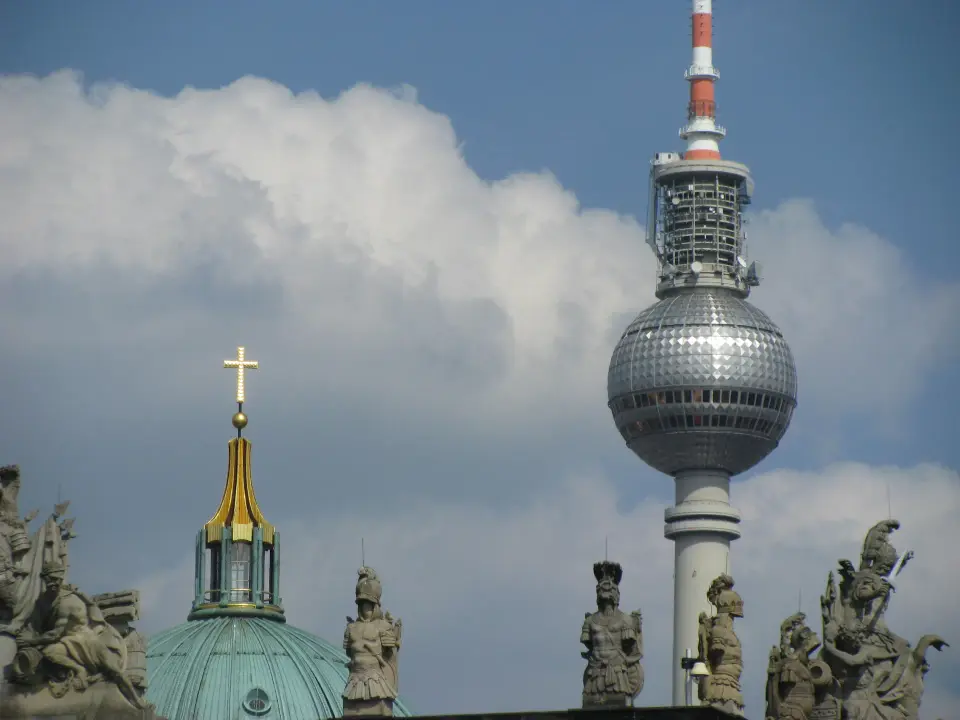
Berlin TV Tower
At 368 meters the tallest structure in Germany, with an observation deck and a revolving restaurant.
Stay in the neighborhood
Find hotels in Mitte
Planning a visit to Federal Chancellery? Here you'll find places to stay in the Mitte district.