Viewpoint · History · Art
Teufelsberg
A rubble hill in the Grunewald forest topped by the Western Allies' decaying listening station, now a street art gallery and viewpoint.
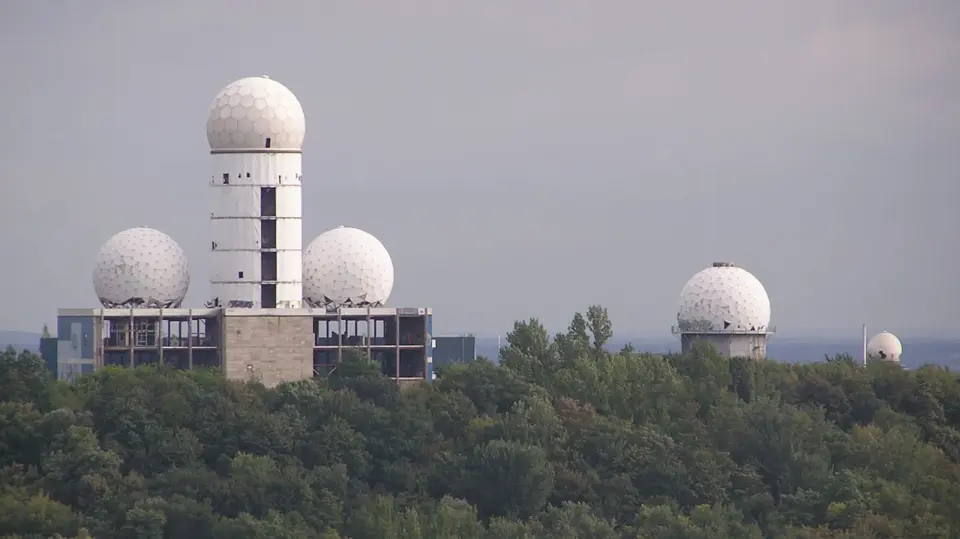
Teufelsberg in the Grunewald rises to about 120 meters (roughly 390 feet), making it one of the highest points in Berlin, but it did not form naturally. After World War II, millions of cubic meters of rubble from the bombed-out city were piled up here over about two decades. Beneath the hill lies the shell of the Wehrtechnische Fakultät (military technology faculty), begun in the Nazi era as part of a planned university district but never finished. The ruin was almost impossible to blow up, so it disappeared under the rubble instead.
The hill became famous for what stands on top. From the 1950s, American and British forces used the summit for signals intelligence, since from here they could listen deep into the GDR. This grew into a large listening station with the distinctive white radar domes that still define its silhouette. After the end of the Cold War the Allies withdrew. Several investor plans for hotels, apartments or a conference center fell through, and the complex decayed and became a magnet for adventurers.
Today the site is privately owned and open for an admission fee. The halls and towers are covered with graffiti and murals, and the station feels like an open-air street art gallery. From the top dome tower you get a sweeping view over the Grunewald, the Havel River and all the way to the downtown skyline. The buildings have not been renovated, and many areas are deliberately left raw. Sturdy shoes are a good idea, and the grounds are only partly suitable for strollers and wheelchairs.
Getting there involves a short hike. From Heerstraße S-Bahn station (S3, S9) it is a 25- to 30-minute walk uphill through the woods. Right next door is the Drachenberg, a second rubble hill where kites fly on windy days. Opening hours depend on the season and daylight and are adjusted at short notice, so check the operator's website before you go.
How rubble became a hill
After 1945, much of Berlin lay in ruins. The city had to get rid of millions of tons of rubble, and artificial hills were piled up in several places for that purpose, the Teufelsberg being the largest. For years, trucks and narrow-gauge field railways hauled debris here from the West Berlin districts. Later the slopes were covered with soil and reforested, so that at first glance the hill now looks like a natural part of the Grunewald forest.
It takes its name from the nearby Teufelssee, a small bog lake at the foot of the hill. In the 1960s and 1970s there were ski runs with lifts on its slopes, and even a ski jump. Today mountain bikers and walkers use the trails, and on windy fall days families meet with their kites on the neighboring Drachenberg.
The Cold War listening station
West Berlin was an island in the middle of the GDR, and the Teufelsberg was one of the highest points in the western half of the city. From here, radio reception reached far beyond the border. The US Army and the British Royal Air Force installed antennas here from the late 1950s, and permanent buildings followed in the 1960s. The distinctive domes, known as radomes, protected the antennas from wind and weather and at the same time hid the direction in which they were pointed. The main targets were radio traffic and communications of the Soviet and East German militaries.
How much was actually collected here is still only partly known. After reunification the station was abandoned in the early 1990s and the equipment removed. What remains are the shells of the buildings and domes.
What awaits you at the top
- The street art gallery: Hundreds of walls, ceilings and floors are painted, and many works are regularly painted over or added to. The mix ranges from large-scale portraits to small tags.
- The main tower: Stairs lead up to the highest dome. Inside the radome sphere there is a striking echo, with every sound reverberating several times.
- The view: From the roof and the upper platforms you can see the Grunewald, the Havel River, the Olympiastadion and, when visibility is good, the TV Tower on the horizon.
- Guided tours: The operator offers tours on the history of the station. They explain a lot that you would hardly figure out on your own.
Planning your visit
From the Heerstraße S-Bahn station, the route follows Teufelsseechaussee into the forest. If you follow the signs, you walk uphill through pine woods to the entrance at the summit. Alternatively, you can start at the Grunewald S-Bahn station (S7) and turn it into a longer forest walk with a detour to the Teufelssee. Allow enough time for the walk, since it gets dark early in the woods in fall and winter.
The site is not accessible for people with limited mobility and is uneven in places. The paths are slippery when it rains. Pay attention to barriers inside, as some areas are closed for safety reasons.
Tips
- For the best photos, come in the late afternoon, when the light falls across the forest from the west. Keep an eye on closing time, though, which depends on sunset.
- Bring water and a small snack. Food and drink options on the site are limited.
- In summer you can combine your visit with a swim in the Teufelssee, one of the free swimming spots in the Grunewald.
Nearby
The Teufelsberg sits in the middle of the Grunewald, which invites long hikes. About three kilometers (two miles) to the north is the Olympiastadion. The S-Bahn takes you to the Wannsee in the southwest or into City West to the Kurfürstendamm. Our page about Charlottenburg collects more places in the west.
Frequently asked
What to know about Teufelsberg
Can you visit Teufelsberg?
Yes, the grounds of the former listening station are open for an admission fee. The site is privately run, and opening hours depend on the season and daylight. Guided history tours are also offered.
How high is Teufelsberg?
The summit is about 120 meters (roughly 390 feet) above sea level. The hill is made of piled-up rubble from World War II.
How do I get to Teufelsberg?
The easiest way is the S3 or S9 to Heerstraße, then a 25- to 30-minute walk through the Grunewald. Car access is restricted, and parking is scarce.
Nearby & related
Pairs well with this
More attractions that combine nicely with a visit to Teufelsberg.
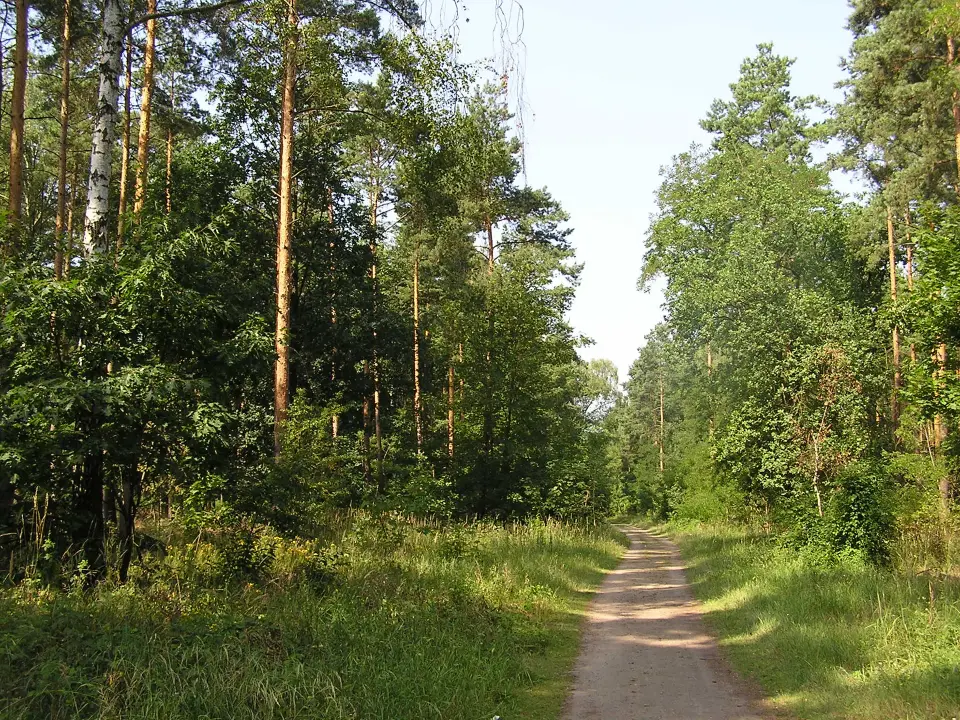
Grunewald Forest
The roughly 3,000-hectare forest in Berlin's west, with lakes, a lookout tower and a hunting lodge, is the city's green recreation heart.
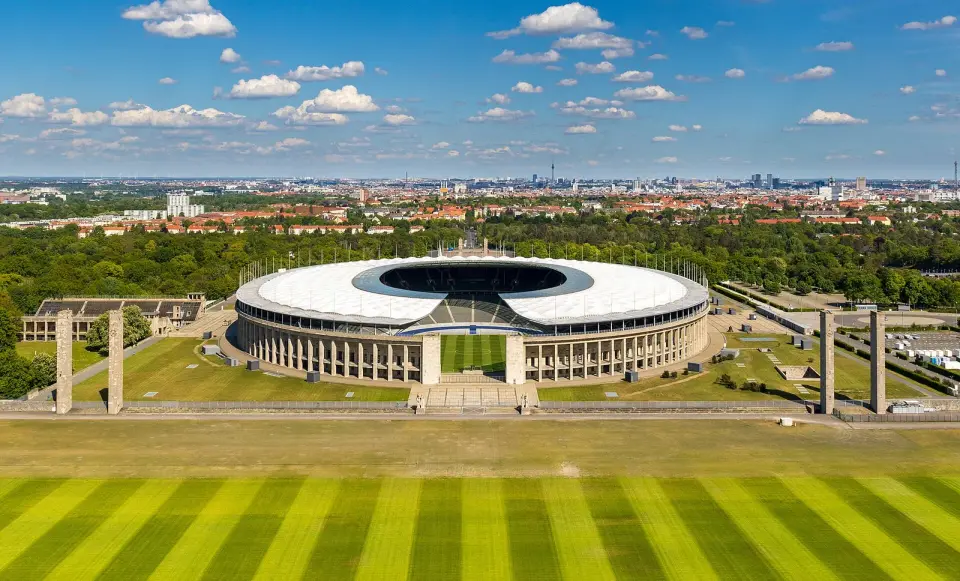
Olympic Stadium
The stadium of the 1936 Olympic Games, rebuilt for the 2006 World Cup, home of Hertha BSC and stage for major finals.
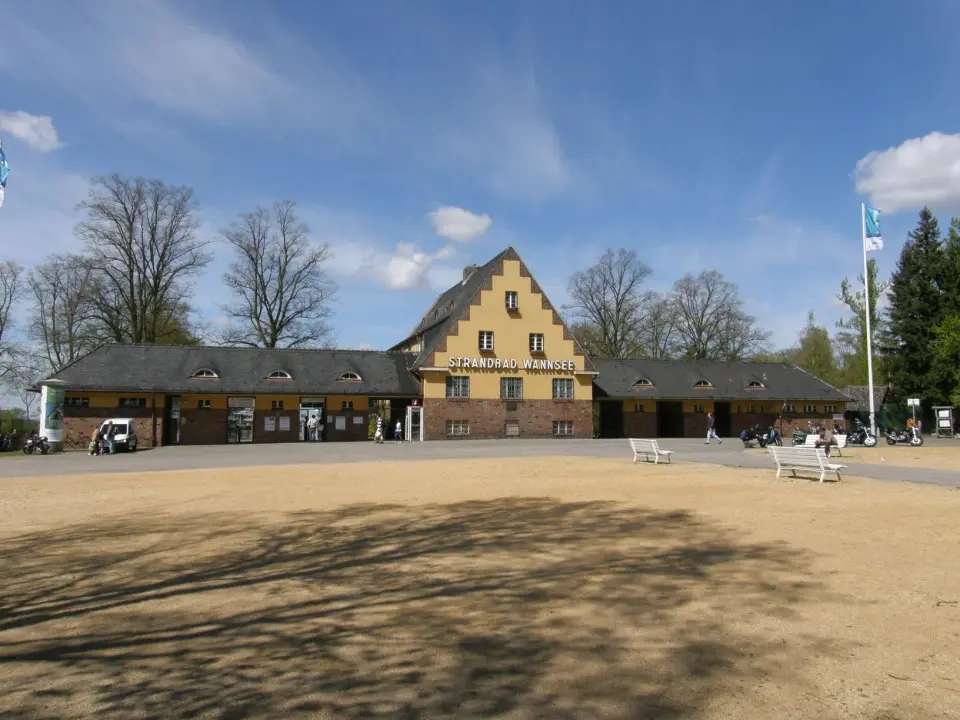
Wannsee
Berlin's most popular waterside getaway, with one of the largest inland lidos in Europe.