Shopping · Culture · History
Markthalle Neun
A historic market hall from 1891 in Kreuzberg, now known for regional food, a weekly market and Street Food Thursday.
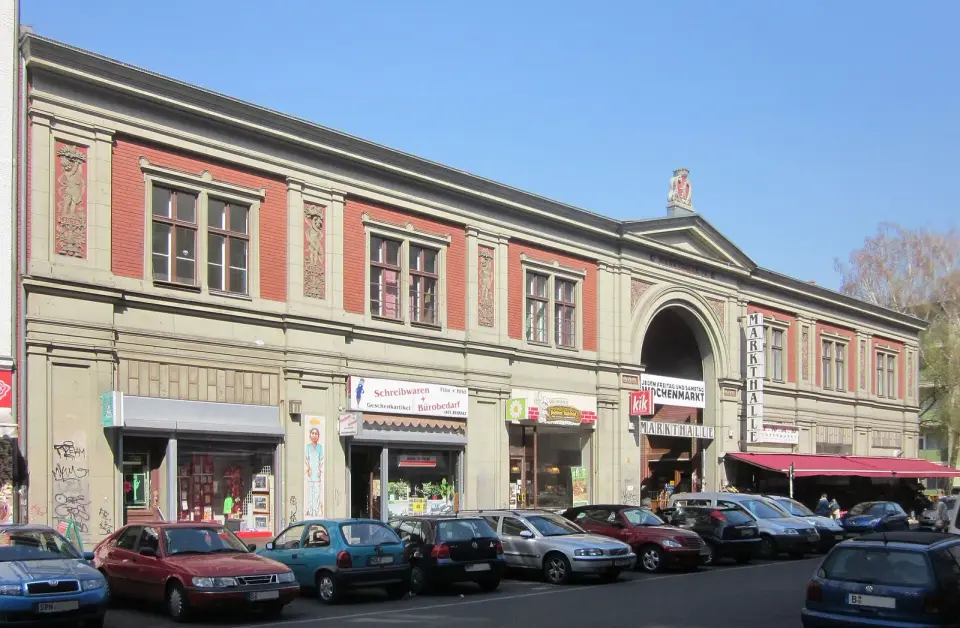
Markthalle Neun on Eisenbahnstraße in Kreuzberg is one of the original fourteen municipal market halls that Berlin built in the late 19th century to move the food trade off the streets and into more hygienic halls. It opened in 1891 and, as the ninth of these halls, carries its number in its name ("Neun" means nine). The historic street facade with its large round-arched portal survives, and inside, a steel structure spans the wide space.
Like many other market halls, this one lost importance in the 20th century. For decades part of it was used by a discount supermarket, and the rest stood largely empty. When the state of Berlin wanted to sell the hall in 2009, a neighborhood initiative campaigned to have it run as a market hall again. It reopened in a new form in 2011. Since then it has stood for a particular idea of food: regional and handmade products, short supply chains and small producers.
During the week you will find permanent stalls with bread, cheese, meat and vegetables, a canteen serving lunch, coffee roasters and a brewery that brews right in the hall. On Fridays and Saturdays a larger weekly market adds vendors from Berlin and Brandenburg. Beyond the city, the hall is best known for Street Food Thursday. Every Thursday from late afternoon, dozens of cooks set up their stalls, with everything from Asian dumplings to regional cooking to desserts. It gets crowded, loud and sociable, with people packed tightly along the long tables.
The market hall is in the Wrangelkiez neighborhood, about five minutes' walk from Görlitzer Bahnhof U-Bahn station (U1, U3). If you come on a Thursday, arrive early, before long lines form at the most popular stalls. The exact hours of individual stalls vary, and the hall posts them on its website.
Why Berlin built market halls
In the late 19th century Berlin grew so fast that supplying it with fresh food became a problem. The weekly markets on open squares were considered unhygienic, clogged the streets and were hard to use in bad weather. The city therefore decided to build a network of covered market halls spread across the residential neighborhoods, complemented by a central market hall at Alexanderplatz. Most of the halls went up in the 1880s and 1890s to designs by the city’s chief building officer, Hermann Blankenstein.
The halls could not hold on to their role for long. As grocery stores opened in residential buildings, and later supermarkets, they lost customers. Several had already closed before World War I, and others were destroyed in World War II. Of the original fourteen halls, only a few survive today or have been rebuilt. Besides Markthalle Neun, they include the Arminiushalle in Moabit and the Marheineke-Markthalle in Kreuzberg, both of which are also back in use as market halls.
What you find in the hall
The lineup changes, but some things have been fixtures for years.
- Permanent stalls: A bakery, a butcher, cheese, fruit and vegetables, many of them with produce from Brandenburg or from small farms in the region.
- Kantine (canteen): A lunch counter with changing dishes, cooked from ingredients sold by the vendors in the hall.
- Coffee and beer: A coffee roastery and a small brewery operate right in the hall, and the beer is poured on site.
- Weekly market: On Fridays and Saturdays extra vendors join in, and that is when the selection is biggest.
- Events: Throughout the year there are themed markets and festivals, for example around cheese, bread or regional farming. The program is on the hall’s website.
How to tackle Street Food Thursday
Thursday evening is the hall’s best-known format and also its most crowded. Dozens of stalls serve small dishes from many cuisines, with portions sized so that you can try several. You pay directly at each stall. From early evening the hall fills up fast, and some stalls draw long lines.
It is most relaxed right at the start. If you come as a group, split up: one person saves seats at the long tables while the others fetch food from different stalls. Vegetarian and vegan dishes are well represented.
Planning your visit
It is only a few minutes’ walk from the Görlitzer Bahnhof U-Bahn station. The hall has entrances on Eisenbahnstraße and on Pücklerstraße. There are bike racks outside the door, but parking spaces for cars in the Wrangelkiez neighborhood are scarce. The hall is usually closed on Sundays.
Its character changes with the day. On weekdays it is a quiet neighborhood market during the day, on Saturdays a lively weekly market, and on Thursday evenings a meeting place for people from all over the city.
Tips
- Bring your own bag if you plan to shop. Many stalls do without plastic bags.
- A little cash does not hurt in case a stall does not take cards.
- For a walk afterward, stroll along Wrangelstraße or take a detour to the nearby bank of the Spree.
Nearby
From the market hall you are at the Oberbaum Bridge in about ten minutes, and the East Side Gallery begins on the other side of the Spree. The U1 takes you in a few stops to the Park am Gleisdreieck and the German Museum of Technology. You will find more tips for the district on our pages about Kreuzberg and Friedrichshain.
Frequently asked
What to know about Markthalle Neun
When is Street Food Thursday at Markthalle Neun?
Every Thursday from late afternoon into the evening, currently from 5 to 10 p.m. (as of October 2026). Admission is free, and you pay directly at the stalls.
How do I get to Markthalle Neun?
Take the U1 or U3 to Görlitzer Bahnhof, then walk about five minutes.
Is Markthalle Neun worth a visit outside Street Food Thursday?
Yes. During the week there are permanent stalls, coffee and lunch, and on Fridays and Saturdays a larger market with regional producers. The hall is usually closed on Sundays.
Nearby & related
Pairs well with this
More attractions that combine nicely with a visit to Markthalle Neun.
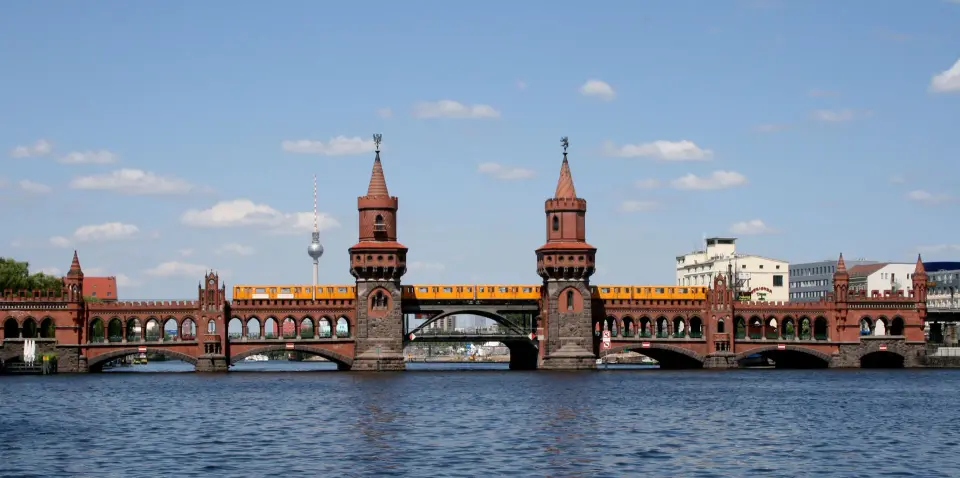
Oberbaum Bridge
A striking brick bridge over the Spree connecting Friedrichshain and Kreuzberg.
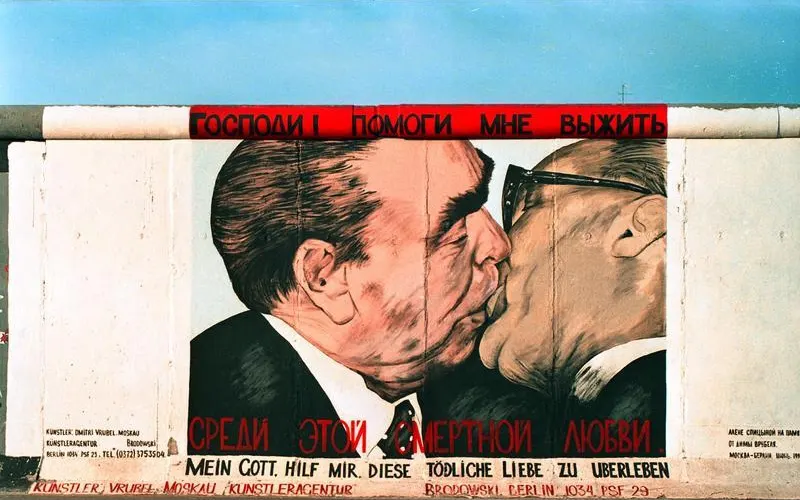
East Side Gallery
The longest surviving stretch of the Berlin Wall, painted by artists from around the world into an open-air gallery.
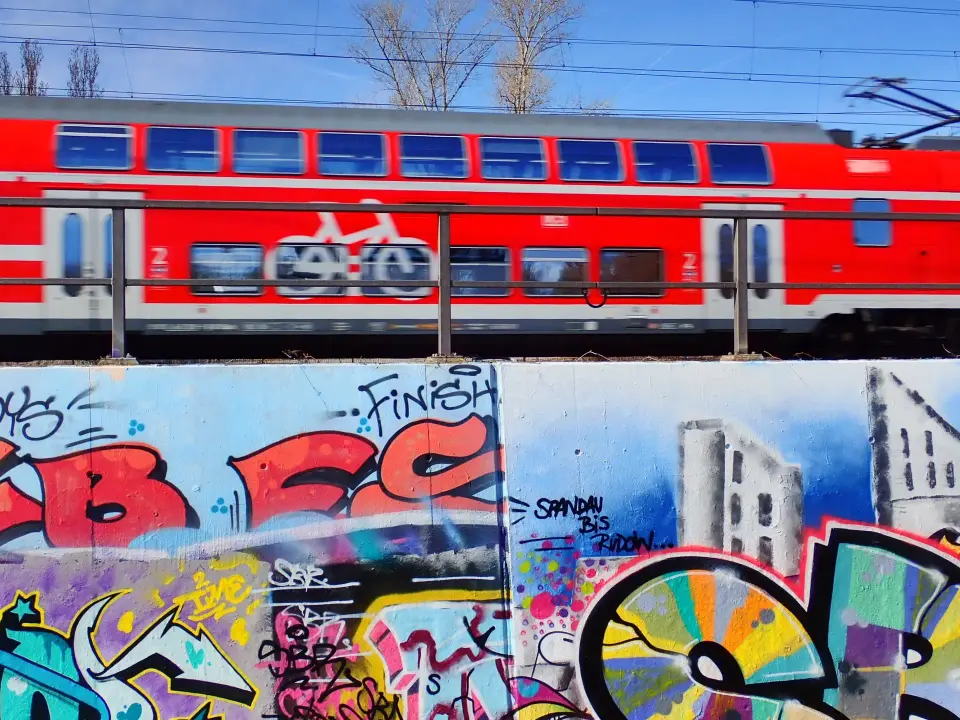
Park am Gleisdreieck
An expansive city park on former railway land between Kreuzberg and Schöneberg, blending an industrial past with modern leisure use.
More in Kreuzberg
More attractions in Kreuzberg
Other highlights in the same district that pair well with a visit to Markthalle Neun.
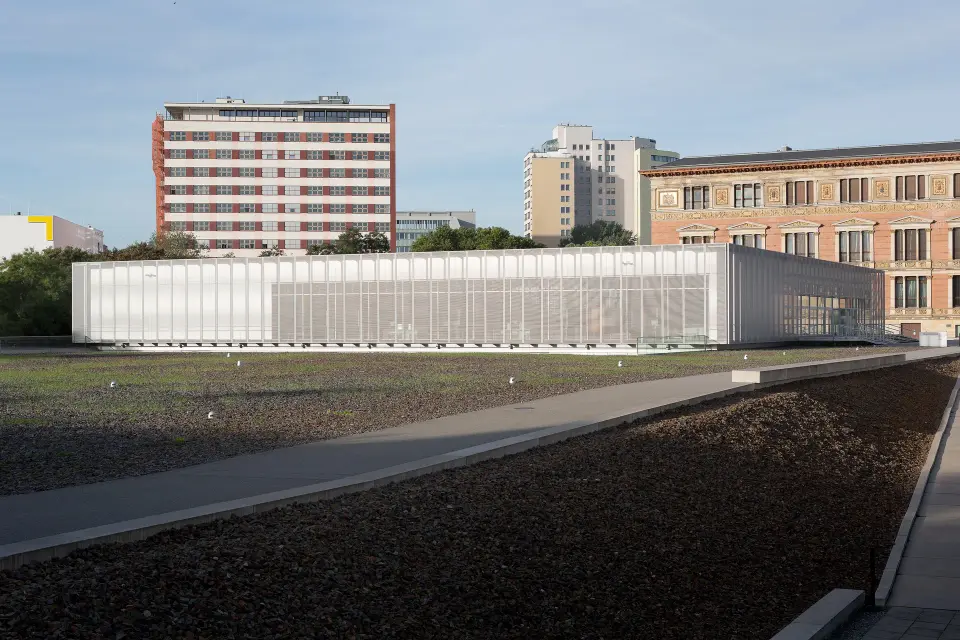
Topography of Terror
A documentation center on the former Gestapo grounds tracing the history of Nazi terror.
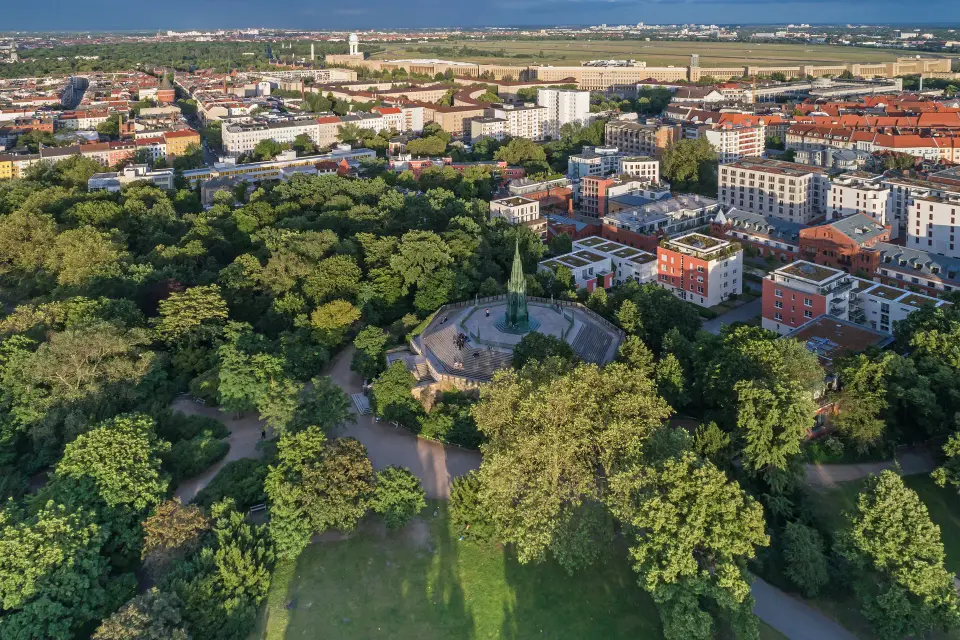
Viktoriapark
A green hilltop park on the 66-meter Kreuzberg, with Schinkel's national monument, an artificial waterfall and wide views over the city.
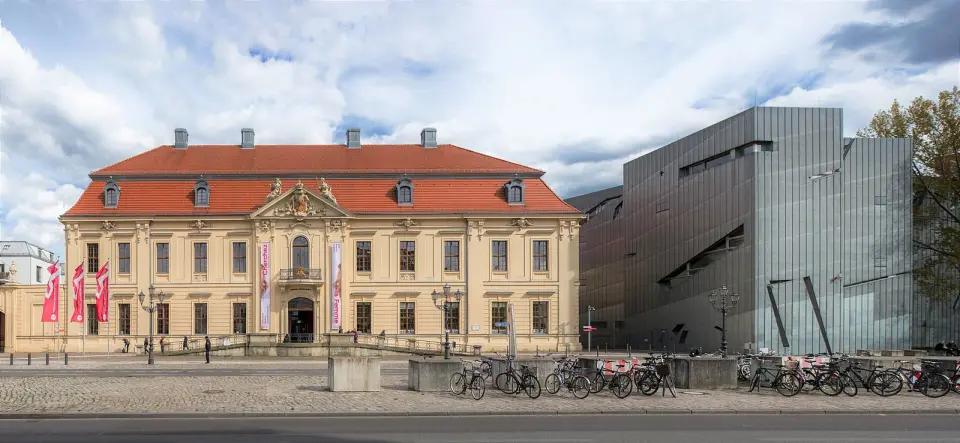
Jewish Museum Berlin
A museum of Jewish history and culture in Germany, housed in Daniel Libeskind's zigzag building in Kreuzberg.
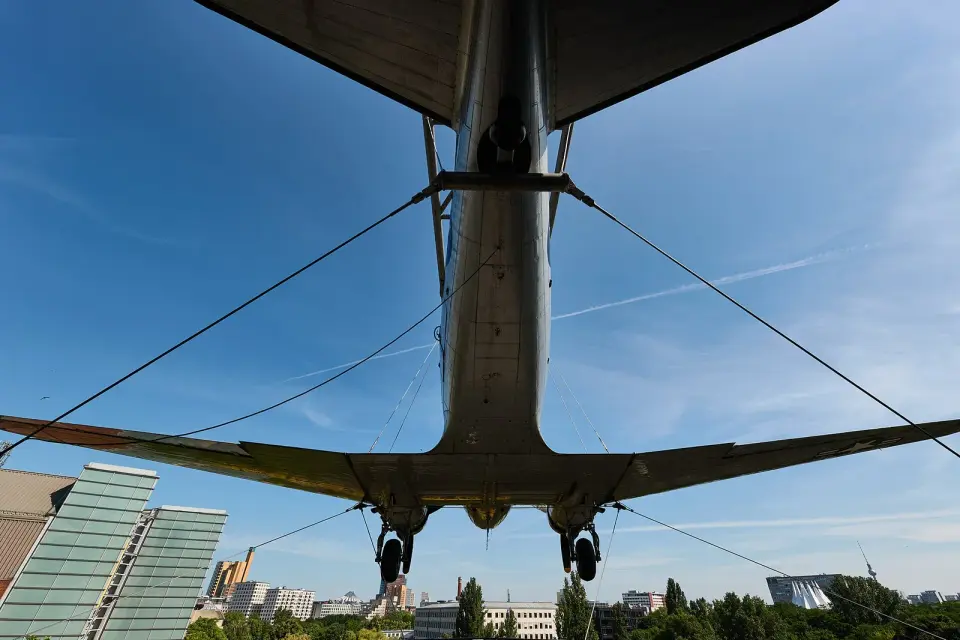
German Museum of Technology
A huge museum of technology on the old Anhalter freight yard, with locomotive sheds, an aircraft hall and the "Raisin Bomber" on the roof.
Stay in the neighborhood
Find hotels in Kreuzberg
Planning a visit to Markthalle Neun? Here you'll find places to stay in the Kreuzberg district.