Museum · History · Architecture
Jewish Museum Berlin
A museum of Jewish history and culture in Germany, housed in Daniel Libeskind's zigzag building in Kreuzberg.
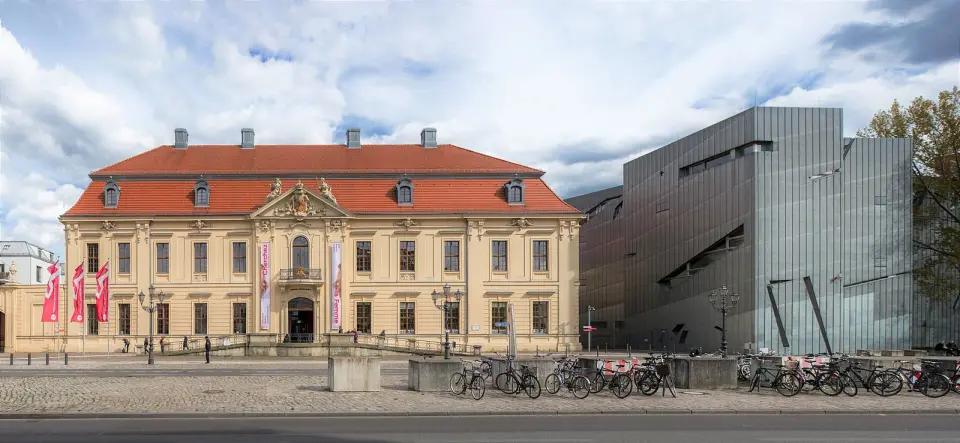
The Jewish Museum Berlin on Lindenstraße in Kreuzberg is one of the most visited museums in the city and tells the story of Jews in Germany from the Middle Ages to the present. It opened in September 2001. Even before that, the empty new building drew hundreds of thousands of visitors, because its architecture makes a statement all on its own.
The design is by Daniel Libeskind. Seen from above, the building resembles a broken lightning bolt, and its zinc facade is slashed with narrow, seemingly random window slits. It has no entrance of its own. You enter through the baroque Kollegienhaus next door, the former Prussian Court of Justice from 1735, and take a staircase down to the lower level. There three sloping axes cross, standing for continuity, exile and the Holocaust. They lead to the Holocaust Tower, a cold, dark concrete space, and to the Garden of Exile with its tilted concrete pillars.
Running through the whole building are so-called voids, empty spaces that cannot be entered or can only be crossed. One of them holds the installation "Shalekhet" (Fallen Leaves) by Menashe Kadishman, with thousands of iron faces lying on the floor. As you walk over them, you hear the metal clank with every step.
The permanent exhibition reopened completely redesigned in 2020 and combines objects, media stations and personal stories. It is free of charge, while special exhibitions are ticketed. Across the street, in a former wholesale flower market hall, is the museum's W. Michael Blumenthal Academy with its library and archive, along with the ANOHA children's museum for younger kids. There are security checks at the museum entrance, so allow a little time for them. The nearest U-Bahn stations are Hallesches Tor (U1, U3, U6) and Kochstraße (U6), each about a ten-minute walk away.
A museum with a history of its own
Berlin had a Jewish Museum once before. It opened in January 1933 next to the New Synagogue on Oranienburger Straße, a few days before the Nazis came to power, and was closed after the November pogroms of 1938. Its collection was confiscated, and only parts of it have resurfaced to this day.
From the 1970s on, there were efforts in West Berlin to commemorate the city’s Jewish history once more with a museum of its own. At first the plan was a department of the Berlin Museum in the Kollegienhaus. An architecture competition for the extension was held in 1988/89, and Daniel Libeskind won it with his design “Between the Lines.” During planning the project changed: the department became an independent museum, which has been run as a federal foundation since 2001.
How to read the Libeskind building
Much about the building only makes sense once you know what to look for.
- The window slits: Libeskind derived the lines of the facade openings from an imaginary network connecting the addresses of former Jewish and non-Jewish Berlin figures. They look random, but they follow a construction.
- The axes in the basement: The floor rises and falls slightly, and the walls are not quite parallel. Walking feels unsteady, and that is intentional.
- The Garden of Exile: The concrete columns stand on a sloping floor and are themselves slightly tilted. As you walk through, you can feel your balance go off. Oleaster trees grow on top of the columns.
- The voids: These empty concrete shafts cut vertically through the building. You cross them on bridges on the exhibition floors. They stand for what was lost through the annihilation.
What the permanent exhibition shows
The exhibition on the upper floor is arranged both chronologically and by theme. It begins with the first Jewish communities in the Rhineland in the Middle Ages and goes on to court Jews and the Enlightenment, Moses Mendelssohn, emancipation in the 19th century and the rise of Jewish families in business and culture. Persecution and murder under National Socialism take up a large part. The last section reaches into the present, with chapters on Jewish life in both German states, immigration from the former Soviet Union and current debates. Along the way there are rooms on religion and rituals that make sense even without prior knowledge.
Planning your visit
If you only have half a day, focus on the axes, the Holocaust Tower, the Garden of Exile and part of the permanent exhibition. Four hours for all of it is not too much. You have to check large bags and suitcases at the cloakroom, and the security check is similar to an airport’s.
Bus line M29 stops nearby at Lindenstraße/Oranienstraße, and from Hallesches Tor U-Bahn station it is about a ten-minute walk north.
Tips
- On weekday mornings there are many school groups in the building. Early afternoons are often quieter.
- The museum garden behind the Kollegienhaus has benches for a break. There is a café in the old building.
- For families with small children, a detour to the ANOHA children’s museum across the street is worthwhile. It has its own opening hours and is often booked in advance.
- Check ahead whether any temporary exhibitions are on that require a ticket.
Nearby
On foot you reach Checkpoint Charlie and the Topography of Terror in about 15 minutes. To the south, across the Landwehr Canal, is the German Museum of Technology, and a little farther on the Park am Gleisdreieck. If you are spending the day in Kreuzberg, you will find more ideas on our page about the Kreuzberg neighborhood.
Frequently asked
What to know about Jewish Museum Berlin
Does the Jewish Museum Berlin charge admission?
The permanent exhibition is free, and tickets are sold for special exhibitions (as of October 2026). Check current conditions on jmberlin.de before your visit.
How much time should I plan?
For the Libeskind building, the axes, the Garden of Exile and the permanent exhibition, allow at least two to three hours. The exhibition is extensive, and many visitors come back a second time.
On which days is the museum open?
According to current information, the museum is open Tuesday through Sunday from 10 a.m. to 6 p.m. and closed on Mondays (as of October 2026). It also closes on some Jewish holidays, so check the website beforehand.
Who designed the building?
The new building is by the architect Daniel Libeskind. It connects underground to the baroque Kollegienhaus, through which you enter the museum.
Nearby & related
Pairs well with this
More attractions that combine nicely with a visit to Jewish Museum Berlin.
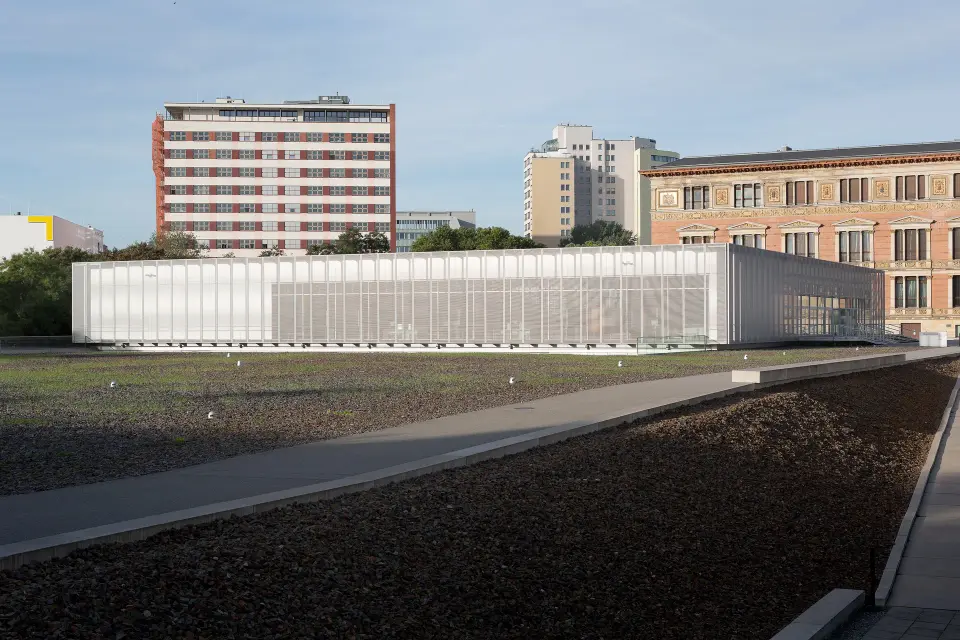
Topography of Terror
A documentation center on the former Gestapo grounds tracing the history of Nazi terror.
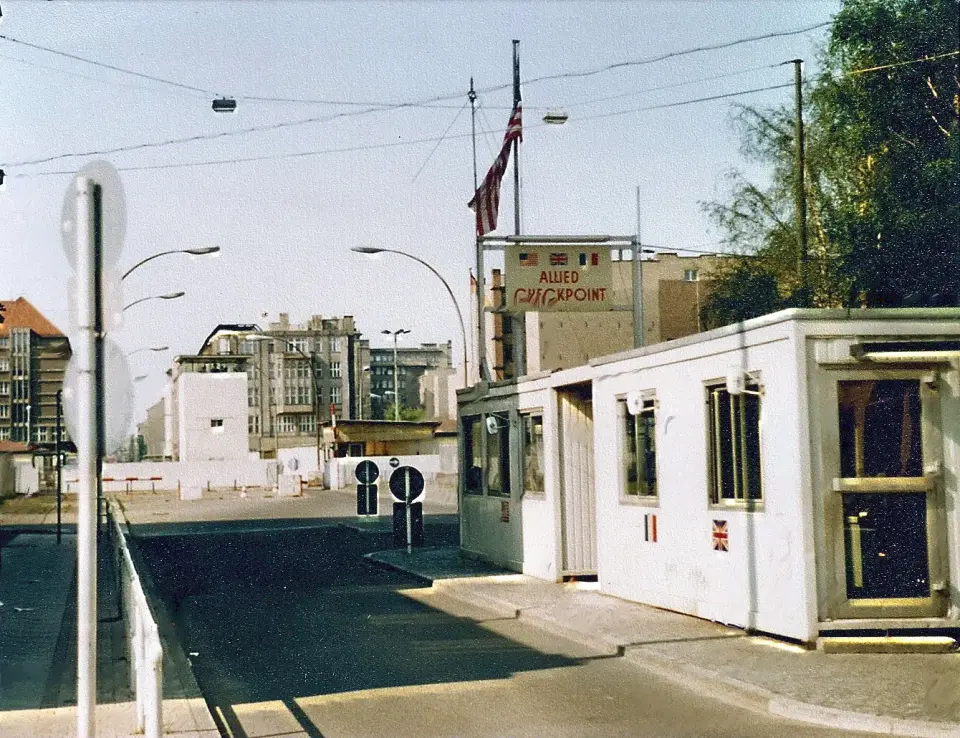
Checkpoint Charlie
The former border crossing between East and West, today a symbol of the Cold War.
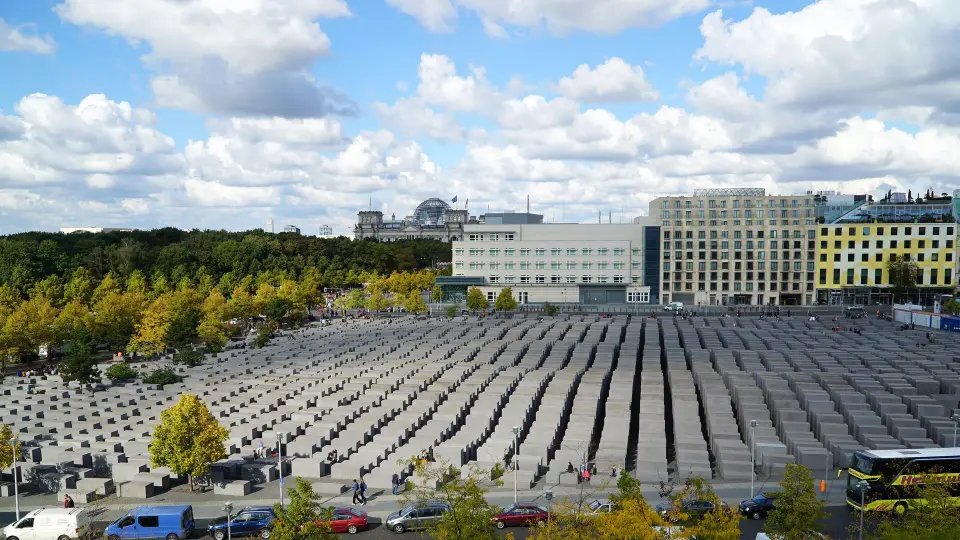
Holocaust Memorial
The Memorial to the Murdered Jews of Europe, with 2,711 concrete steles near the Brandenburg Gate.
More in Kreuzberg
More attractions in Kreuzberg
Other highlights in the same district that pair well with a visit to Jewish Museum Berlin.
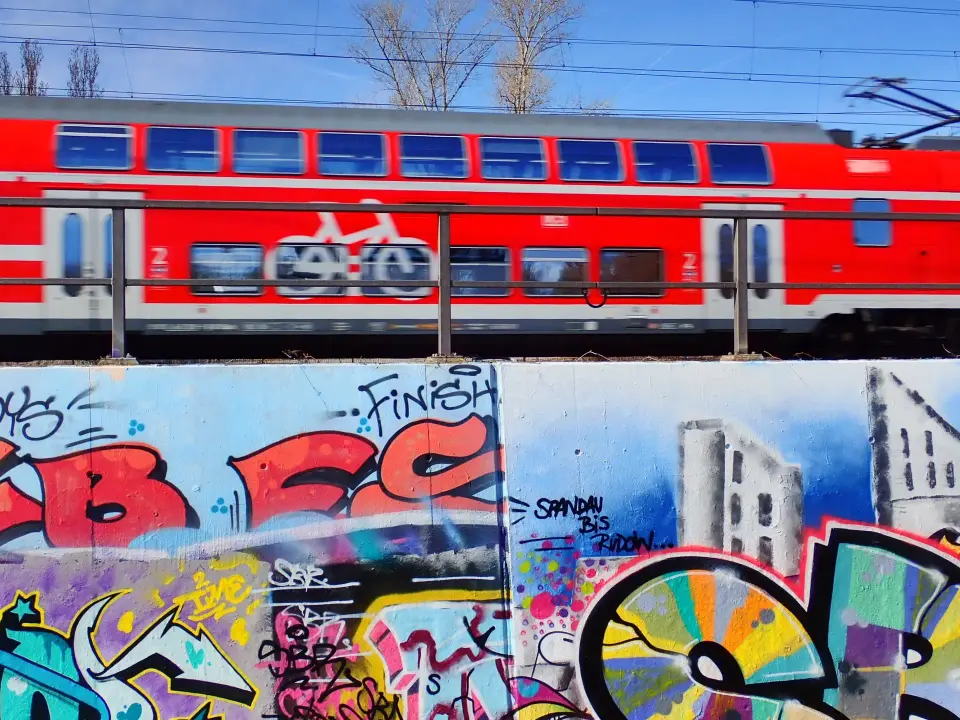
Park am Gleisdreieck
An expansive city park on former railway land between Kreuzberg and Schöneberg, blending an industrial past with modern leisure use.
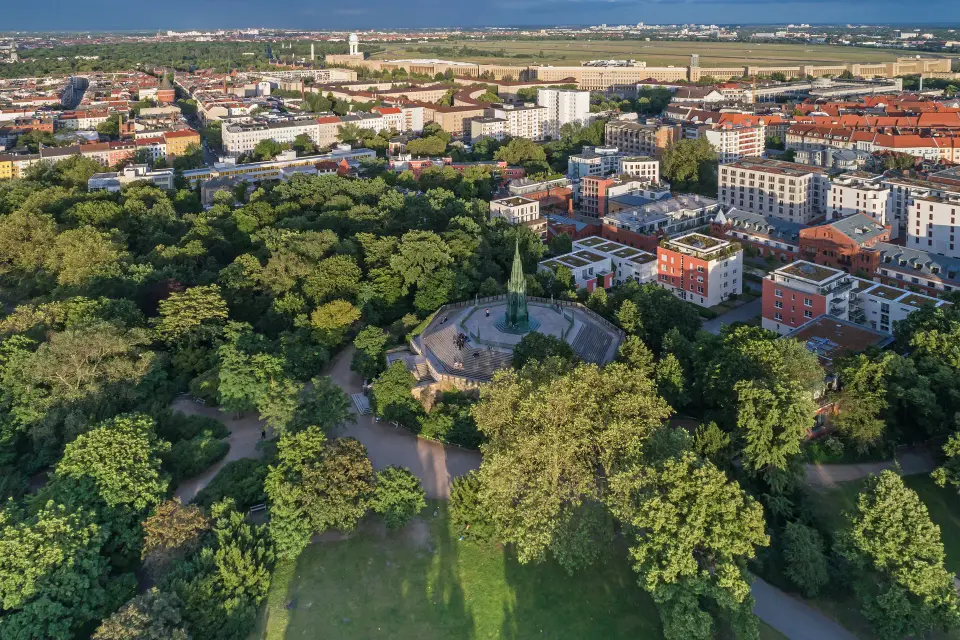
Viktoriapark
A green hilltop park on the 66-meter Kreuzberg, with Schinkel's national monument, an artificial waterfall and wide views over the city.
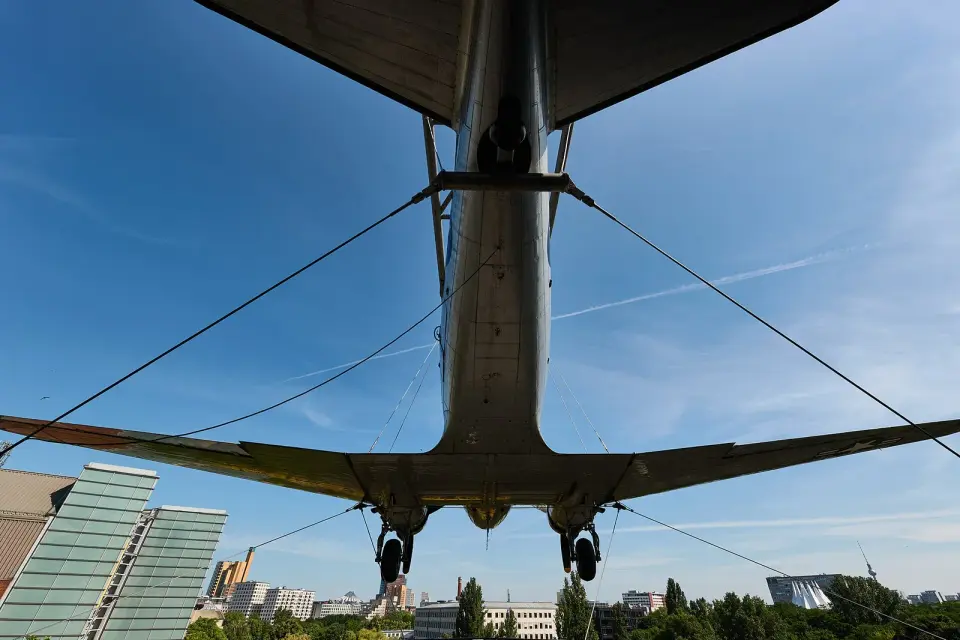
German Museum of Technology
A huge museum of technology on the old Anhalter freight yard, with locomotive sheds, an aircraft hall and the "Raisin Bomber" on the roof.
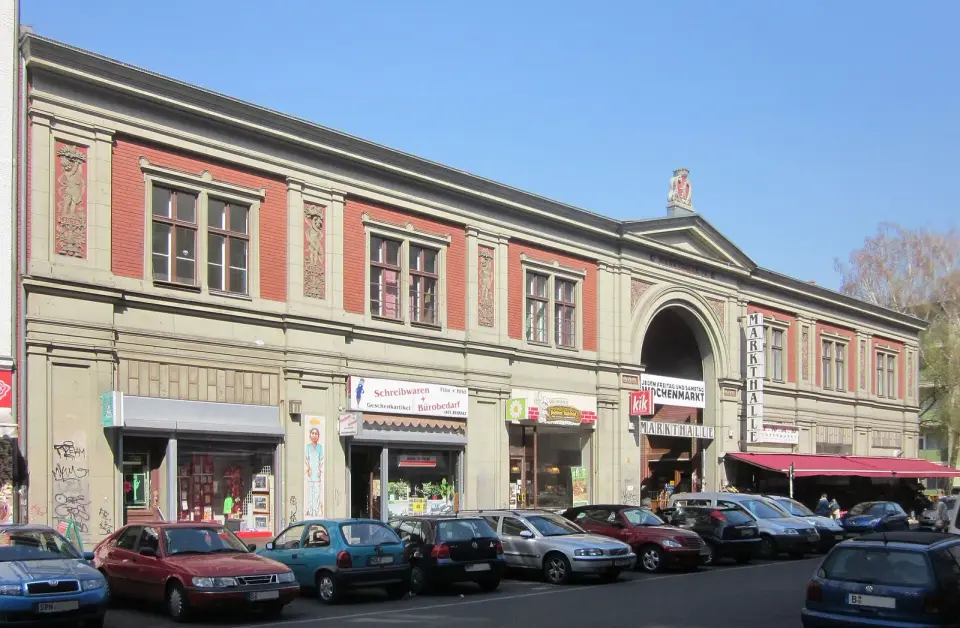
Markthalle Neun
A historic market hall from 1891 in Kreuzberg, now known for regional food, a weekly market and Street Food Thursday.
Stay in the neighborhood
Find hotels in Kreuzberg
Planning a visit to Jewish Museum Berlin? Here you'll find places to stay in the Kreuzberg district.