Architecture · History · Art Nouveau
Hackesche Höfe
A winding ensemble of eight interconnected commercial courtyards with Art Nouveau facades in the heart of the Spandauer Vorstadt.
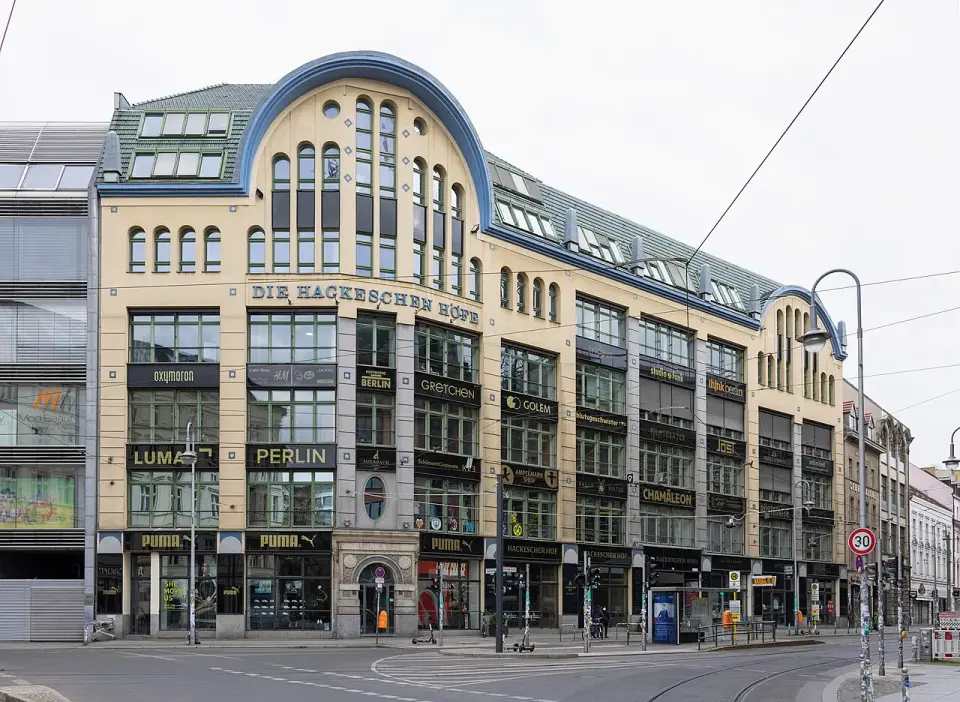
The Hackesche Höfe form the largest connected courtyard complex in Germany and a landmark of the Spandauer Vorstadt, the neighborhood next to the historic Scheunenviertel. Built between 1905 and 1907 to plans by the architect Kurt Berndt, the buildings wrap around eight interconnected courtyards covering roughly 27,000 square meters (about 290,000 square feet). The complex opened in September 1906 and has been a protected historic monument since 1977.
Architecturally the highlight is the first courtyard, whose facades the Art Nouveau artist August Endell clad in colored glazed brick with sweeping ornament. The street front on Rosenthaler Straße is showy and richly decorated, while the courtyards behind it get quieter and more finely broken up. After the Wall came down the complex fell into disrepair, then was thoroughly restored between 1994 and 1997, and it now counts among the best-known properties in Berlin.
Today the courtyards mix apartments, offices and culture. You will find the Chamäleon Theater variety stage, the long-running Hackesche Höfe cinema, plus boutiques, galleries, cafés and restaurants. Walking through all eight courtyards is worth it precisely because each one has its own character. One tip: early in the day it is noticeably calmer, while in the evening the area around the courtyards and nearby Hackescher Markt draws a big crowd.
Why the courtyards were built this way
The Hackesche Höfe are an early example of a mixed-use urban block. Around 1905, Kurt Berndt deliberately planned apartments, workshops, factory floors and banqueting halls on a single plot. At the front, on Rosenthaler Straße, were shops and prestigious rooms, and in the rear courtyards small businesses and rented flats. The sequence of courtyards gets plainer and quieter toward the back, as was usual in imperial-era Berlin, except that here there is much more light and greenery than in many of the Mietskasernen (crowded tenement blocks) of the time.
Before 1933 many Jewish families lived in the Spandauer Vorstadt, and Jewish entrepreneurs and associations also worked in the courtyards. After expropriation under the Nazis and decades of neglect in the GDR, the courtyards were badly run down by 1990. During the restoration in the 1990s, a residents’ initiative campaigned to keep the apartments. That’s why people still live on the upper floors today, even though shops and cafés dominate below.
What you see as you walk through
The walk starts at the main entrance, Rosenthaler Straße 40/41. In the first courtyard, August Endell’s glazed bricks stand out, with wave-like ornaments in blue, white and ocher. This is also where you’ll find the entrance to the Chamäleon variety theater in the old banqueting halls. The farther back you go, the simpler the facades become. Some courtyards are green, one planted with trees and benches, while others are more like passageways with small shops for design, jewelry and fashion. The last courtyard opens onto Sophienstraße, one of the best-preserved streets in the Spandauer Vorstadt.
Right next door at Rosenthaler Straße 39 is Haus Schwarzenberg. Its unrenovated courtyard, covered in street art and posters, is a sharp contrast to the polished Hackesche Höfe. Here you’ll find the Museum Blindenwerkstatt Otto Weidt, which remembers a businessman who employed and hid blind and deaf Jewish workers during the Nazi era, as well as the Anne Frank Zentrum. A detour there adds an important chapter of the neighborhood’s history to your visit.
Planning your visit
- Getting there: S-Bahn S3, S5, S7 or S9 to Hackescher Markt, then a two-minute walk. Trams M1, M4 and M5 also stop at Hackescher Markt. On the U8, ride to Weinmeisterstraße.
- How long: Half an hour is enough to walk through all the courtyards. Add Haus Schwarzenberg, a café and a detour along Sophienstraße and it becomes a relaxed afternoon.
- Best time: Weekday mornings are when the courtyards are quietest and the facades of the first courtyard catch the light. In the evening, cinema and variety audiences fill the place.
Be considerate
The courtyards are private property, even if they feel open. Where there are apartments, signs ask for quiet, and many building entrances are off-limits to visitors. Taking photos in the courtyards is normal, but tripods and larger photo shoots need the owners’ permission. It’s best to push your bike.
Common mistakes
Many people stop in the first and best-known courtyard and miss the quieter ones behind it. Walk all the way through to Sophienstraße. A second classic: Hackescher Markt and the Hackesche Höfe are not the same thing. The Markt is the square by the S-Bahn station with its arches and restaurants, while the courtyards are a few steps farther on, on Rosenthaler Straße.
Nearby
The Spandauer Vorstadt is easy to explore on foot. Along Oranienburger Straße you reach the Neue Synagoge (New Synagogue) in ten minutes, and to the south, across the Spree, Museum Island and Berlin Cathedral. The TV Tower at Alexanderplatz is also only a few minutes away. Heading north, you come to the Berlin Wall Memorial on Bernauer Straße. For more on the area, see our guide to Mitte.
Frequently asked
What to know about Hackesche Höfe
Do the Hackesche Höfe charge admission?
No, the courtyards are freely accessible and can be walked through at no cost during the day. You only pay for specific venues such as the Chamäleon Theater or the cinema.
How many courtyards are there?
Eight interconnected commercial courtyards, running between Rosenthaler Straße and Sophienstraße across roughly 27,000 square meters.
When were the Hackesche Höfe built?
The complex was built from 1905 to 1907 to plans by Kurt Berndt and opened in September 1906. The Art Nouveau facades are by August Endell.
Nearby & related
Pairs well with this
More attractions that combine nicely with a visit to Hackesche Höfe.
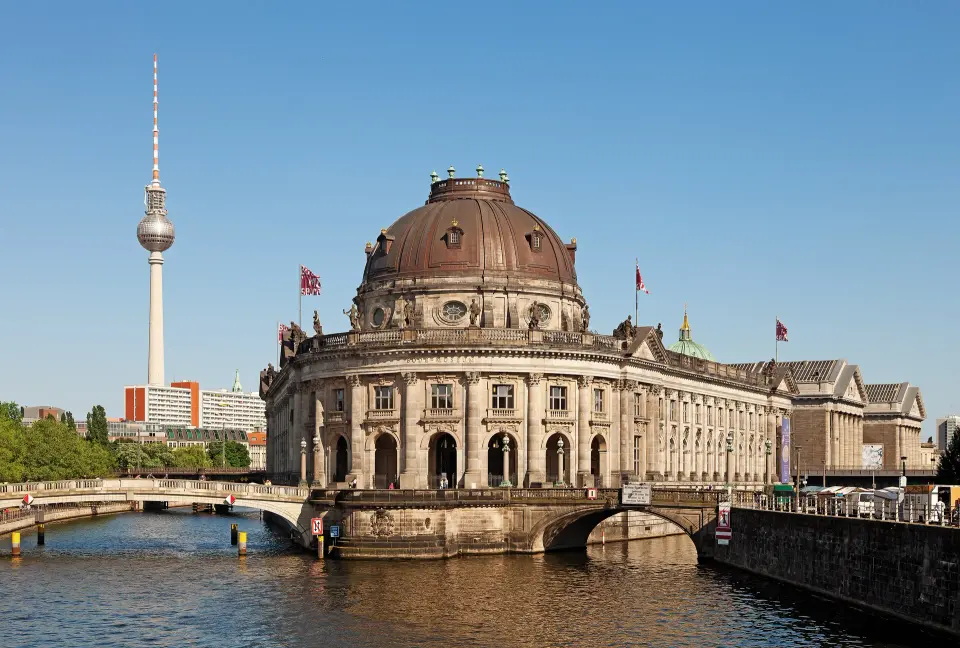
Museum Island
Five world-famous museums on an island in the Spree, a UNESCO World Heritage Site since 1999.
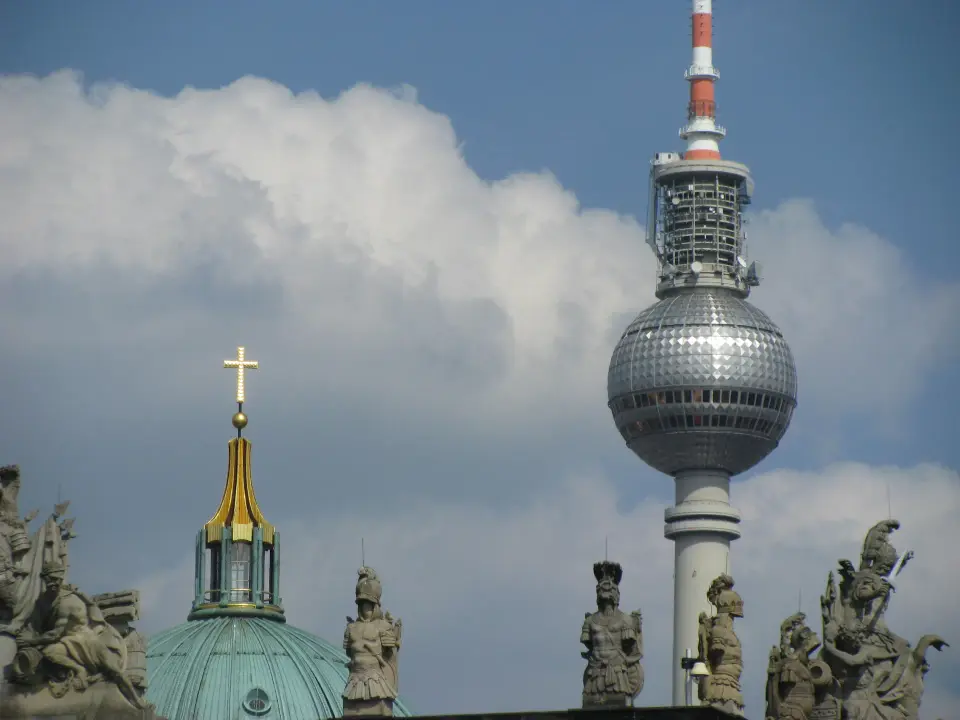
Berlin TV Tower
At 368 meters the tallest structure in Germany, with an observation deck and a revolving restaurant.
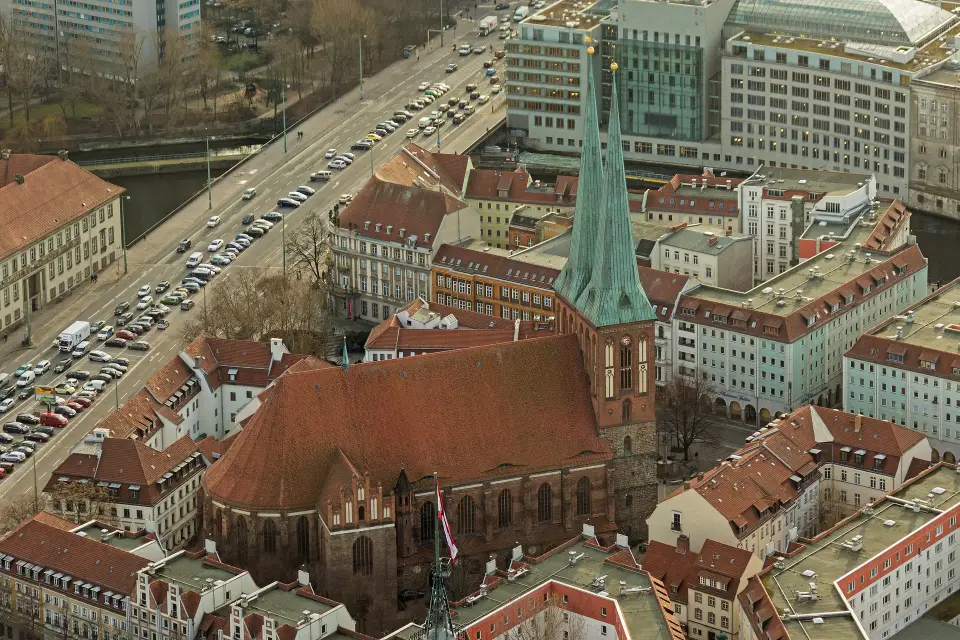
Nikolai Quarter
A reconstructed old town around the Nikolaikirche, with narrow lanes and views of the Spree.
More in Mitte
More attractions in Mitte
Other highlights in the same district that pair well with a visit to Hackesche Höfe.
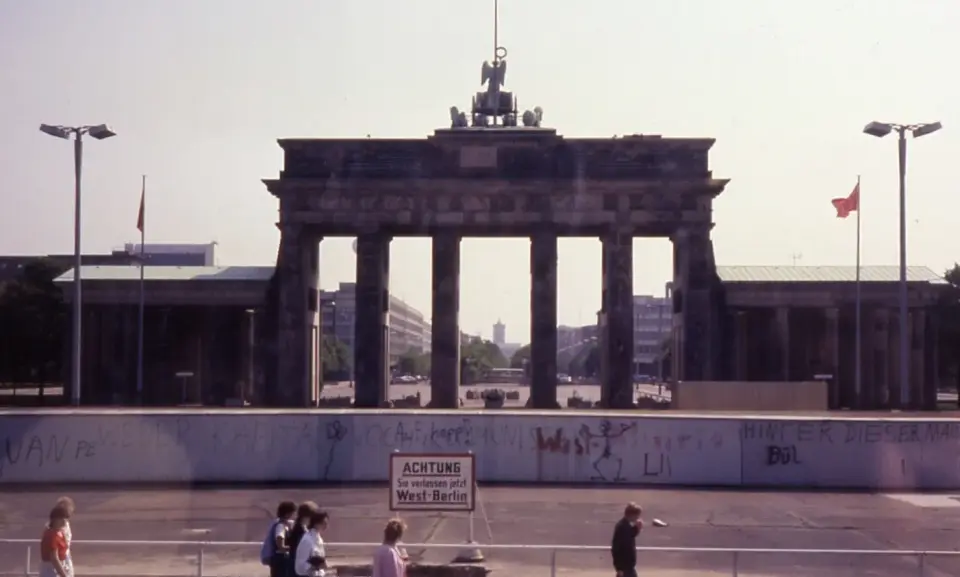
Brandenburg Gate
Berlin's most famous landmark on Pariser Platz, transformed from a symbol of division into a symbol of unity.
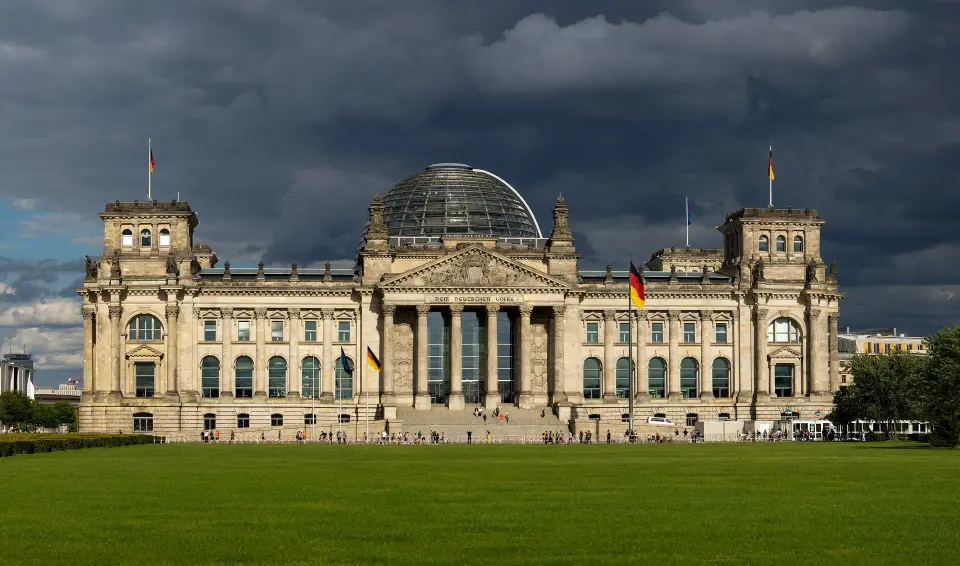
Reichstag Building
Seat of the German Bundestag, with a walk-up glass dome by Norman Foster and views over the government quarter.
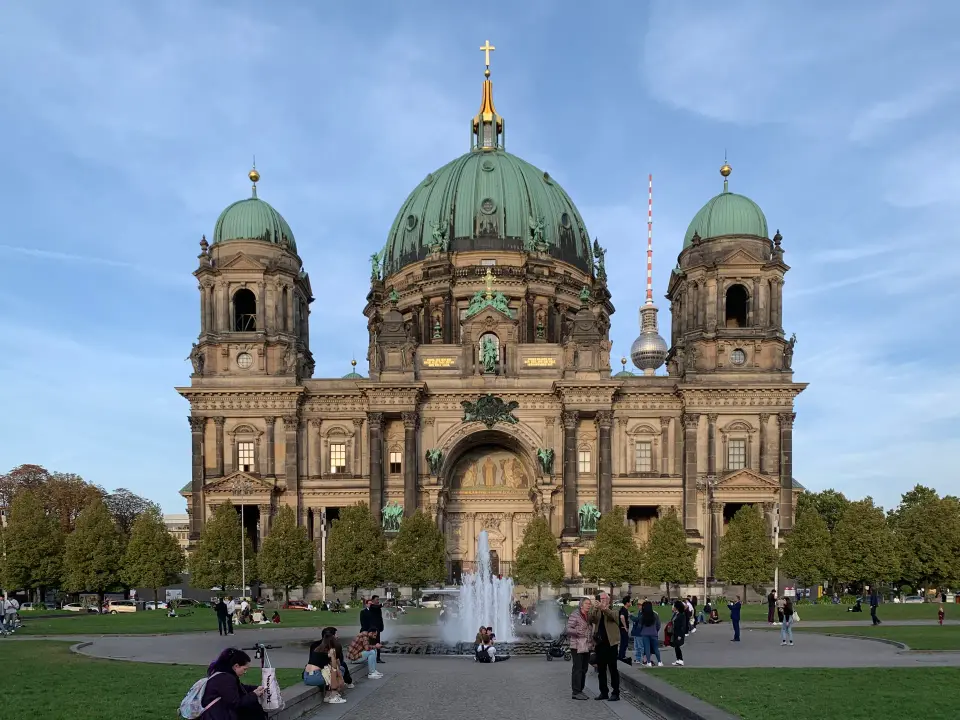
Berlin Cathedral
A monumental Protestant church on the Lustgarten with a walk-up dome and views over Museum Island.
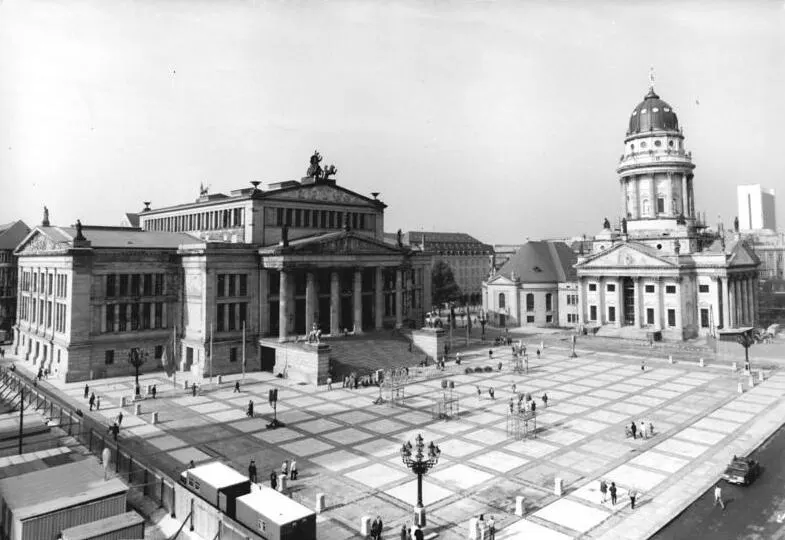
Gendarmenmarkt
One of the most beautiful squares in Berlin, with the Konzerthaus and the German and French cathedrals.
Stay in the neighborhood
Find hotels in Mitte
Planning a visit to Hackesche Höfe? Here you'll find places to stay in the Mitte district.
Tours & tickets around Hackesche Höfe
Guided walks, skip-the-line tickets and experiences around Hackesche Höfe. A curated selection from GetYourGuide, bookable directly.
* Tours & tickets from GetYourGuide. If you book through the markers we earn a small commission at no extra cost to you.