Shopping · Landmark
KaDeWe
The Kaufhaus des Westens on Wittenbergplatz, a Berlin institution since 1907 and famous for its gourmet food floor.
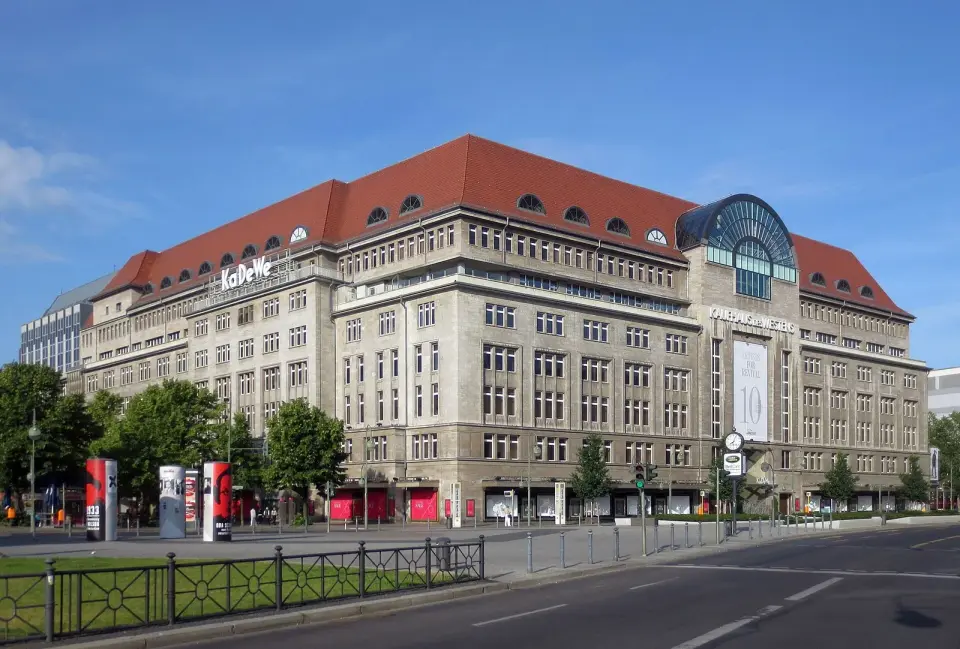
The Kaufhaus des Westens (Department Store of the West), KaDeWe for short, opened in 1907 on Tauentzienstraße at Wittenbergplatz. It was founded by the merchant Adolf Jandorf and designed by the architect Johann Emil Schaudt. The name said it all. The "New West" around Kurfürstendamm and Tauentzienstraße was growing rapidly at the time, and the store deliberately targeted the wealthy residents of the new neighborhoods.
In the late 1920s the department store group Hermann Tietz took over and added more floors. After the Nazis seized power, the group, whose owners were Jewish, was expropriated and continued under the name Hertie. In 1943 an American plane that had been shot down crashed into the building, which then burned out. From 1950 onward KaDeWe gradually reopened and in divided Berlin became a showcase of the West, one of the first places many visitors from the GDR headed for after the Wall fell.
Today the merchandise is spread over several floors, organized like a classic department store. Cosmetics, bags and luxury brands dominate the lower floors, with fashion, home goods and toys above. But most visitors head for the gourmet food floor on the sixth floor. Counters with cheese, sausage, fish, chocolates, wine and delicacies from many countries line up one after another, with small bars and snack counters in between where you can taste on the spot. Above it is a restaurant with a glass roof.
You do not have to buy anything to experience KaDeWe. For many people, a stroll through the food hall and a look at the shop windows, which are lavishly decorated at Christmastime, are simply part of a Berlin visit. Wittenbergplatz U-Bahn station (U1, U2, U3) is right outside the door, and the Kaiser Wilhelm Memorial Church and the start of Kurfürstendamm are about ten minutes away on foot. The store is usually closed on Sundays.
A department store for the New West
Around 1900, wealthy Berlin shifted westward. Upper-middle-class residential neighborhoods grew up around Kurfürstendamm, Tauentzienstraße and Wittenbergplatz, and with them a new shopping district that competed with the old city center in Mitte. Adolf Jandorf, who already ran several department stores for a broader public, deliberately aimed the KaDeWe at the upscale market. From the start the store was built around quality and selection, not cheap mass-produced goods.
The store’s history mirrors the history of the city. Under the Tietz family it was expanded in the late 1920s, and a few years later the Nazis forced out its Jewish owners. After the war the burned-out ruin initially stood empty. When the store partly reopened in 1950, shortly after the end of the Blockade and the Airlift, West Berliners saw it as a sign that the city was carrying on. Over the following decades the KaDeWe had floors added and was remodeled several times. On the weekend after November 9, 1989, large numbers of people from East Berlin and the GDR came here, many of them for the first time.
How the store is laid out
As in classic department stores, the merchandise is arranged by floor.
- Ground floor: Cosmetics, perfume, accessories, jewelry and watches, plus luxury brands in their own areas.
- Middle floors: Women’s and men’s fashion, shoes, designer labels and a children’s department.
- Upper floors: Home, kitchen, toys and electronics.
- Sixth floor: The gourmet floor with delicatessen, wine, baked goods and bars.
- Above that: The restaurant in the winter garden under the glass roof.
The exact layout changes with each round of remodeling. There are directory boards by the escalators.
Through the gourmet floor
For many visitors, the sixth floor is the real reason to come. The department is divided into islands where you can eat as well as shop: counters with fish and seafood, pasta, sushi or sausages, bars for wine and champagne, pastry shops with cakes and chocolates. Prices are well above those of an ordinary supermarket. Even so, coffee and cake or a small bite at the counter is doable on a smaller budget. If you are looking for gifts to take home, you will find Berlin specialties, tea, spices and sweets in attractive packaging.
Planning your visit
Wittenbergplatz U-Bahn station, with its historic entrance building, is directly opposite. Lines U1, U2 and U3 meet here. From Zoologischer Garten station it is about a 15-minute walk along Tauentzienstraße, past the Memorial Church. Bus lines M19, M29 and M46 also stop nearby.
It is busiest on Saturdays and during Advent. If you want to browse the delicatessen in peace, come on a weekday morning.
Tips
- Many visitors from non-EU countries can claim a VAT refund on their purchases. Ask at the register for the right form.
- Restrooms and cloakrooms are on several floors. A visit with suitcases is a hassle, so use the lockers at Bahnhof Zoo first.
- During the Christmas season, the shop windows along Tauentzienstraße are worth a look even after closing time.
Nearby
A few minutes’ walk to the west stand the Kaiser Wilhelm Memorial Church and the start of Kurfürstendamm. Behind Breitscheidplatz lies the Berlin Zoo. Heading north along Budapester Straße, you reach the Tiergarten. For more on the neighborhood around Wittenbergplatz, see our page on Schöneberg.
Frequently asked
What to know about KaDeWe
What is the gourmet food floor at KaDeWe?
The food department on the sixth floor, with counters for cheese, fish, meat, sweets, wine and international specialties. At several bars and snack stands you can eat and drink right there.
How do I get to KaDeWe?
Take the U-Bahn to Wittenbergplatz (U1, U2, U3). The station is directly across from the entrance. From Zoologischer Garten station it is about a 15-minute walk.
Is KaDeWe open on Sundays?
Usually not. Exceptions are individual shopping Sundays set by the state of Berlin. You can find current opening hours on the store's website.
Nearby & related
Pairs well with this
More attractions that combine nicely with a visit to KaDeWe.
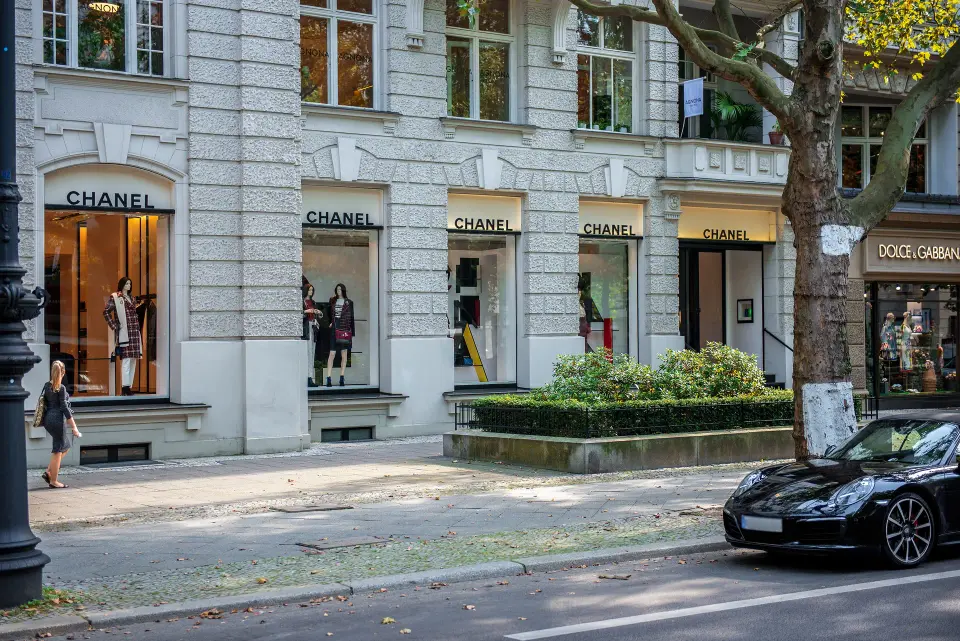
Kurfürstendamm
Berlin's most famous shopping boulevard in the west, with stores, cafés and the KaDeWe nearby.
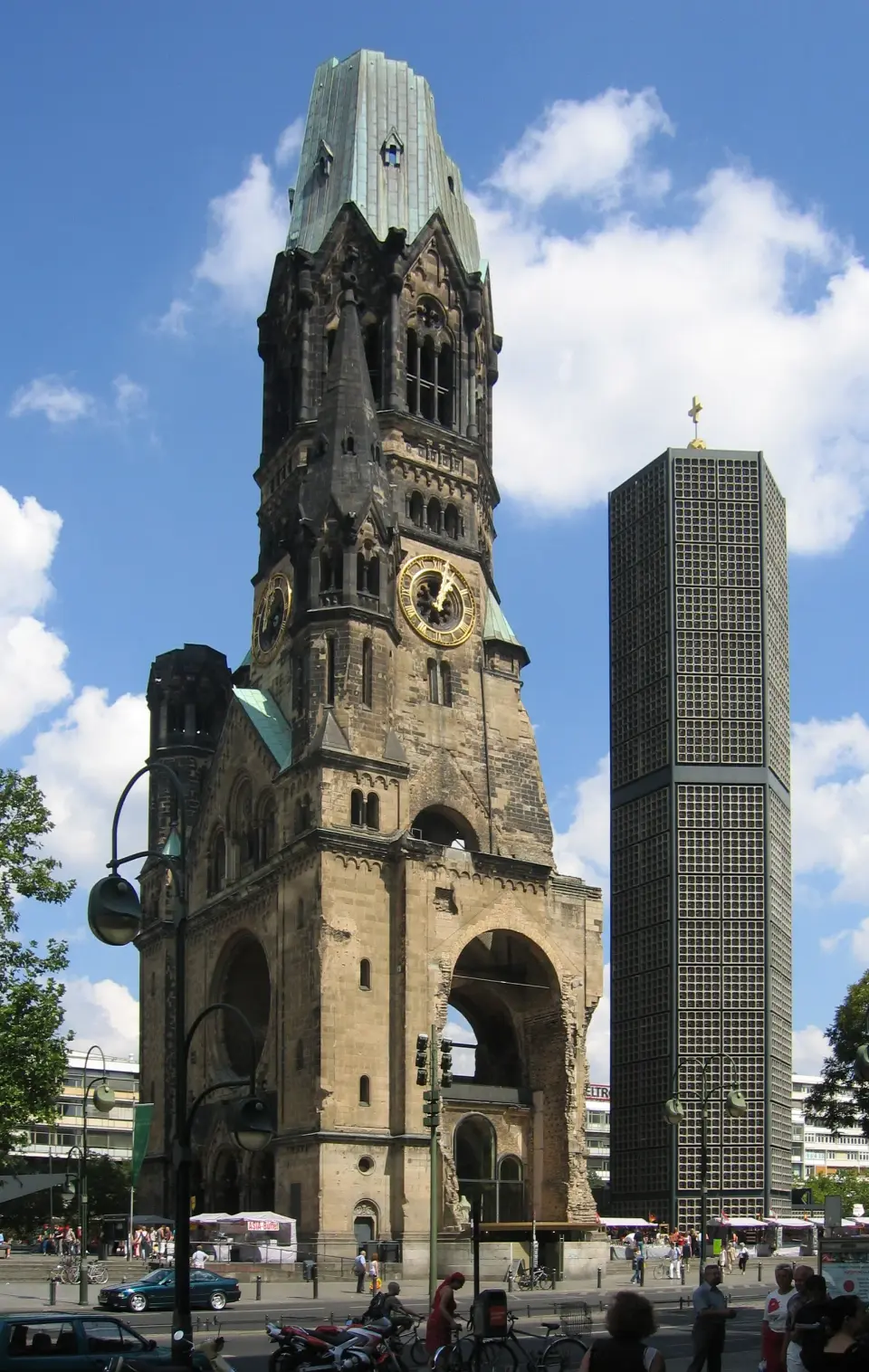
Kaiser-Wilhelm-Gedächtniskirche (Kaiser Wilhelm Memorial Church)
A war-ruined church tower kept standing as an anti-war memorial, paired with a modern sanctuary that glows deep blue.
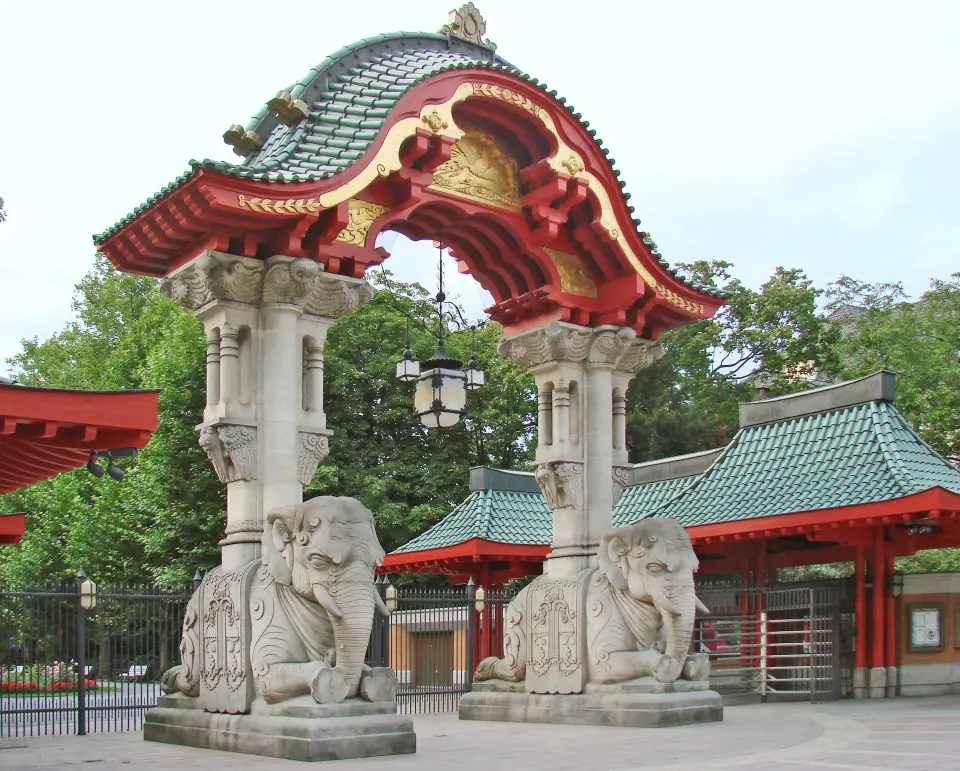
Berlin Zoo
Germany's oldest zoo, with great biodiversity in the middle of the western center.
More in Tempelhof-Schöneberg
More attractions in Tempelhof-Schöneberg
Other highlights in the same district that pair well with a visit to KaDeWe.